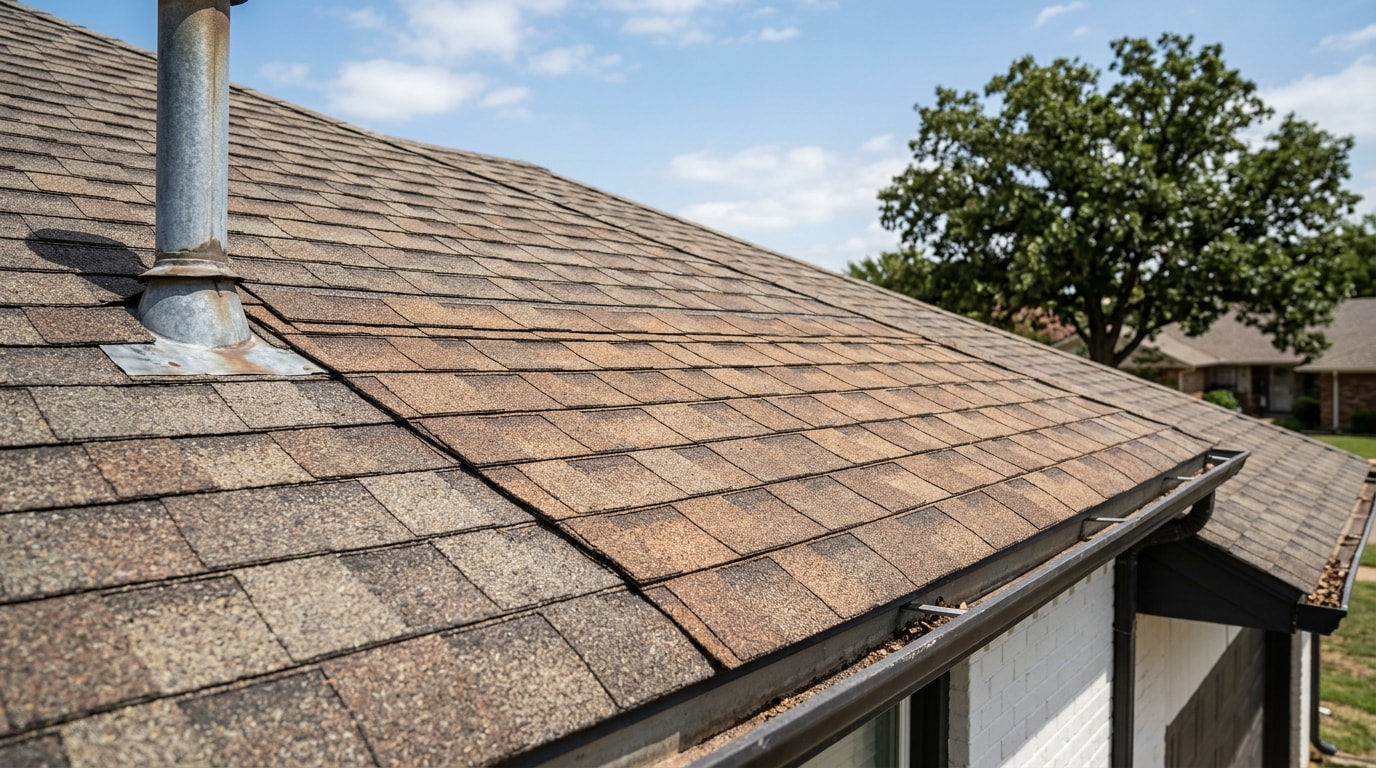
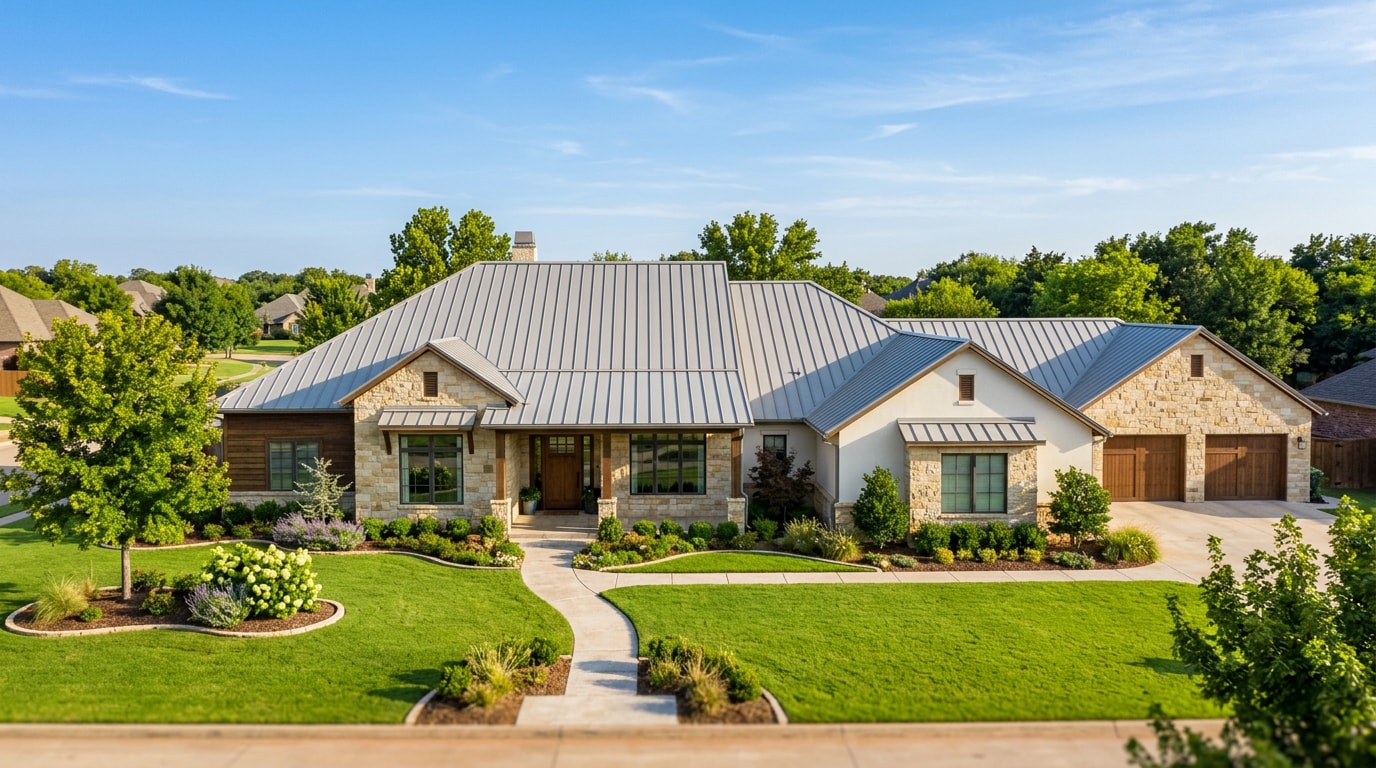
Sustainable roofing options in Jenks, OK are no longer a niche request, they're a standard question homeowners ask before any reroof. Hot summers, hail-heavy storm seasons, and rising utility bills push most of that demand. This guide breaks down what actually works on a Jenks roof, what each option costs in 2026, and one tax-credit change most local guides haven't caught up on yet.
Why Sustainable Roofing Matters for Jenks, OK Homes
Jenks homeowners are asking more questions about sustainable roofing than they did even a few years ago. Hot, humid Oklahoma summers push cooling bills higher every season, and spring hailstorms regularly damage traditional asphalt shingles long before their expected lifespan ends.
Three reasons tend to drive the decision:
- Environmental protection — fewer virgin resources used, less landfill waste
- Energy efficiency — reflective and insulating materials cut cooling loads
- Durability — many sustainable products outlast standard shingles and survive hail better
In a region where summer humidity and triple-digit heat indexes are routine, better insulation and reflective surfaces translate into real savings. Fewer roof replacements also mean less waste heading to Tulsa-area landfills over time. For homeowners comparing options through a local roofing contractor, these factors are now weighed as heavily as upfront price.
Metal Roofing
Metal roofing is one of the most popular sustainable roofing options because it's made with a meaningful share of recycled steel and remains fully recyclable at the end of its service life. Recycled content varies by manufacturer and product line, so ask any installer for the mill certification on a specific panel before assuming a number.
Asphalt shingles generate an enormous volume of landfill waste every year, while a metal roof that reaches the end of its 50- to 70-year lifespan simply returns to the metals recycling stream. Standing seam metal panels, in particular, are prized for their clean lines and tight, interlocking seams that resist wind uplift during storms.
Reflective metal surfaces also help keep indoor temperatures lower during the hottest stretch of an Oklahoma summer, easing the load on air conditioning systems. Combined with its long lifespan, metal is often the first material homeowners compare against traditional shingles when sustainability is the priority.
Cool Roofs
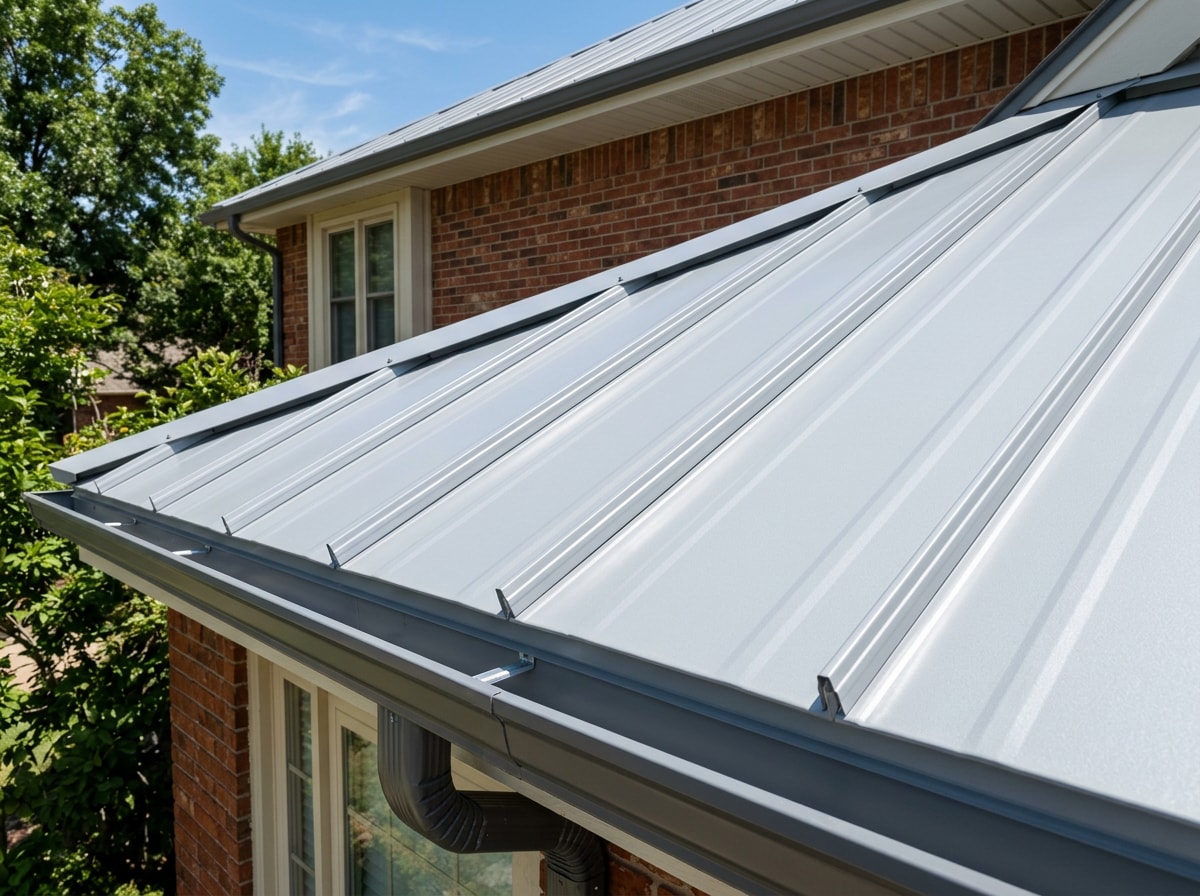
A cool roof isn't a specific material, it's any roofing surface engineered or coated to reflect more sunlight and absorb less heat than a standard dark shingle. The difference shows up directly on an energy bill during peak summer months.
Cool roofs use reflective coatings or naturally light-colored materials to send solar energy back into the atmosphere instead of into an attic, which is especially effective in hot, sun-heavy climates like northeastern Oklahoma. Light-colored metal roofing, including white or light-gray coated steel and aluminum panels, achieves some of the highest solar reflectance values among common roofing products.
ENERGY STAR sets minimum reflectance thresholds for qualifying cool roof products. Low-slope products must reach an initial solar reflectance of 0.65 or higher, while steep-slope products must reach 0.25 or higher , based on the official ENERGY STAR roof products specification. The Cool Roof Rating Council reports that a building with a cool roof can significantly reduce cooling costs, with average energy savings ranging between 7% and 15% of total cooling costs .
Actual savings vary by home orientation, attic ventilation, and insulation levels, so results won't be identical from house to house. A roof inspection is the fastest way to find out whether your current attic ventilation is already working against you, something our roof inspection team checks before recommending any cool-roof upgrade.
Recycled Shingles
Recycled shingles pair the familiar look of traditional roofing with a lighter environmental footprint. They're typically manufactured from repurposed rubber, plastic, or wood fiber pressed into durable, weather-resistant panels instead of raw asphalt or virgin materials.
Because these products reuse waste streams instead of consuming new resources, they support landfill waste reduction while still delivering a dimensional, shake-style, or slate-style appearance. Many recycled rubber shingle products now carry Class 4 impact ratings, manufacturer-rated for strong resistance to hail, a frequent concern for anyone roofing a home in the Jenks area. Ask any installer for the specific recycled-content percentage on the product line you're considering, since it varies by manufacturer.
Green (Living) Roofs
Green roofs, also called living roofs, layer soil and vegetation over a waterproof membrane to turn a rooftop into a small working ecosystem. They're less common on single-family homes in Jenks than on commercial buildings, but interest is growing among homeowners who want maximum environmental impact.
A vegetative roofing system absorbs rainwater before it reaches storm drains. Green roofs can reduce and slow stormwater runoff in the urban environment, and filter pollutants from rainfall, with extensive and intensive green roofs reducing runoff by 60 to 100 percent respectively . The soil and plant layer also provides natural insulation, shields the roof membrane from UV damage, and helps counter the urban heat island effect that makes paved, built-up areas feel hotter than surrounding green space, according to the EPA's research on green roofs and heat islands.
Installation costs run higher than conventional roofing, and structural reinforcement is often required, so this option suits homeowners planning a long-term investment rather than a standard reroof. Jenks' stormwater program, managed through the City of Jenks Public Works office, is the right place to check before assuming a project qualifies for local credits.

Solar Roofing
Solar roofing has shifted from bulky rooftop panel arrays toward sleeker integrated solar shingles that blend into the roofline itself. Either format produces clean, renewable energy that lowers monthly electricity bills and reduces a household's carbon footprint over time.
Here's the part most 2026 guides still get wrong: the 30% federal Residential Clean Energy Credit under Section 25D, the incentive homeowners have relied on for years, ended for homeowner-owned systems. You can't claim residential clean energy credits for expenditures made after December 31, 2025 , per the IRS's own Form 5695 instructions. If you buy and own a solar system outright in 2026, there's no federal tax credit waiting at tax time, only state-level incentives or third-party lease and PPA structures may still carry indirect federal value. Confirm current eligibility with a tax professional before budgeting a project around a 30% write-off.
Installing a solar roof still reduces dependence on the regional power grid, which can matter during Oklahoma's occasional summer storm outages. The upfront investment is significant without that federal credit, so run the numbers carefully against a straightforward roof replacement before committing.
Comparing Sustainable Roofing Materials
Choosing between these sustainable roofing options usually comes down to lifespan, upfront cost, and how well a material handles Oklahoma's hail-prone storm seasons. The table below lines up the core trade-offs side by side.
| Material | Lifespan | Recyclability | Maintenance | Est. Cost/Sq Ft (2026) | Best for OK Hail/Storm Exposure |
|---|---|---|---|---|---|
| Standing seam metal | 50–70 yrs | High at end of life | Low | $9–$16 | Excellent |
| Cool roof (coated metal/shingle) | 20–40 yrs | Varies by material | Low–Moderate | $7–$14 | Good–Excellent |
| Recycled rubber/composite shingles | 30–40 yrs | High (recycled content) | Low | $6–$12 | Very Good (Class 4 rated) |
| Green (living) roof | 30–50 yrs (membrane) | Low (vegetative system) | High | $15–$35 | Good, with reinforcement |
| Solar shingles/panels | 25–30 yrs | Moderate | Moderate | $15–$30+ | Good |
Pricing varies by installer, roof complexity, and material grade, so treat these figures as planning estimates rather than quotes. If you're also weighing a commercial or low-slope reroof nearby, our industrial roofing systems guide for Jenks, OK breaks down additional membrane and coating options not covered here.
For a precise number on your home, request a free roof replacement estimate that accounts for your roof's pitch, square footage, and current decking condition.
Choosing a Sustainable Roofing Contractor in Jenks
Material selection only gets you halfway there. Installation quality determines whether a reflective coating actually performs, whether a green roof membrane stays watertight, or whether a metal panel system survives its first hailstorm. At AH Roofing Contracting, our crews have installed and repaired roofs across the Tulsa metro long enough to know which products hold up locally and which ones look good on a spec sheet but underperform in Oklahoma's swing between ice storms and 100-degree summers.
Before you commit to a material, ask your contractor three things: what warranty actually covers wind and hail damage, what the manufacturer's tested recycled content or reflectance rating is (not just marketing language), and whether the crew has installed that specific product in this climate before. If you want those questions answered against your own roof, get a free estimate and we'll walk the property with you.
FAQ
What is the most sustainable roofing material?
Metal roofing, particularly steel with high recycled content, is widely considered the most sustainable conventional roofing material available. It's recyclable at the end of its life, lasts 50 to 70 years, and reflects solar radiation to reduce cooling loads.
What is a cool roof and how does it save energy?
A cool roof uses highly reflective materials or coatings to bounce back more solar radiation than standard roofing. The Cool Roof Rating Council reports average cooling-cost savings between 7% and 15%, with greater savings in hot climates like Oklahoma's.
How much does a green roof cost?
A green roof installation typically runs $15 to $35 per square foot, or roughly $15,000 to $70,000 total for an average residential project, depending on structural reinforcement needs. Check with the City of Jenks stormwater management office to see whether any local credit programs apply to your project.
Are recycled rubber shingles durable enough for residential use?
Yes. Many recycled rubber shingle products commonly achieve Class 4 impact ratings and last 30 to 40 years. They resist hail, high wind, temperature swings, and UV exposure while reusing waste rubber and plastic that would otherwise go to a landfill.
Is there still a federal tax credit for solar roofing in 2026?
Not for homeowner-owned systems. The 30% Residential Clean Energy Credit ended for expenditures made after December 31, 2025, according to IRS Form 5695 instructions. Third-party leases or power purchase agreements may still carry indirect federal value, and state incentives are separate, so confirm current options with a tax advisor before budgeting a solar reroof.
What roofing material handles Oklahoma hail best?
Standing seam metal and Class 4-rated recycled rubber shingles both perform well against hail. Metal panels resist denting better at higher gauges, while Class 4 composite shingles absorb impact without cracking, making both strong choices for Jenks' storm-prone spring seasons.