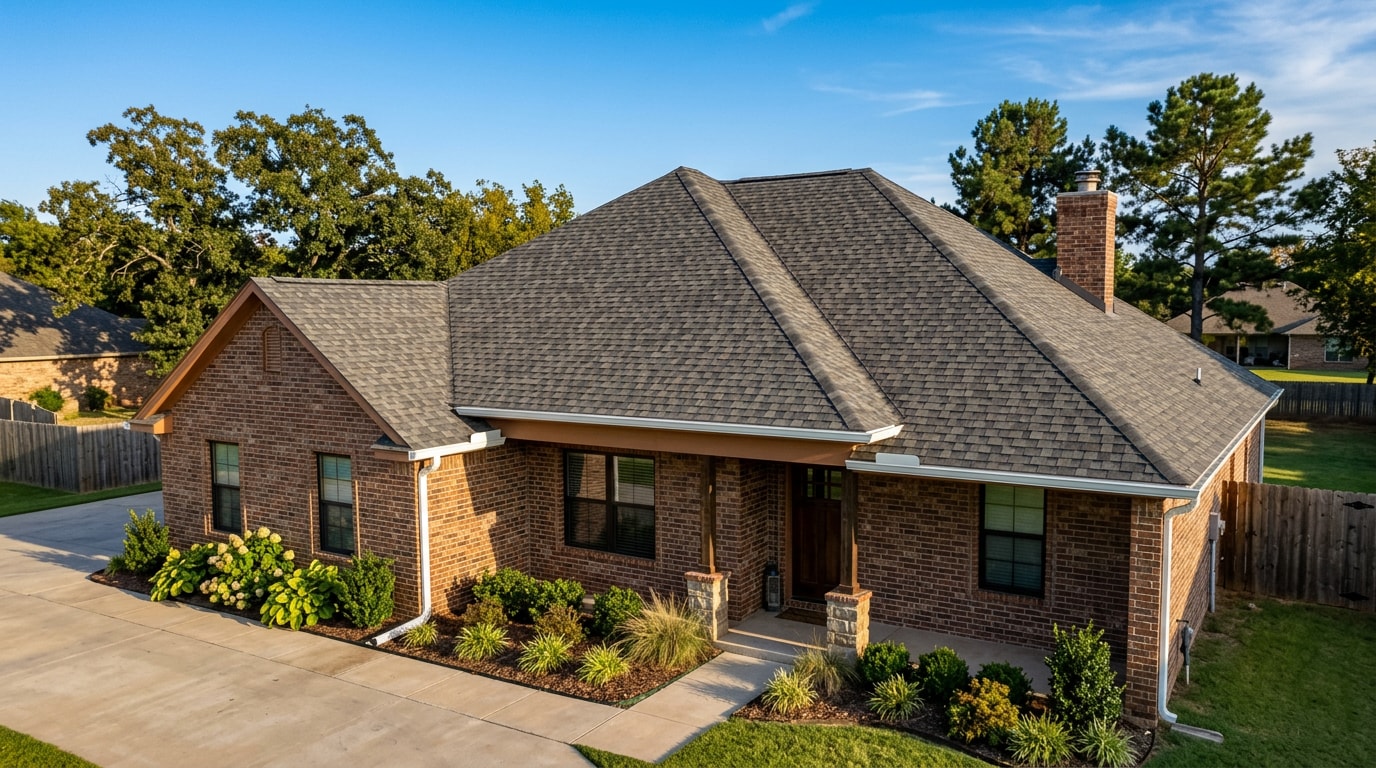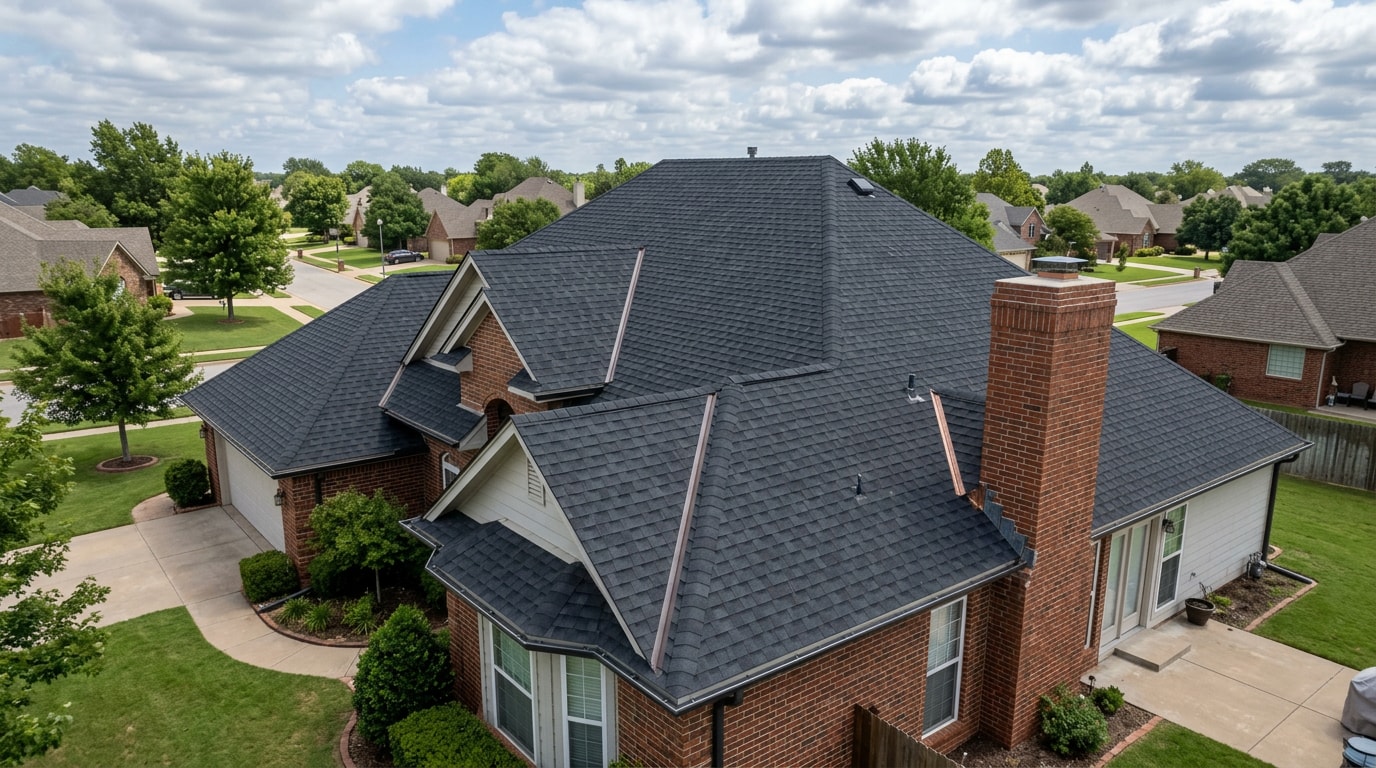
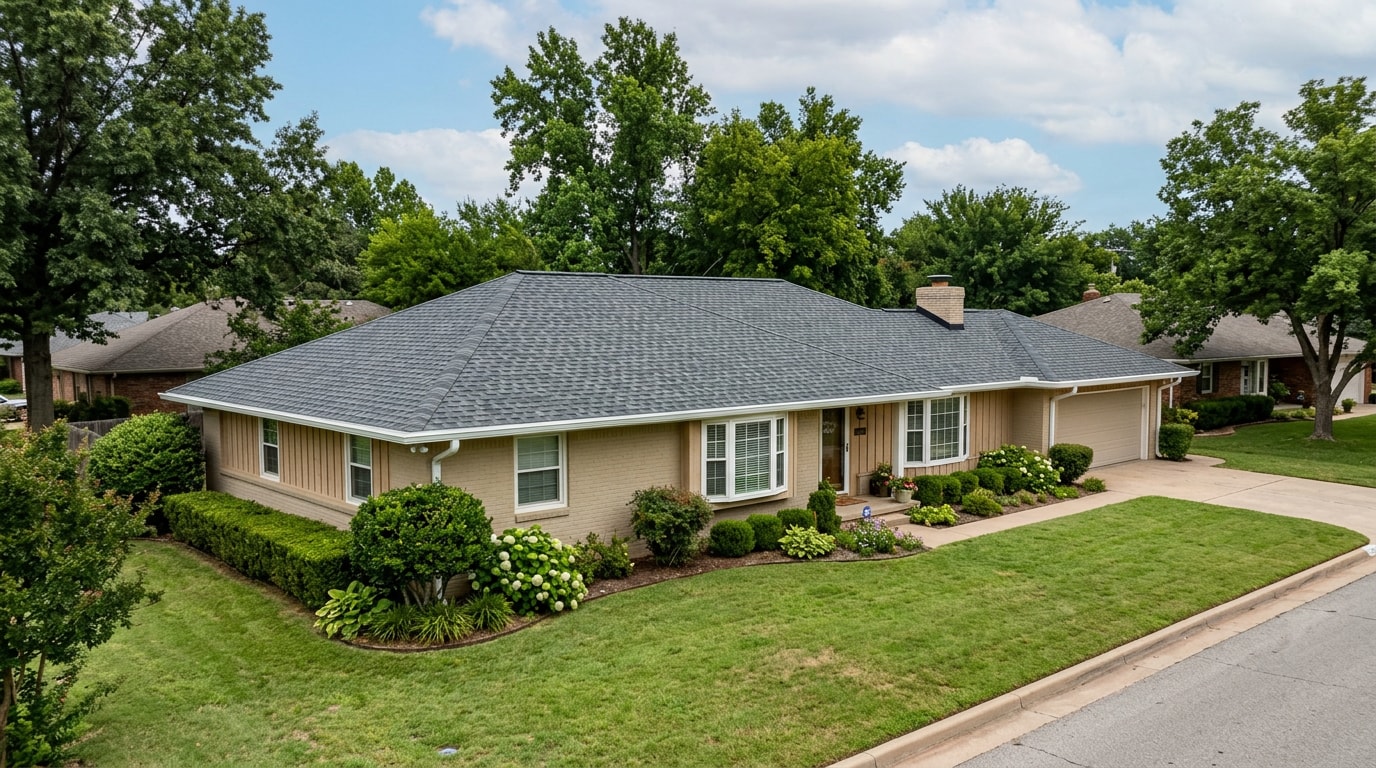
Asbestos roofing in Edmond, OK shows up most often on homes built before 1980, when asbestos-cement shingles were the standard choice for their fire resistance and low cost. An intact roof isn't an emergency, but a cracked or crumbling one is a different problem entirely, and knowing which one you're dealing with changes everything about your next step.
How to Identify Asbestos Roofing on an Edmond Home
Visual inspection can flag a roof as suspicious, but it can never confirm asbestos on its own. Only a lab can do that. Homes across Edmond, OK built before the early 1980s make up most of the local risk pool, since manufacturers phased these products out as regulations tightened.
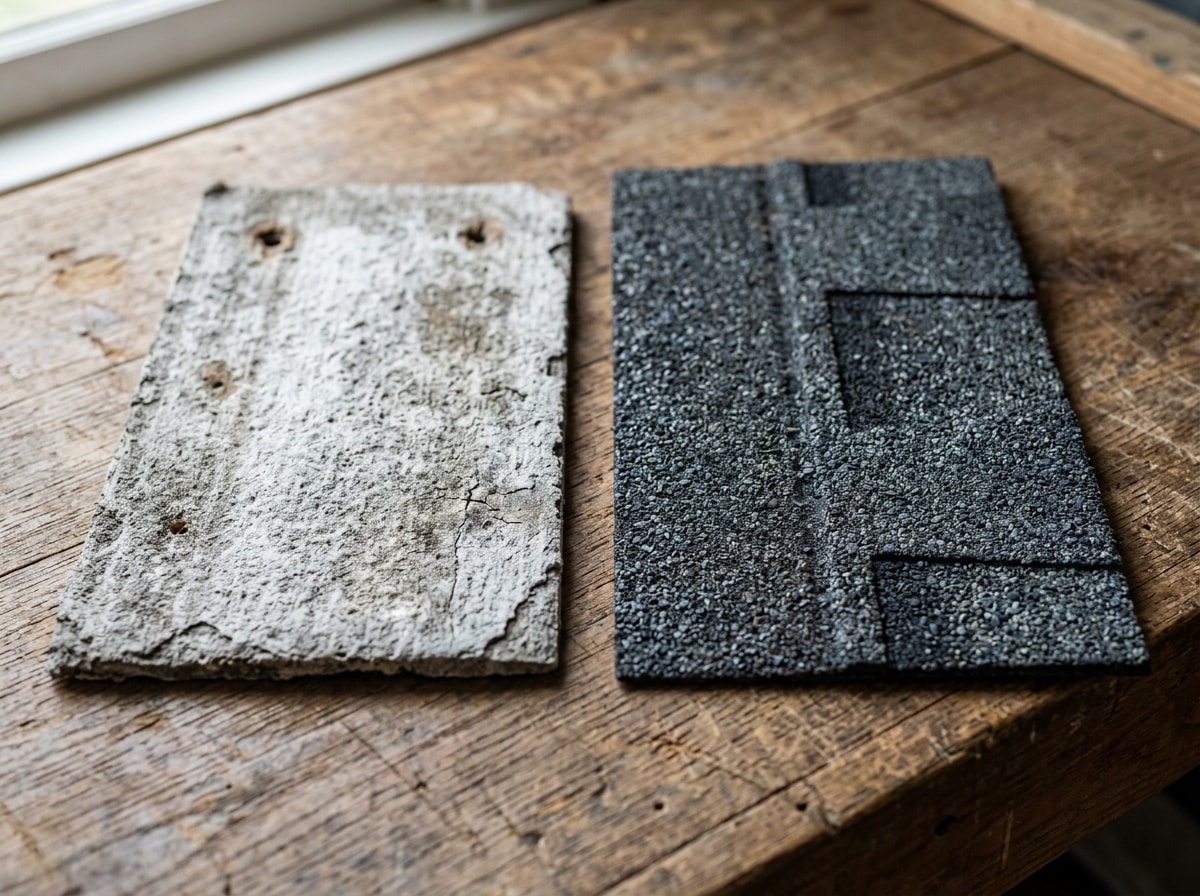
A few physical traits tend to show up together on genuine asbestos-cement roofs:
- Rigid, chalky texture rather than a flexible, pliable surface
- Pre-drilled, perfectly uniform nail holes, instead of hand-nailed spacing
- Flat rectangular tiles or corrugated panels in dull, weathered gray
- Clean, brittle edges that snap rather than bend
A genuine asbestos cement shingle is rigid, gray, chalky to the touch, with chrysotile bonded into a Portland cement matrix and a pre-drilled nail hole pattern that asphalt strip roofing never had. Most asbestos-cement shingles were manufactured with a specific amount of fiber content: asbestos shingles are cement roof tiles bound with 14 to 30 percent chrysotile.
The manufacturing window runs from the 1920s through the EPA 1989 ban on new asbestos products, with peak production between 1944 and 1973 by firms like Johns-Manville and Eternit.
None of these traits confirm anything by themselves, and scraping, sanding, or snapping off a piece to "check" is exactly the wrong move. Asbestos cement roofing, shingles, and siding are not likely to release asbestos fibers unless sawed, drilled, or cut. Disturbing the material is what releases fibers in the first place, so the safer path is a professional sample collected with minimal disruption and sent to an accredited lab.
| Feature | Asbestos-Cement Shingle | Modern Asphalt/Fiber-Cement |
|---|---|---|
| Material feel | Rigid, dense, chalky | Flexible, pliable |
| Color | Dull, weathered gray | Dyed colors, consistent tone |
| Nail holes | Pre-drilled, uniform spacing | Nailed on-site, less exact |
| Shape | Flat rectangles or corrugated panels | Layered strip shingles with texture |
If your Edmond, OK home fits this profile, a professional roof inspection is the right next step before any repair work begins, including arranging the lab sample. For a broader look at what inspectors check on older homes nearby, see our Roofing Inspection Checklist for Piedmont, OK Homeowners.
Is Asbestos Roofing Dangerous? The Real Health Risks
An intact asbestos roof left alone is generally low risk because the fibers are bound tightly inside the cement matrix and aren't airborne. The danger comes from disturbance: cracking, drilling, pressure-washing, or sanding, all of which can break that matrix apart.
This is the friable versus non-friable distinction that matters most. Non-friable material, like an undamaged cement shingle, can't be crumbled by hand and poses minimal exposure risk. Once it becomes friable, cracked, crumbled, or powdered, airborne fiber exposure becomes a real concern. OSHA's construction standard (29 CFR 1926.1101) classifies the removal of asbestos-containing roofing materials as Class II asbestos work, requiring respiratory protection, a regulated work area, and proper disposal.
Long-term inhalation of asbestos fibers is linked to serious illnesses, including mesothelioma, asbestosis, and lung cancer, conditions that typically develop after repeated or prolonged exposure over years, not from passing beneath an intact roof. OSHA establishes strict numeric limits for asbestos exposure on construction sites: the permissible exposure limit is 0.1 fibers per cubic centimeter measured as an 8-hour time-weighted average. That limit applies to workers actively disturbing the material, not to homeowners living beneath an undamaged roof.
Worth noting for freshness: in March 2024, the EPA finalized a ban on chrysotile asbestos, the most common form used in residential products.
That ban affects new manufacturing, not the materials already installed on millions of American homes, so it doesn't change what you do with an existing Edmond roof, but it does signal regulators are paying closer attention to the material overall.
For the exact classification standards contractors must follow, see OSHA's Asbestos Standard for the Construction Industry, 29 CFR 1926.1101 , published on OSHA's official asbestos construction page.
What the Law Actually Requires Before You Touch It
This is the part most homeowner guides skip, and it changes the calculus for a lot of Edmond roofs. Federal regulations regarding renovations or demolitions of asbestos-containing materials do not apply to a homeowner's renovation of their home, according to EPA guidance, though state or local rules may still apply. Hiring a contractor changes the picture, since contractors operate under federal and state rules regardless of who owns the house.
There's also a size threshold under the federal asbestos NESHAP that catches a lot of homeowners off guard: for roofing renovation projects, if the total asbestos-containing roof area undergoing renovation is less than 160 square feet, the NESHAP does not apply, regardless of the removal method used, the type of material, or its condition. That threshold doesn't mean small jobs are automatically safe to DIY. It means the federal notification and disposal rules kick in at a specific size, which is exactly why a licensed contractor who knows both the regulation and safe handling practices is worth the call even on a small repair.
Your Options: Encapsulation, Overlay, or Full Removal
Once asbestos is confirmed, homeowners generally land on one of three paths. Which one makes sense depends on the shingle's condition, friable or still intact, not simply on how old the roof is.
Overlay With New Roofing
When the existing shingles are intact and structurally sound, it's often possible to install a new roofing layer directly over them without disturbing the original material. Lightweight metal roofing is a common overlay choice because it adds minimal weight to the structure.
Local building codes typically cap the number of roofing layers allowed on a single structure, so this isn't always an option regardless of condition. A roof replacement inspection is still needed to confirm the deck can handle the added load and that code allows the extra layer, and proper flashing details matter to avoid trapping moisture against the old material underneath.
Encapsulation
Encapsulation means coating the asbestos shingles with a specialized sealant that locks existing fibers in place rather than removing the material. It's generally the lowest-cost non-removal option available.
Be clear-eyed here: encapsulation manages the hazard, it doesn't eliminate it. The asbestos stays on your roof, coated rather than gone, so future storm damage or repairs could still disturb it down the road. It works best as a short-to-medium-term solution and typically needs reapplication over time as the coating wears.
Full Asbestos Abatement and Replacement
Full removal becomes necessary when the material is already deteriorating, friable, or when code requirements conflict with an overlay approach. This is also the only real option once you're ready to fully replace the roof rather than manage around the old material.
This work should always be handled by a licensed asbestos contractor trained in containment and disposal procedures, never as a DIY project. Full abatement is, by a wide margin, the highest-risk activity in this entire process, since it directly disturbs material that was otherwise stable. A full roof replacement typically follows immediately after abatement, since the old deck is already exposed.
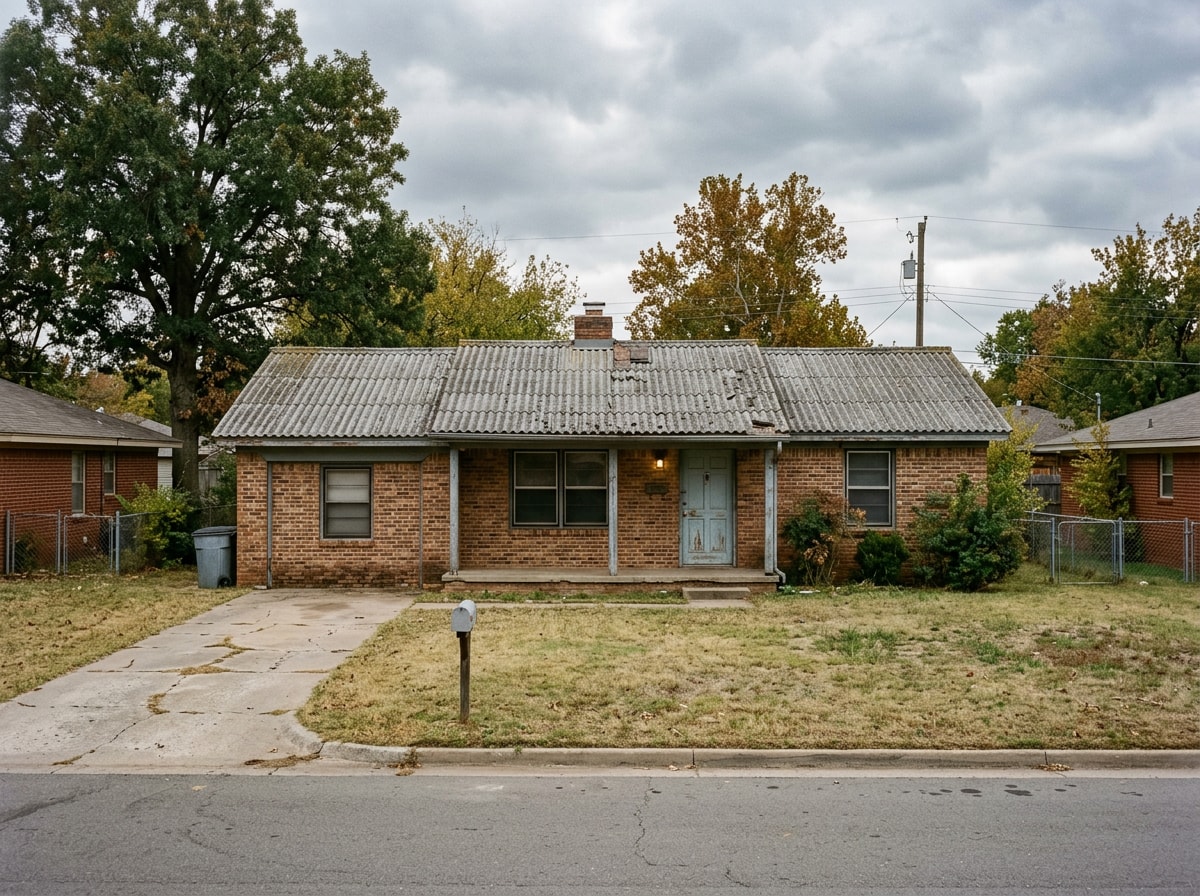
In our own inspections across Edmond's older neighborhoods, brittle, cracked cement shingles are consistently the detail that pushes a homeowner from "monitor it" to "replace it." A roof that's still rigid and uncracked rarely needs anything more than a watchful eye.
Cost to Remove or Replace an Asbestos Roof in 2026
Pricing varies by roof size, accessibility, and how friable the material already is. Homeowners identify and test suspect roofs, then choose between management in place, encapsulation, or a $8,000 to $20,000 full abatement on a typical residential project nationally, a range that tracks with what most Edmond-area homeowners should expect to budget for a complete tear-off.
| Service | Typical 2026 Cost Range |
|---|---|
| Professional lab testing | $300–$600 per sample |
| Encapsulation | $3–$6 per sq. ft. |
| Full abatement (removal only) | $8–$15 per sq. ft. |
| New roof installation after removal | $4–$9 per sq. ft. |
These are general industry ranges, not a quote, since disposal fees, roof pitch, and access all move the number. Disposal fees alone can add a meaningful chunk to the total, since asbestos waste has to go to approved facilities rather than a standard landfill. For a project-specific number on your Edmond home, get a free estimate rather than guessing from a table.
FAQ
Do I have to remove an asbestos roof?
No, not if it's intact and undisturbed. An asbestos roof in good condition can often be left in place or managed with encapsulation. Removal becomes necessary when the material is failing, visibly damaged, or when you're ready to replace the roof outright.
Can I remove asbestos shingles myself?
Technically, federal rules exempt a homeowner's own renovation of their own home in many cases, but state and local ordinances often restrict or require permits for this work anyway. Given the health risks and the fall hazard on a brittle roof, hiring a licensed asbestos contractor is almost always the safer route.
Can you put a new roof over asbestos shingles?
Often, yes, if the existing shingles are intact and local building code permits the additional layer. See the overlay section above for when this approach works and when it doesn't.
How long do asbestos shingles last?
Asbestos-cement shingles typically last 30 to 50 years, and plenty are still functioning well past that mark. Age alone isn't the danger signal. Visible brittleness, cracking, or crumbling is what actually indicates rising risk, so inspect for condition rather than counting years.
Is it safe to pressure wash an asbestos roof?
No. Pressure washing is one of the fastest ways to pulverize the cement matrix and release fibers. Avoid pressure washing, walking on brittle tiles, or any abrasive cleaning on a suspected asbestos roof.
Does homeowners insurance cover asbestos roof removal?
It depends on your policy and why removal is needed. Storm-damage-triggered removal is more likely to have some coverage than routine age-related deterioration, so check with your carrier before assuming either way.
If you're weighing your options for a roof in Edmond, OK that might contain asbestos, the team at AH Roofing & Contracting can walk through inspection, overlay, and replacement paths for your specific roof. Contact us for a free estimate before any work begins.