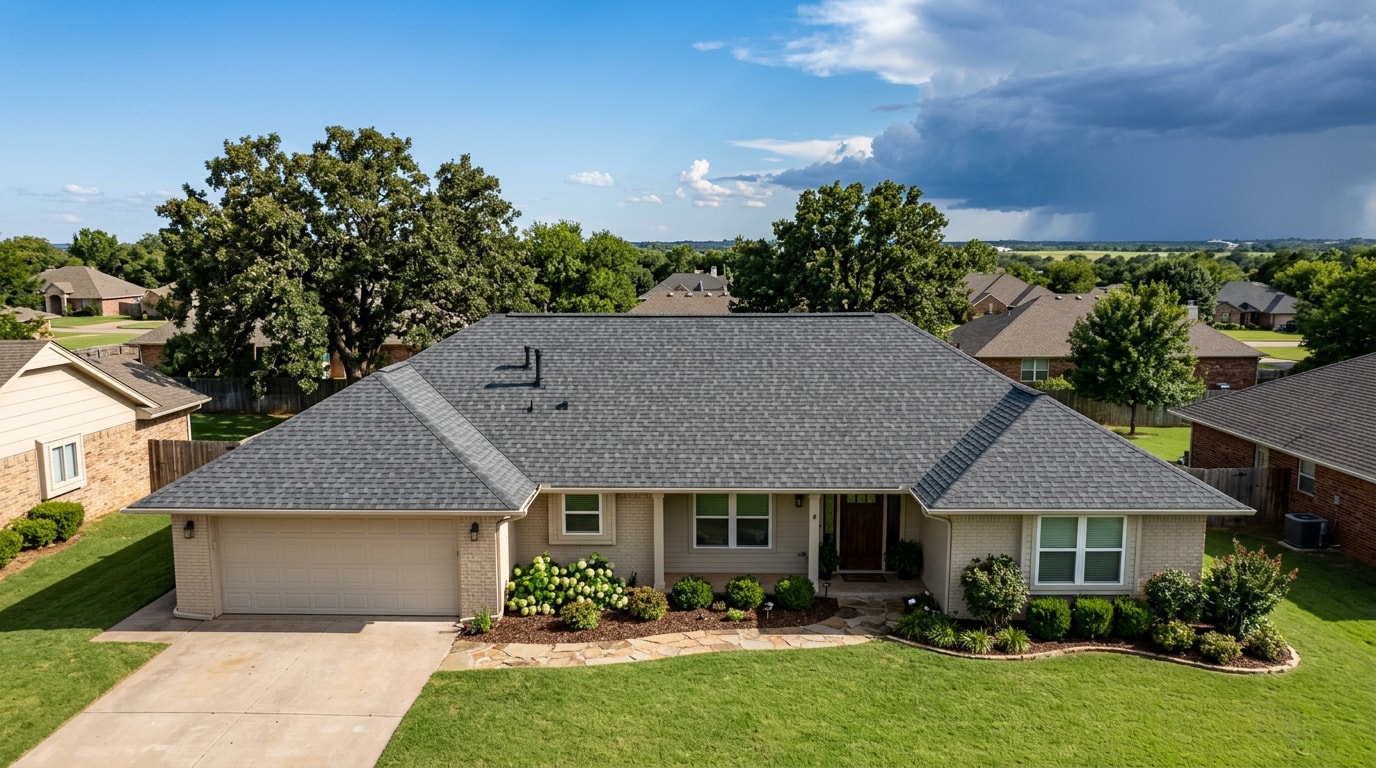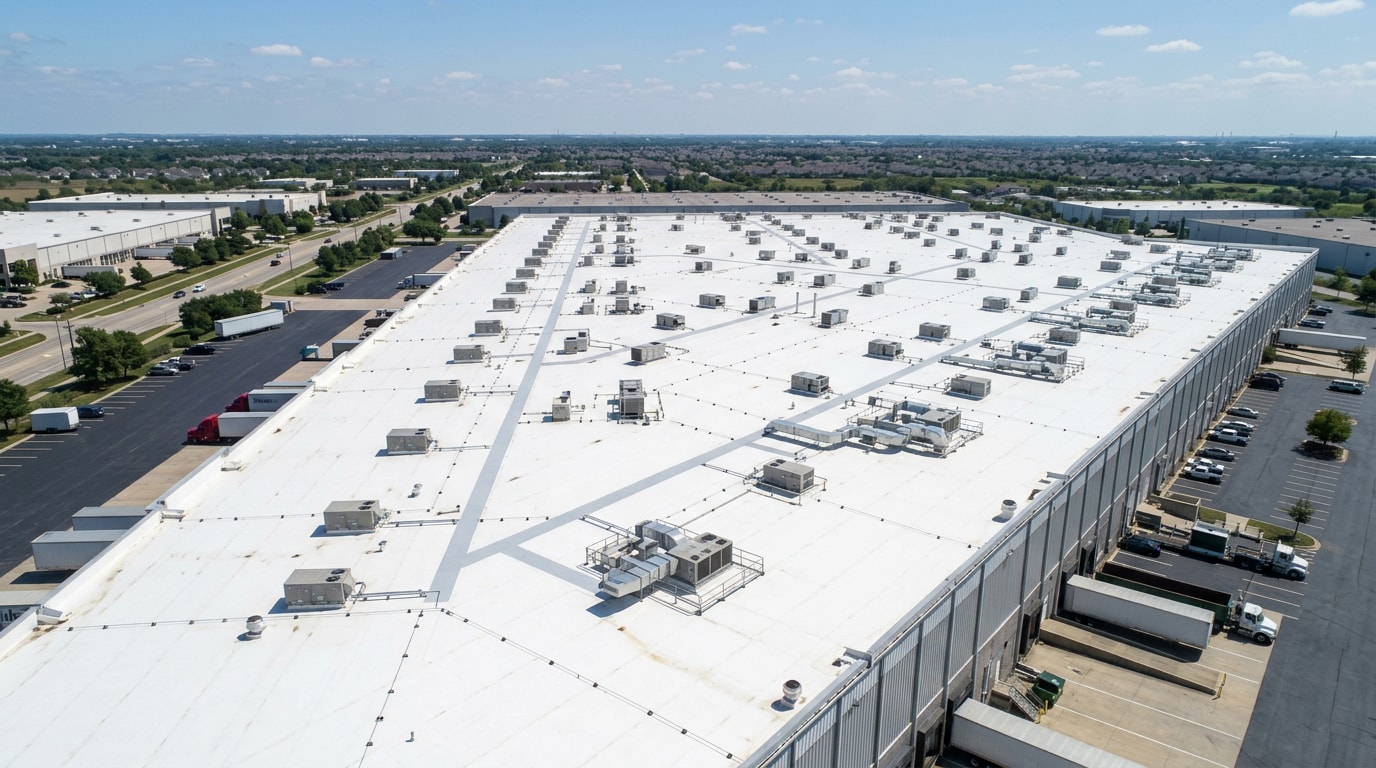
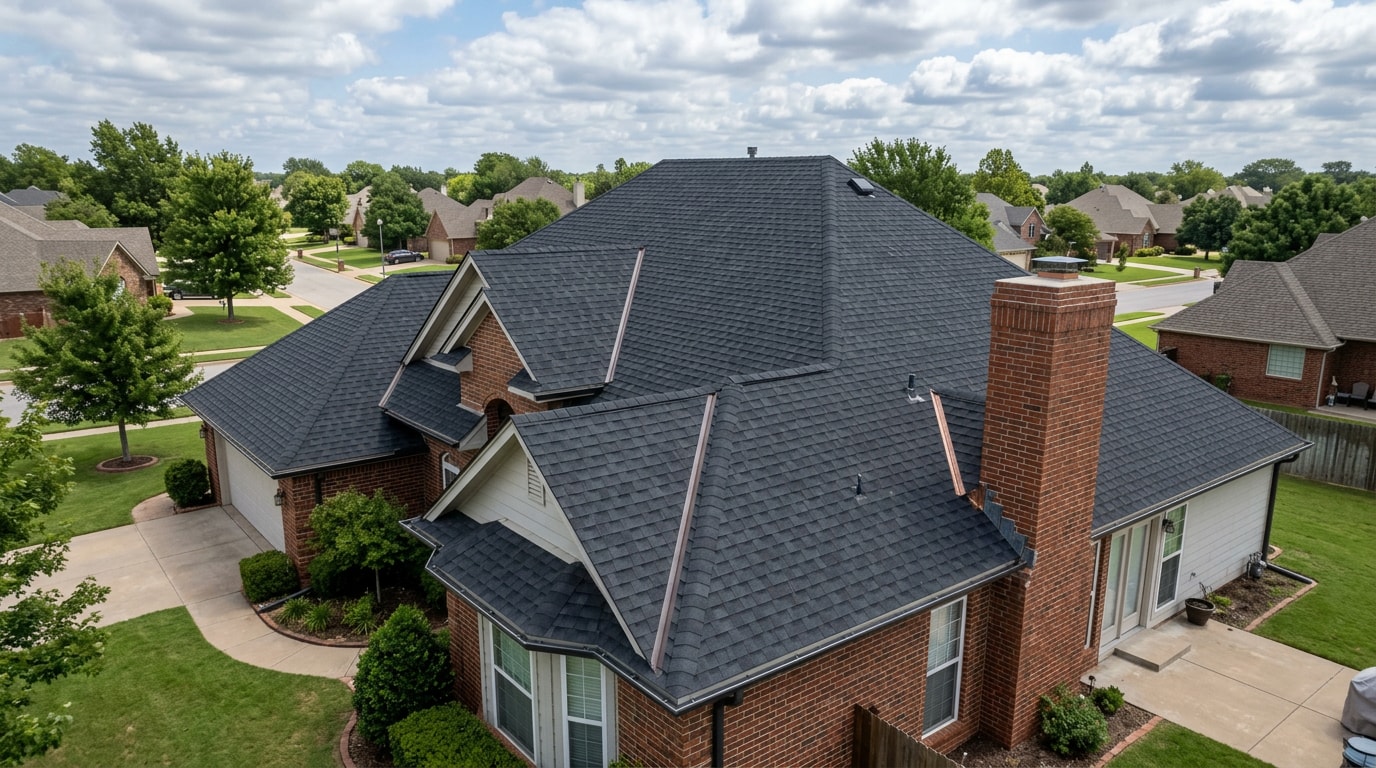
A roofing inspection checklist Piedmont, OK homeowners can actually rely on has to account for one thing most generic guides skip: this part of Oklahoma takes a harder beating from hail and wind than almost anywhere else in the state. Our crews walk Piedmont roofs every storm season, and the damage pattern is almost always the same, small, easy-to-miss wear that turns into a leak the next time a hailstorm rolls through. Below is the exact sequence we use, broken into ground-level, exterior, and attic steps you can run yourself before calling in a professional.
Why Piedmont Roofs Fail Between Inspections
Roofs in the OKC metro rarely fail from one dramatic event. More often, small weaknesses sit unnoticed for months.
A lifted shingle edge. A hairline crack in flashing sealant. A clogged gutter. Then a spring hailstorm or a 60 mph wind gust finds that weak spot and turns it into a leak.
Piedmont sits in Oklahoma's wind and hail corridor, which means roofs here face more cumulative stress than a roof in a milder climate. That's exactly why a seasonal inspection matters more than a one-time look after move-in day. If you'd rather have a licensed crew run the checklist for you, our Piedmont, OK roofing team handles this exact walkthrough on every service call.
Step-by-Step Roof Inspection Checklist
Work through this checklist in order: confirm your safety setup, scan from the ground, inspect the exterior surface closely, then finish inside the attic.
Safety First
Before you touch a ladder, check three things.
- The ladder is on firm, level ground.
- Weather is calm and dry, not windy or wet.
- Someone else is home in case you need help.
Wet shingles and gusty days turn a routine inspection into a fall risk fast. Steep-pitched or multi-story roofs should be left to a professional with proper fall protection. Ladders should be inspected by a competent person for visible defects on a periodic basis and after any occurrence that could affect their safe use , and side rails should extend at least 3 feet above the landing surface you're climbing onto , standards worth reviewing in OSHA's ladder safety regulation before attempting any DIY roof work.
Initial Visual Inspection from the Ground
Start with binoculars and both feet planted on solid ground. Walk the perimeter of your house and scan the roofline for sagging, missing shingles, or debris piles near valleys and vents.
Check your gutters from below too. Look for them pulling away from the fascia or sagging under weight. This ground-level pass takes about ten minutes and often tells you whether a closer look is even necessary. A sagging roofline, especially, warrants prompt follow-up rather than a wait-and-see approach.
Exterior Roof Inspection
An exterior inspection means closely examining the roofing material itself, plus every chimney, skylight, vent, and gutter attached to it. You're checking each for cracks, gaps, corrosion, or displacement that could let water in. What you look for changes depending on your roof material.
| Roof Material | What to Inspect | Red Flags |
|---|---|---|
| Asphalt shingle | Tab edges, granule coverage, nail pops | Curling, bald patches, exposed nail heads |
| Metal panel | Seams, fastener heads, panel edges | Rust streaks, loose screws, oil-canning |
| Flat/TPO membrane | Seams, flashing boots, ponding areas | Blistering, standing water, seam separation |
Across all three, flashing around chimneys, skylights, and vent pipes deserves extra attention, it's the single most common failure point on any roof type. Gutters and downspouts should also be checked for granule buildup, which often signals shingle wear upstream. For a closer look at what a professional inspection covers, see our roof inspection services page.
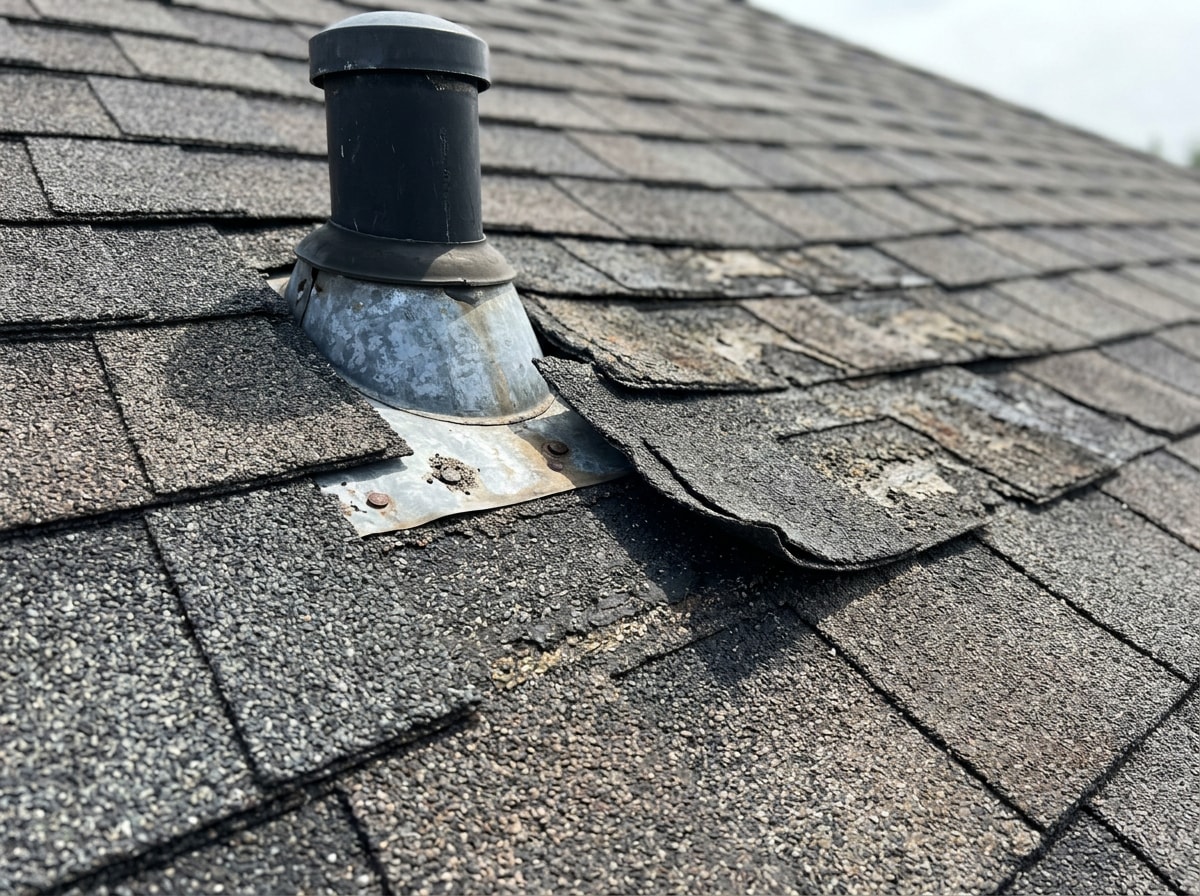
Flashing & Penetrations
Flashing is the thin metal that seals joints around chimneys, vent pipes, and roof valleys, and it fails more often than the shingles around it. Look for rust spots, visible gaps between the flashing and roof surface, and tar patches, which usually mean a previous repair didn't hold.
Interior water stains directly below a chimney or skylight almost always trace back to failed flashing rather than the shingles themselves. Flashings must be installed at wall and roof intersections, wherever there is a change in roof slope or direction, and around roof openings , a baseline worth knowing before you judge whether what you're seeing is normal or a code issue. The full requirements are laid out in the International Residential Code's roof flashing provisions.
Gutters and Drainage Systems
Gutters do more than catch rainwater, they protect your fascia, foundation, and landscaping from erosion. Staining or dark streaks on the fascia board usually mean water has been overflowing rather than draining properly.
Check for downspouts that are rusted, disconnected, or dumping water right next to the foundation instead of away from it. Pooling water near the base of your house is often a drainage problem that started at the roofline, not a foundation issue on its own. If your gutters are the culprit, gutter cleaning and a gutter maintenance plan usually solve it faster than a roof repair does.
Signs of Hail or Wind Damage
Hail damage shows up as dark, bruised-looking spots on shingles where granules have been knocked loose, often alongside cracked or torn tabs. Wind damage looks different: creased shingles, lifted edges, or shingles missing outright near ridgelines and roof corners.
Dented gutters, vents, or AC units nearby are a quick clue that a storm hit hard enough to affect the roof too, even if the shingle damage isn't obvious from the ground. Granule loss alone doesn't always mean urgent repair is needed, but it's worth tracking over time since it signals accelerated aging. If a storm just passed through and you suspect damage, don't wait on it, our emergency roof repair line exists for exactly this. For a breakdown of what storm repairs actually cost in this market, see our guide to roof restoration and storm damage costs in Owasso.
Roof Ventilation
Poor attic ventilation traps heat and moisture, and over time that combination warps decking, rots framing, and shortens shingle life from underneath. Missing or blocked ridge vents are easy to miss since they're rarely visible from the ground.
Inside the attic, hot, stuffy air or visible mold on the underside of the decking both point to airflow problems. Controlling moisture and ventilation in your attic is a key part of building a durable attic , according to the Department of Energy's attic durability guidance, and it affects more than comfort, it affects how long your roof deck lasts.
Interior Roof Inspection
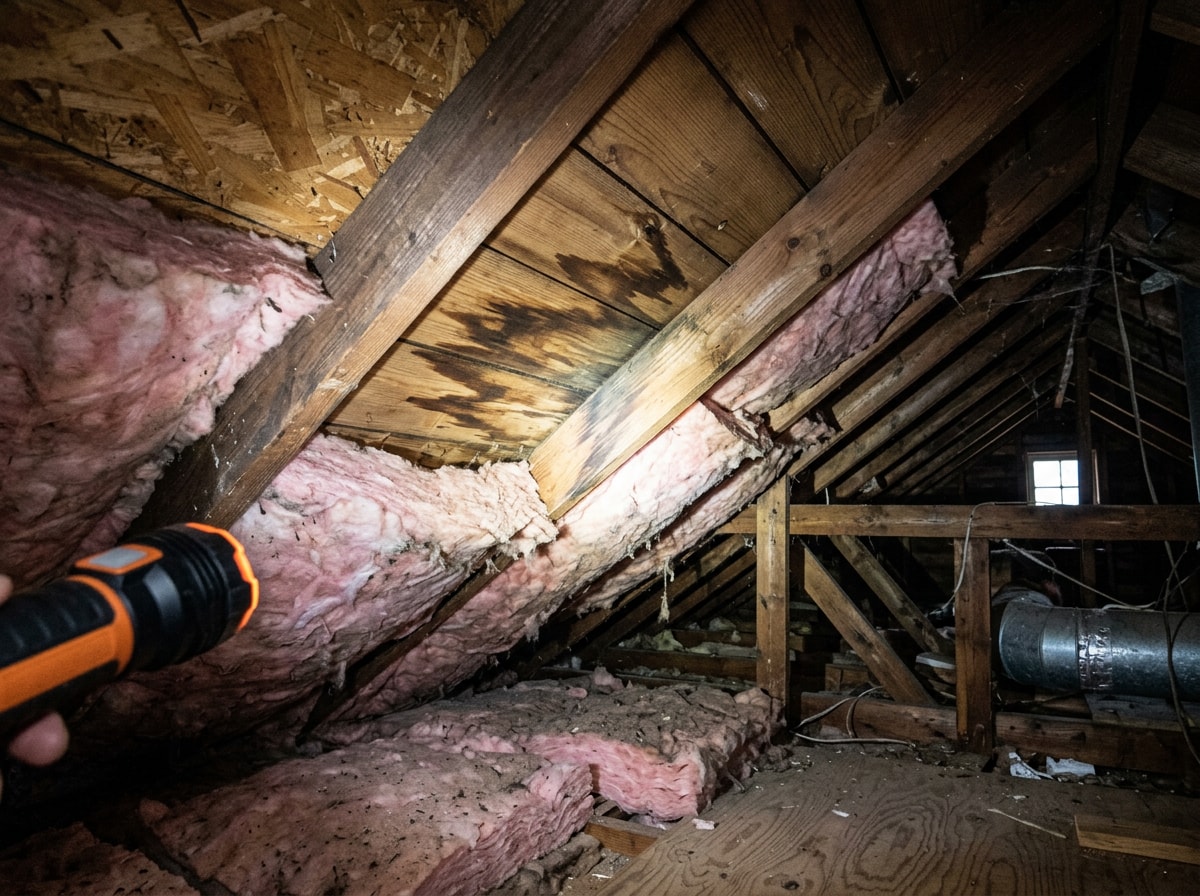
Finish inside the attic, checking for water stains on the underside of the decking, damp or compressed insulation, and daylight visible through gaps where there shouldn't be any. These signs often show up well before a leak ever appears on your ceiling.
While you're up there, press gently on the decking between rafters. A spongy feel suggests water damage weakening the wood underneath, worth flagging for a closer structural look. Back inside the house, scan ceilings and upper walls for brownish rings or soft spots, since those usually trace back to a roof issue rather than plumbing. If the decking is compromised, patch repairs won't hold long and it's time to talk roof replacement instead.
How Often to Run This Checklist
| Timing | What to Focus On |
|---|---|
| Spring | Winter wear, flashing seals, moisture buildup |
| Fall | Pre-winter readiness, gutter function |
| After any major storm | Shingle damage, dents, debris, granule loss |
| Annually (minimum) | Overall condition, attic signs, aging components |
Piedmont, OK Permit and Inspection Requirements
This is the part most roofing checklists miss entirely: if you're replacing or significantly repairing a roof inside Piedmont city limits, the city itself requires an inspection, separate from anything your contractor does.
Piedmont's Community Development department handles this through an online request form, and all inspections must be submitted at least 24 hours before an inspection is scheduled , with no same-day scheduling available. If an inspection fails, all re-inspections must be scheduled in-house due to a $50 payment needed before an inspection can be scheduled .
That fee and lead time catch a lot of homeowners off guard mid-project. You can review the current process directly on Piedmont's roofing inspection request form before you schedule any replacement work.
Documentation and Reporting Standards
Every pass through this checklist is more useful if you write it down and photograph what you find. A dated log with photos gives you a record to compare against next season, and it becomes essential if you ever file an insurance claim or sell the house.
Insurance adjusters and future buyers both respond better to documented history than to a verbal "it's been fine." If anything on this checklist raises a concern, get a second opinion. Get a free estimate from a licensed roofer before small damage turns into a bigger repair bill.
FAQ
How much does a roof inspection cost?
Many roofing contractors, including ours, offer free visual inspections, especially after storms. If you hire an independent inspector for a detailed written report, expect a modest flat fee, generally well under what a single repair would cost. Free inspections are the right starting point for most homeowners; paid, detailed reports make more sense before a home sale.
How long does a roof inspection take?
A standard residential inspection usually takes 30 to 60 minutes for one person working alone. Multi-level roofs or homes with storm damage can take longer, especially when attic access and interior checks are included.
How often should you get a roof inspection?
Twice a year, once in spring and once in fall, plus an extra check after any major hailstorm or windstorm. Given how often Oklahoma sees severe spring weather, skipping the after-storm check is one of the most common mistakes homeowners make.
What do you check during a roof inspection?
Shingle or panel condition, flashing around chimneys and vents, gutter and downspout function, attic ventilation, and interior signs like water stains or damp insulation. Together, these checks reveal both surface damage and the slower, hidden problems that don't show up until a leak appears.
Does Piedmont, OK require a permit or inspection for roof work?
Yes. Roofing work inside Piedmont city limits goes through the city's permit and inspection process, and inspection requests must be submitted through the city's online form at least 24 hours in advance. A licensed local contractor can usually coordinate this scheduling for you.
Can I inspect my own roof, or should I hire a professional?
A ground-level and attic check is safe for most homeowners to do themselves. Climbing onto the roof itself, especially a steep or multi-story one, is where it's worth calling in a professional with the right fall protection and experience reading Oklahoma-specific storm damage. Visit our homepage to see the full range of roofing, gutter, and exterior services we handle across the Piedmont area.