Built-up roofing in Edmond, OK is still one of the toughest options for flat and low-slope commercial buildings, built from alternating layers of bitumen and reinforcing ply instead of a single rolled membrane. This guide breaks down what's actually inside a BUR system, what it costs per square foot in 2026, and how it holds up against TPO and EPDM on an Oklahoma roof deck. If you own or manage a commercial building in the Edmond area, here's what to know before you sign a proposal.
Visit A&H Roofing And Contracting to see our services and request a free estimate.
What Is Built-Up Roofing?
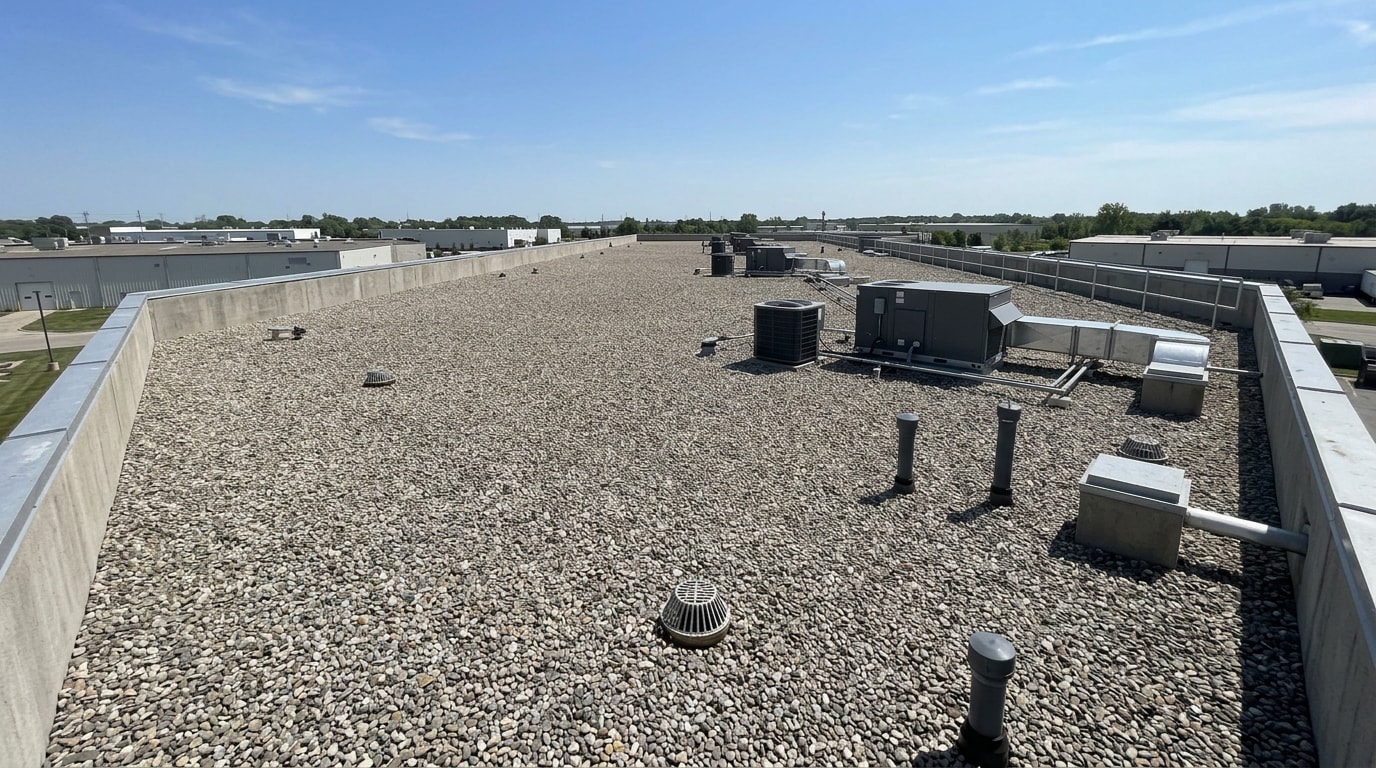
Built-up roofing, often shortened to BUR, is a flat or low-slope roofing system built from multiple layers of waterproof material. Crews alternate bitumen with reinforcing ply sheets over insulation board, building up the roof one pass at a time until it forms a thick, continuous membrane. It's common on commercial, industrial, and apartment buildings with low-slope or flat decks.
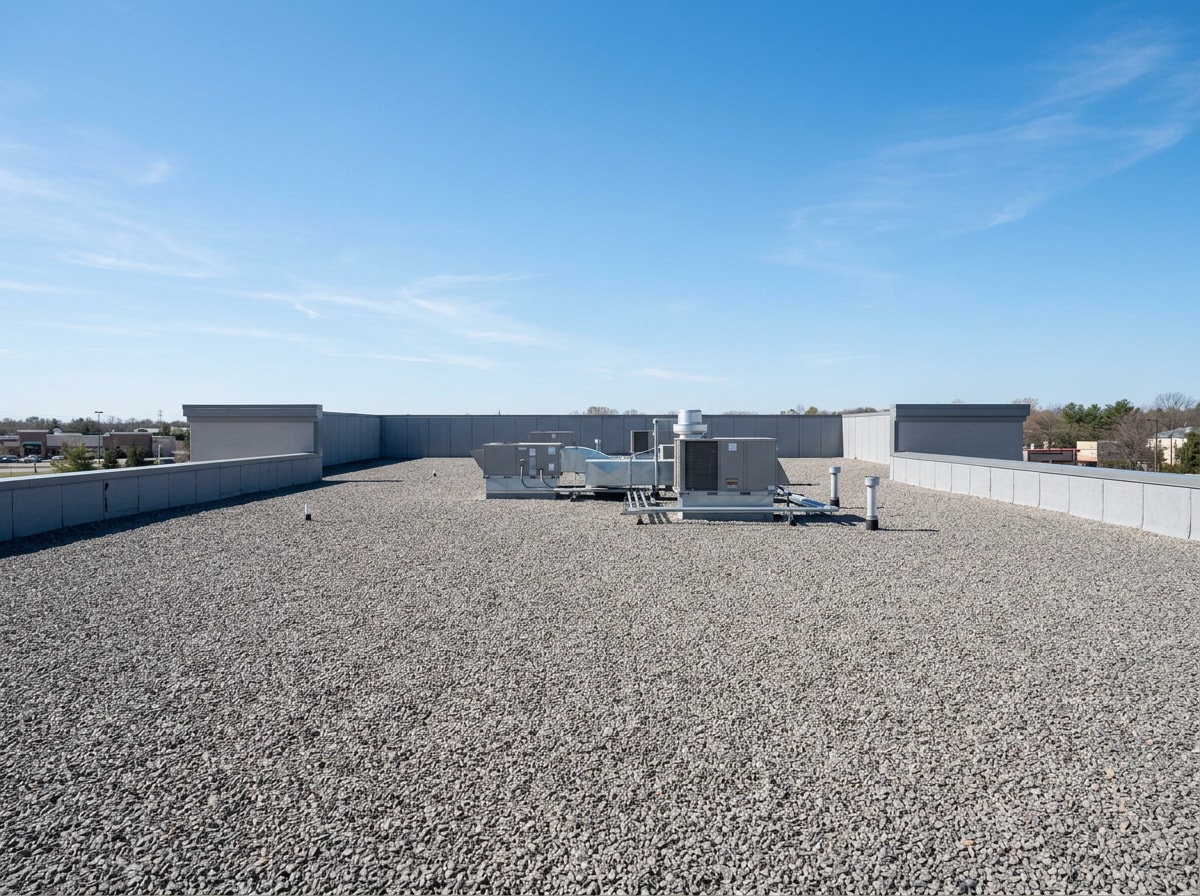
That layering process is also where the nickname comes from: a tar and gravel roof. Gravel is typically embedded into the top layer to protect the bitumen underneath from UV exposure and foot traffic.
Layers of a Built-Up Roofing System
BUR isn't one product, it's an assembled system, and that's what gives it strength. Each layer plays a distinct role, and together they create a seamless, waterproof membrane across the entire roof surface.
A standard built-up roof is layered in this order:
- Insulation board sits directly on the deck, providing thermal performance and a stable base for everything above it.
- A base sheet anchors the system to the deck and gives the ply sheets something to bond to.
- Alternating bitumen and ply sheets, usually three to five plies, with each added layer improving puncture resistance and waterproofing.
- A surfacing layer of gravel, mineral granules, or a reflective coating that shields the bitumen from UV exposure and adds fire resistance.
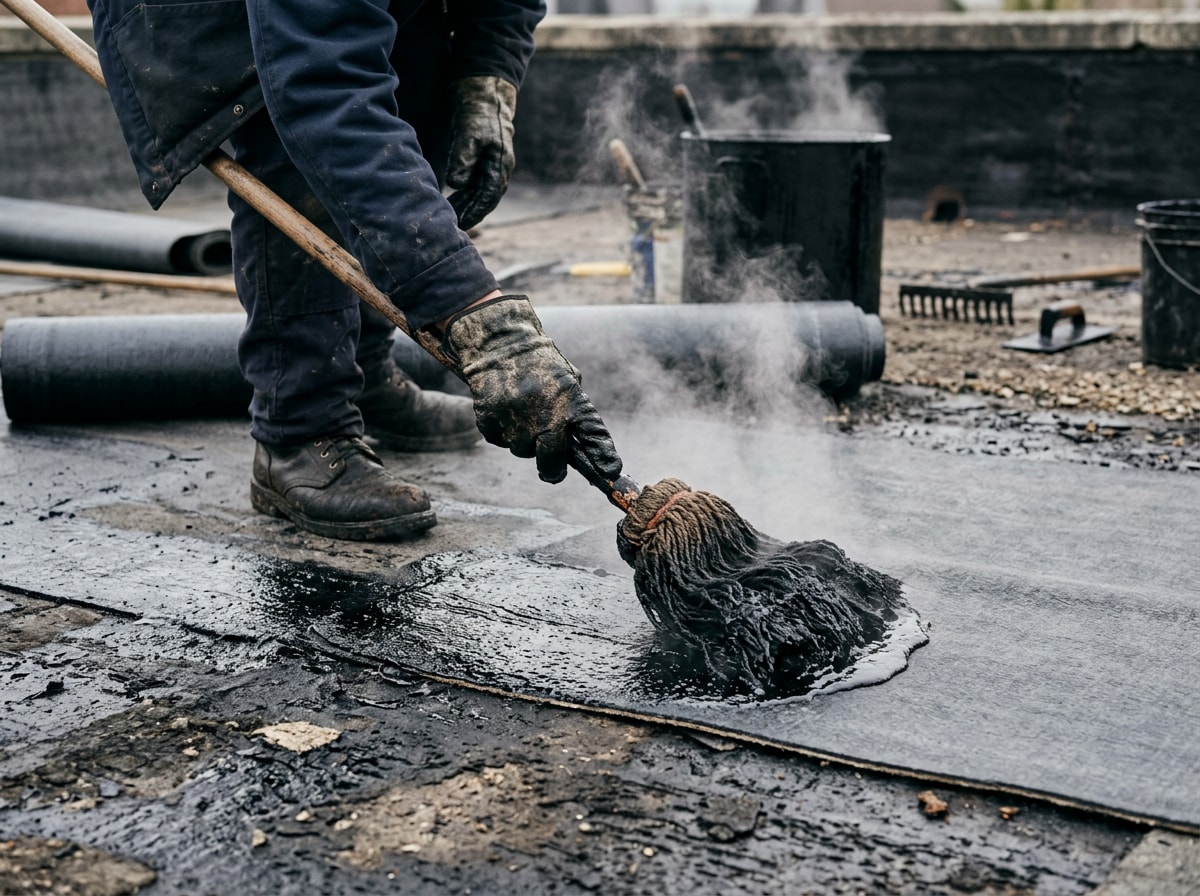
Hot-applied bitumen is still common on BUR jobs, and it comes with real health and fire risks if it's handled wrong. Asphalt fumes cause health effects such as headaches, nausea, and drowsiness, and are also linked to lung cancer. That's one reason BUR installation isn't a DIY-friendly project, and why it's worth hiring a crew that follows current safety practices for hot-applied roofing, like the ones outlined in NIOSH's toolbox talk on asphalt fumes in roofing operations.
Built-Up Roofing Cost Guide: Prices Per Square Foot in 2026
Built-up roofing costs between $3.50 and $10.00 per square foot installed, depending on ply count, insulation thickness, and surfacing choice. Most local commercial buildings pricing built-up roofing in Edmond, OK fall in the $5.50 to $8.50 per square foot range for a standard tar and gravel system. On a 10,000-square-foot roof, that works out to roughly $55,000 to $85,000 installed.
Ply count is the biggest cost driver, and it also determines how long the roof should last.
| Ply Count | Cost Per Sq Ft | Expected Lifespan |
|---|---|---|
| 3-ply | $3.50 – $5.50 | 15 – 20 years |
| 4-ply | $5.00 – $7.50 | 20 – 25 years |
| 5-ply (gravel) | $6.00 – $10.00 | 25 – 40 years |
These figures shift based on roof access, existing deck condition, and local labor rates, so treat them as planning numbers rather than a fixed quote. Request a free estimate for pricing specific to your building.
Advantages of Built-Up Roofing
BUR's biggest advantage is durability under abuse. Foot traffic, dropped tools, and wind-blown debris that would puncture a single-ply membrane barely affect a properly installed BUR system, because the whole surface functions as one continuous membrane with no exposed laps to fail.
That strength comes with a trade-off: gravel surfacing makes leaks harder to spot and pinpoint than on a smooth single-ply membrane, so routine inspections matter more with BUR than with some newer systems.
It's also worth thinking past the install-day quote. Industry guidance on built-up roof design emphasizes a life-cycle costing approach, warning against shortsighted first-cost economies that can cause premature failure and much higher long-term roofing costs. In plain terms: the cheapest 3-ply bid isn't always the cheapest roof over 20 years. A roof inspection before and after installation helps catch the ponding, blistering, or seam issues that shorten a BUR system's life.
Built-Up Roofing vs. Other Flat Roof Systems
BUR tends to perform best on large, flat commercial roofs, where its thick, multi-ply construction creates a redundant, durable membrane. Here's how it stacks up against the other systems most contractors quote today.
| System | Typical Cost/Sq Ft | Lifespan | Installation | Best For |
|---|---|---|---|---|
| Built-Up (BUR) | $3.50 – $10.00 | 15 – 40 years | Hot or cold bitumen, multiple plies | Foot traffic, hail resistance, re-covers |
| Modified Bitumen | $4.00 – $8.00 | 15 – 20 years | Torch, cold-adhesive, or self-adhered | Mid-range redundancy |
| TPO | $4.50 – $8.50 | 15 – 25 years | Heat-welded single-ply | Fast installs, reflectivity |
| EPDM | $4.00 – $7.50 | 15 – 25 years | Adhered or mechanically fastened | Budget-friendly, simple repairs |
Many contractors now quote TPO or EPDM first for new installs, mainly because single-ply systems go down without hot work or open flames. Even so, BUR still gets specified where redundancy and hail resistance matter most, or when a building owner is re-covering an existing tar-and-gravel roof and wants a familiar, proven system.
Where Built-Up Roofing Works Best
A built-up roof fits flat and low-slope buildings that need a durable, fire-resistant system more than they need the fastest install. It's especially common on these property types across the Edmond metro:
- Warehouses, manufacturing facilities, and big-box retail with wide-open roof decks and routine maintenance traffic
- Older commercial buildings being re-covered, since matching an existing BUR system avoids compatibility issues that can surface with a different membrane
- Apartment complexes and schools with flat roof sections, largely for the fire-resistance rating and track record in hail-prone climates
If you're weighing BUR against a metal or shingle retrofit for a mixed-slope building, our guide on metal roofing underlayment in Edmond, OK covers how code requirements change by roof type.
Is Built-Up Roofing Still Used Today?
BUR is still specified today, though it's no longer the automatic default for new flat-roof construction. Many contractors now quote single-ply systems first for speed, but BUR still gets chosen for redundancy, hail resistance, or when matching an existing tar-and-gravel roof, all relevant considerations given Edmond's storm exposure.
One point we see trip up building owners: the idea that a blanket "25% rule" forces a full tear-off nationwide. The model codes most states adopt, the International Residential Code and International Existing Building Code, contain no 25 percent whole-roof trigger. What does apply almost everywhere is simpler: a roof recover generally isn't allowed if the roof is already carrying multiple layers or if the deck is wet or deteriorated. Code restricts recovering where the existing roof has two or more applications of any type of roof covering, or where the existing roof covering is water soaked or deteriorated to the point that it's not adequate as a base for additional roofing. That's spelled out in the International Existing Building Code's reroofing provisions, and it's exactly what a roof replacement estimate should check before quoting a re-cover over full tear-off.
For more on how BUR assemblies are supposed to be built and inspected, NRCA's manual on built-up roof systems is the industry reference most specifiers still work from.
A licensed roofing contractor serving the Edmond, OK area can tell you quickly whether your building qualifies for a re-cover or needs a full tear-off. Get a free estimate before budgeting either option.
FAQ
What is another name for built-up roofing?
Built-up roofing is often called a "tar and gravel roof" because of its typical gravel-embedded top layer. The name describes both the appearance and the aggregate surfacing most commonly used to protect the bitumen layers underneath.
What is the average cost of replacing a roof in Oklahoma?
Commercial roof replacement costs in Oklahoma generally track close to national averages, though hail and wind exposure can push pricing toward the higher end. For a built-up roof specifically, that usually lands in the $5.50 to $8.50 per square foot range, with gravel surfacing adding hail resistance that's worth the cost in this climate.
How long does a BUR roof last compared to single-ply systems?
BUR roofs typically last 20 to 40 years, with many well-maintained systems exceeding 30 years. Single-ply membranes like TPO or EPDM commonly run 15 to 25 years. Material quality, installation, and climate affect real-world results for either system.
Can you put a new flat roof over an existing BUR system?
Re-covering an existing BUR roof is often possible if the system is dry, structurally sound, and not already carrying multiple roof layers. A roof inspection should confirm moisture content and deck condition first, since building over a wet or failing BUR system traps problems instead of solving them.
Can a built-up roof be repaired instead of replaced?
Yes, localized BUR issues like blistering, splitting, or a failed seam can usually be patched without a full tear-off. Once deterioration spreads across a large share of the roof or the deck is compromised, roof repairs stop making financial sense and a recover or replacement becomes the better option.
How often should a BUR roof be inspected?
Twice a year is standard, typically spring and fall, plus a check after any major hail or wind event. Because gravel surfacing hides leaks better than a smooth membrane, catching ponding water, blistering, or loose gravel early is what keeps a BUR roof hitting its full 25 to 40-year lifespan.
About the Author
This guide was written with input from Chris Archer, owner of A&H Roofing & Contracting, who brings over 26 combined years of roofing experience to commercial and residential projects across Edmond and the greater Oklahoma City area. Contact our team with questions about a specific building or roof system.