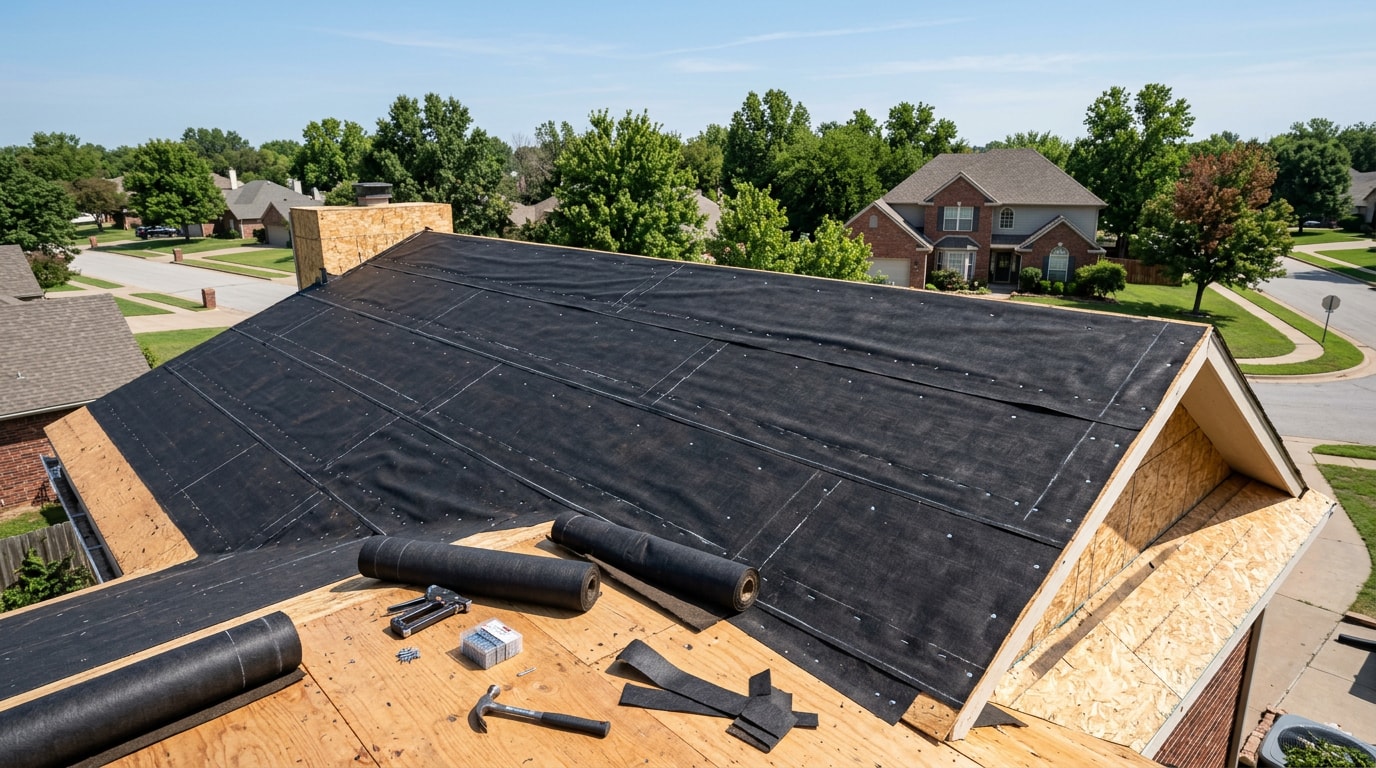
Felt paper for roofing Tulsa, OK homeowners install is the asphalt-saturated layer that sits between the shingles and the roof deck, quietly doing a job nobody notices until it fails. Tulsa's hail, heat, and wind stress that layer harder than most climates ever will. Here's what separates felt from synthetic underlayment, what code actually requires, and how to tell when yours needs replacing before the next storm finds the gap.
What Roof Underlayment Does (and Why Felt Paper Still Comes Up)
Roof underlayment is a water-resistant barrier installed over the roof deck and beneath the shingles. It protects the wood structure from moisture before the final roofing layer goes on.
Think of it as the roof's backup plan. Shingles handle most of the rain and sun exposure, but wind can lift them, nails can back out, and hail can crack them open. When that happens, underlayment is what stands between the weather and your plywood deck.
Without this layer, even a well-shingled roof is vulnerable to rot, mold, and structural damage over time. Most Tulsa roofing contractors carry both felt and synthetic options, so homeowners working with a roofing contractor{{SITE_URL}}/services/roofing-contractor typically have a real choice rather than a one-size-fits-all install.
Felt Paper vs. Synthetic Underlayment: What's Actually Different
Tulsa homeowners generally choose between two materials: asphalt-saturated felt and synthetic underlayment. A few roofers also add rubberized ice-and-water membrane in valleys and around penetrations, but felt and synthetic cover most residential installs in this market.
Asphalt-Saturated Felt (15 lb and 30 lb)
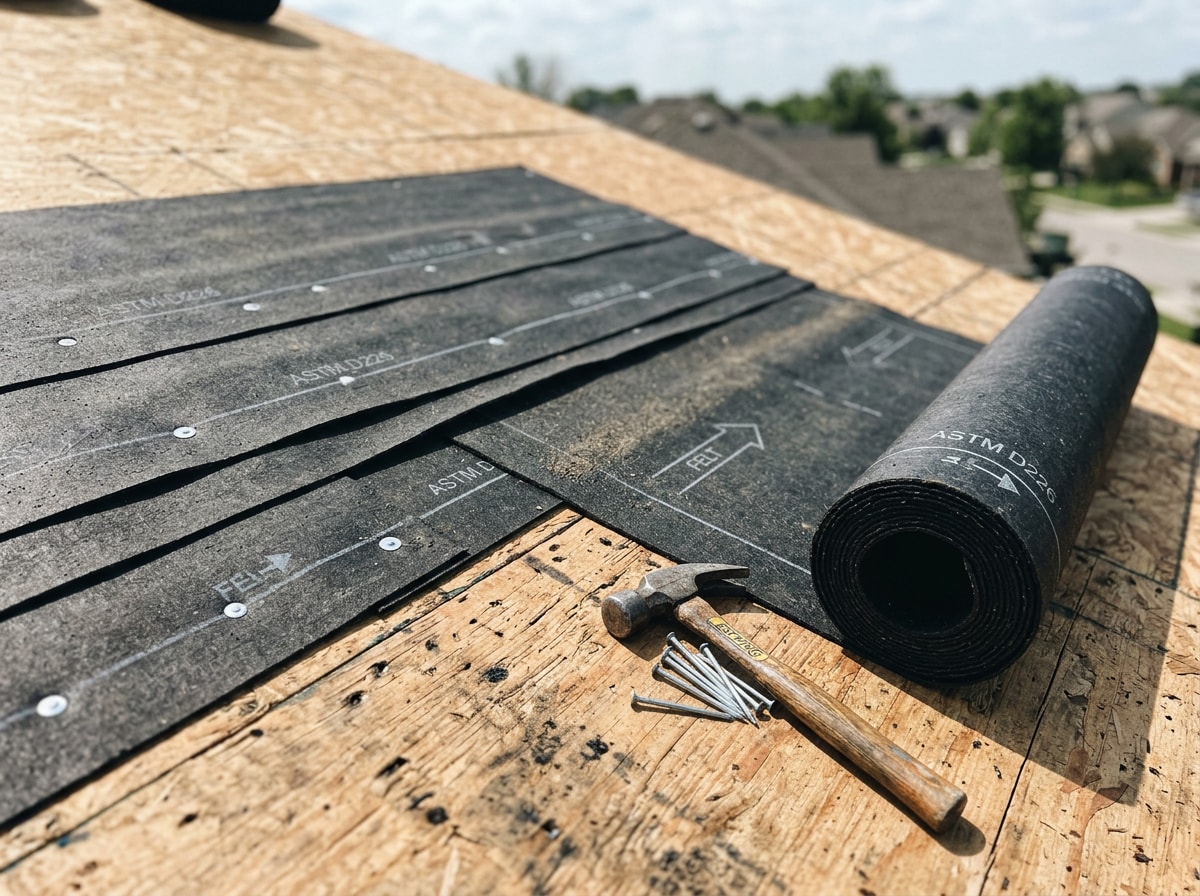
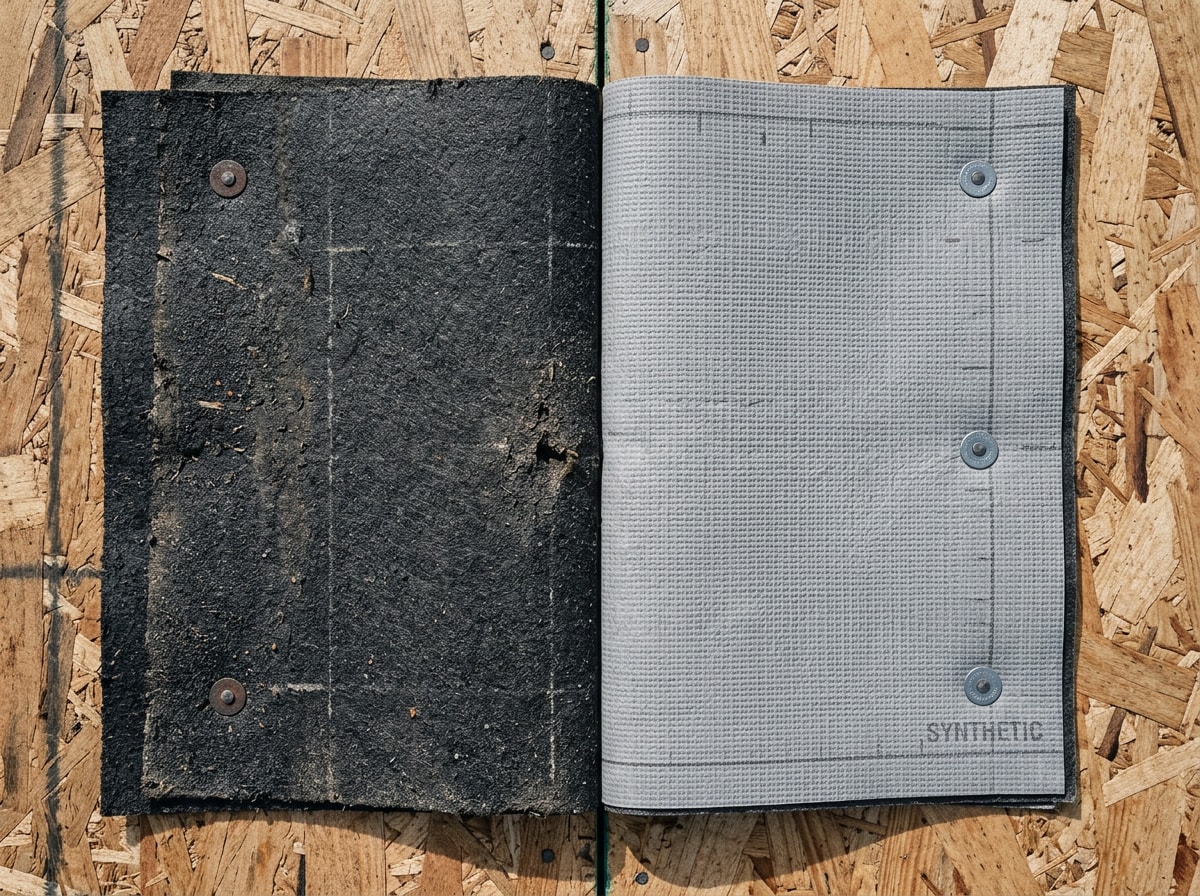
Asphalt-saturated felt, often called felt paper or tar paper, is covered under two types of asphalt-saturated felts: type I, commonly called No. 15 asphalt felt, and type II, commonly called No. 30 asphalt felt , under the ASTM D226 specification. Historically, asphalt-saturated organic felt has been specified and widely used as asphalt shingle underlayment , which is why it's still common on Tulsa reroofs today.
15 lb felt is lighter and cheaper, making it common on lower-slope sections or budget-conscious projects. 30 lb felt is thicker and more tear-resistant, which matters on a roof that will see hail or foot traffic during installation.
The trade-off is durability. Felt can wrinkle once it absorbs humidity, and repeated summer heat cycles tend to make it more brittle over a roof's lifespan.
Synthetic Underlayment
Synthetic underlayment is made from woven or non-woven polypropylene, often with a non-slip coating. Compared to felt, traditional asphalt felt underlayments tear easily and absorb moisture, leading to wrinkling that telegraphs through the shingles , which is the main reason many Tulsa roofers have shifted toward synthetic over the past decade.
Synthetic costs more upfront, but it resists tearing during installation and holds up better against Oklahoma's temperature swings. It doesn't absorb moisture the way felt can, so it's less likely to wrinkle or buckle under the shingles after a humid stretch.
| Feature | Asphalt-Saturated Felt | Synthetic Underlayment |
|---|---|---|
| ASTM designation | D226 Type I (#15) or Type II (#30) | No single ASTM number; varies by brand |
| Weight options | 15 lb, 30 lb | Varies by brand/thickness |
| Tear resistance | Moderate | High |
| Moisture absorption | Can wrinkle when wet | Resists moisture, less wrinkling |
| Typical lifespan | Often cited around 10 to 20 years | Often rated 25 years or more by manufacturers |
If you're weighing underlayment choices for a metal roof instead of asphalt shingles, our metal roofing underlayment guide covers the differences in more detail.
What Oklahoma Building Code Actually Requires
This is the part most felt-versus-synthetic articles skip, and it matters more than brand preference. The International Residential Code, which Tulsa-area building departments reference, sets minimum installation rules regardless of which material you choose.
Underlayment materials required to comply with ASTM D226, D1970, D4869 and D6757 shall bear a label indicating compliance to the standard designation . The lap and layer requirements change based on roof pitch:
- 4:12 slope or steeper:
underlayment shall be not fewer than one layer of underlayment felt applied shingle fashion, parallel to and starting from the eaves and lapped 2 inches .
- 2:12 up to 4:12 slope:
underlayment shall be two layers applied in the following manner: apply a 19-inch strip of underlayment felt parallel to and starting at the eaves , with full sheets lapped over it.
A roofer who skips the double layer on a low-slope section, or who doesn't lap rows correctly, is cutting a corner that won't show up until the first hard rain.
Why Underlayment Is Your Backup Plan After Tulsa Hailstorms
Underlayment becomes the roof's last line of defense whenever shingles are cracked, lifted, or torn away. According to the National Weather Service office in Tulsa, any specific location in the Tulsa metropolitan area can expect to receive hail an average of two to three times each year , and hail has been reported in every month, with the highest frequency during the transitional months in the spring .
After a hailstorm, it's common for a handful of shingles to lose granules or crack even if the roof looks mostly intact from the ground. In those moments, underlayment buys time before a full repair happens, but only if it was sound to begin with. An underlayment that was already brittle, wrinkled, or thin before the storm won't hold up as well, which is one reason insurance adjusters and roofers check underlayment condition during a post-storm inspection.
If a storm has already damaged your roof, don't wait on a small leak to become a bigger one. Emergency roof repair exists for exactly this situation, and it's usually cheaper than the water damage repair that follows a delay.
Signs Your Roof Underlayment Has Failed
Underlayment problems are easy to miss because the layer is hidden under shingles. Most homeowners only learn there's an issue after a leak appears inside the house or a roofer pulls back shingles during an inspection.
Watch for these signs:
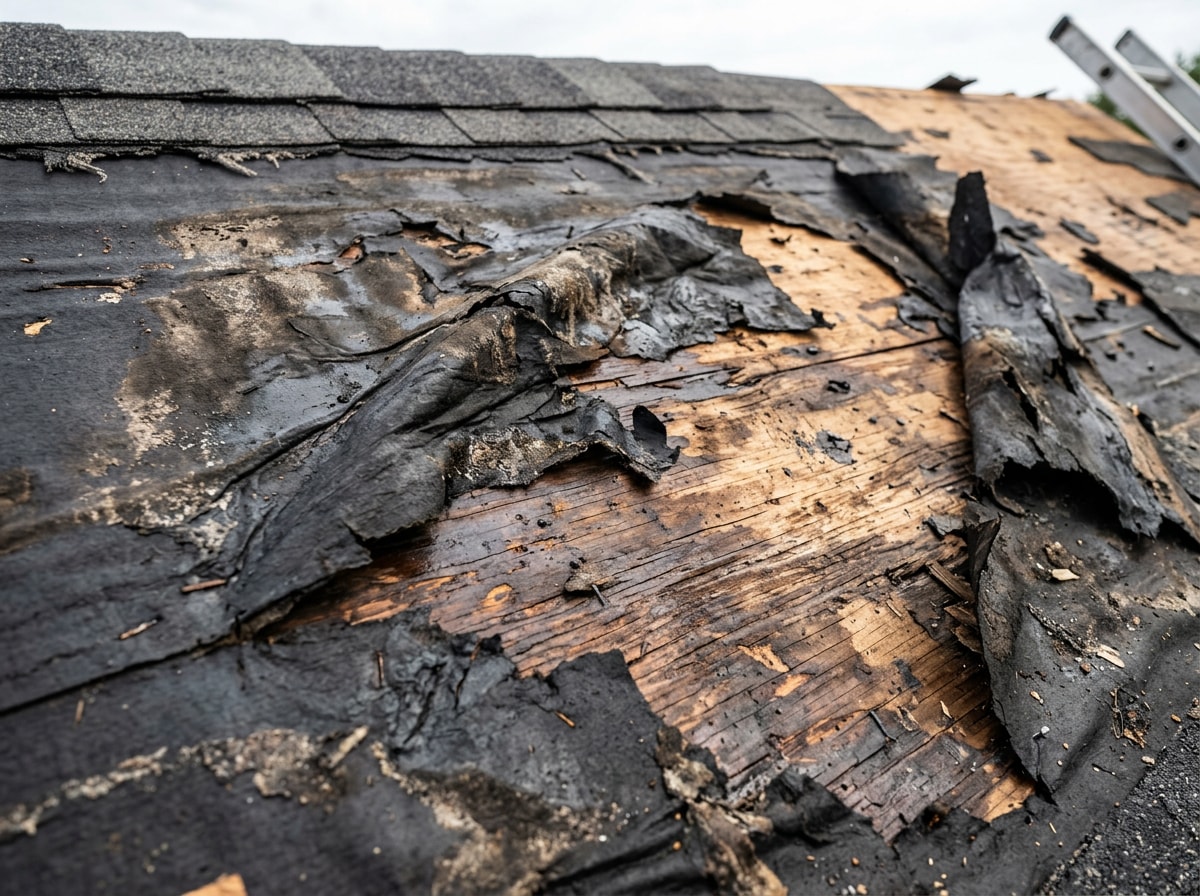
- Torn sections, usually concentrated around nail holes, roof penetrations, and valleys where foot traffic or wind stress is highest.
- Wrinkled or rippled felt, which happens when the material absorbs moisture and dries unevenly, sometimes telegraphing through the shingles above.
- Missing patches where wind or age has worn the material away entirely.
- Moisture stains on the underside of the roof deck, often brownish or dark discoloration, one of the clearest leak signs a roofer looks for.
- Staining in multiple spots rather than one isolated area, which usually points to a problem that's existed for a while rather than a single recent event.
If any of this sounds familiar, a roof inspection is the fastest way to find out whether it's a roof repair or something bigger.
Which Underlayment Fits Tulsa's Climate
Choosing underlayment comes down to weighing upfront cost against how long you want it to last and how much your local climate will stress the material. For Tulsa, that climate factor carries real weight.
Synthetic underlayment generally handles Oklahoma's wide temperature swings with less cracking and less moisture absorption, which can translate into fewer underlayment-related callbacks over a roof's lifespan. That said, felt isn't a poor choice for every project, especially on a budget reroof where the shingle quality and installation technique above it matter just as much as the underlayment itself.
Homeowners working with a contractor on a full roof replacement should ask directly which underlayment is being quoted and why, rather than assuming one type automatically applies to every house in the area. Homeowners in the broader Tulsa, OK area deal with the same hail and heat exposure regardless of neighborhood, so this isn't a decision to make on price alone.
What Roof Underlayment Costs in 2026 (Approximate Guidance)
Felt paper typically costs less upfront, while synthetic costs more per square but often lasts longer. The ranges below are general material-cost guidance based on typical supply-house and big-box pricing, not a quote. Actual installed cost varies by contractor, roof pitch, and current material pricing.
| Underlayment Type | Typical Roll Coverage | General Cost Range |
|---|---|---|
| 15 lb felt | Around 400 sq ft per roll | Lower end of the material range |
| 30 lb felt | Around 200 sq ft per roll | Mid-range, more than 15 lb |
| Synthetic | Varies by brand/width | Higher than felt, often by a meaningful margin |
Complexity matters too. A roof with multiple valleys, dormers, or steep pitches takes more labor and material to underlay properly, which raises cost per square regardless of which material you pick. Getting a detailed, itemized quote helps separate underlayment costs from labor and shingle costs, which makes it easier to compare bids apples-to-apples. Get a free estimate before you sign anything, so you know exactly what underlayment is included.
How to Make Sure Your Contractor Installs It Right
A homeowner doesn't need to become a roofing expert to ask good questions. Before shingles go on, ask to see:
- Photos of the underlayment covering the full deck, not just a few sections.
- The overlap pattern at each row, and at valleys and eaves specifically.
- The fastening schedule, since loose or widely spaced fasteners invite wind lift.
- Extra protection at penetrations, like vent pipes, chimneys, and skylights.
Our crews treat these steps as non-negotiable on every tear-off, because an underlayment mistake is invisible until the first leak. If you're unsure whether a past installation was done correctly, or your roof shows any of the warning signs above, schedule a roof inspection to check the underlayment condition directly instead of guessing from the attic side.
FAQ
What is roof underlayment and why does it matter?
Roof underlayment is the water-resistant layer installed between the roof deck and the shingles. It protects the wood structure from moisture if shingles are damaged, lifted by wind, or simply age over time, acting as the roof's backup defense against leaks.
What's the difference between roofing felt and tar paper?
"Roofing felt" and "tar paper" are generally used interchangeably to describe the same asphalt-saturated underlayment product. The "tar paper" name comes from older manufacturing processes, though modern products are asphalt-based rather than coal-tar-based. Functionally, there's no meaningful difference today, and both are typically sold as 15 lb or 30 lb felt.
How many square feet does a roll of 30 lb roofing felt cover?
A standard 36-inch-wide roll of 30 lb felt typically covers around 200 square feet, while the lighter 15 lb version usually covers around 400 square feet per roll. Exact coverage varies by manufacturer and roll width, so always check the label on the specific roll you're buying.
How do I know if my roof underlayment is bad?
Age, visible tears, wrinkling, and interior leak stains are the main signs. If your roof is more than 15 to 20 years old or you've noticed staining on ceilings or in the attic, it's worth having a professional inspect the underlayment condition directly rather than waiting for a more obvious failure.
What type of underlayment is best for Tulsa's weather?
Synthetic underlayment generally performs better in Tulsa's climate because it resists the heat-related brittleness and moisture absorption that can affect felt over time. Felt paper remains a reasonable, budget-friendly option for many reroofs, but homeowners planning to stay long-term or facing frequent storm exposure often get more value from synthetic's added durability.
How many layers of felt does Oklahoma code require?
It depends on roof slope. For roofs at 4:12 pitch or steeper, code calls for one layer lapped at least 2 inches. For lower-slope sections between 2:12 and 4:12, two layers are required. A licensed contractor should know which applies to your roof before material goes down.
How long can felt paper sit exposed before shingles go on?
Manufacturer limits vary by product, and exposure limits are usually printed right on the roll label. As a general rule, felt tends to have shorter safe exposure windows than many synthetic products, so a roof that sits uncovered for more than a few weeks during a busy storm season is worth a second look before shingling continues.
If you're weighing felt against synthetic for an upcoming reroof or just found warning signs during a DIY attic check, talk to a licensed local crew before deciding. A&H Roofing Contracting serves Tulsa and the surrounding metro, and you can get a free estimate or browse our completed projects to see the kind of underlayment and shingle work we stand behind.