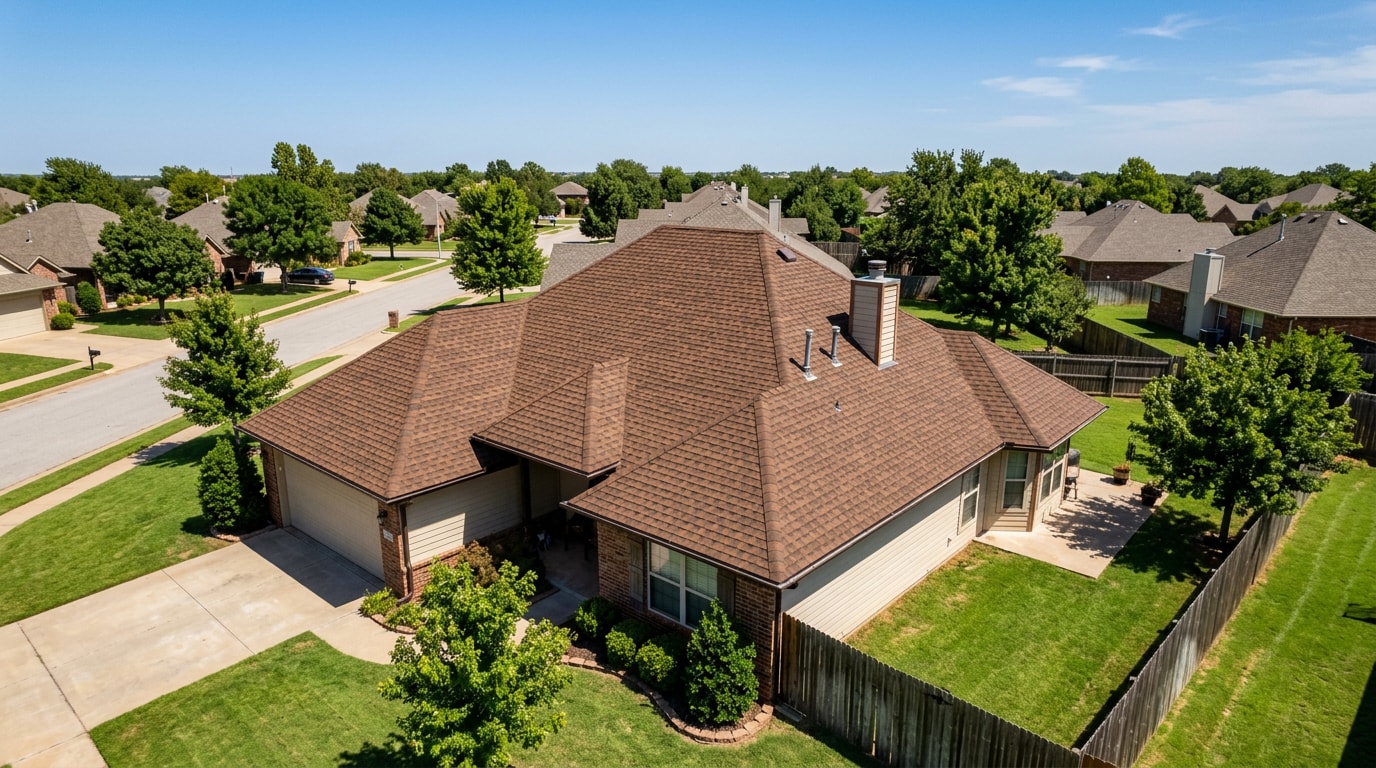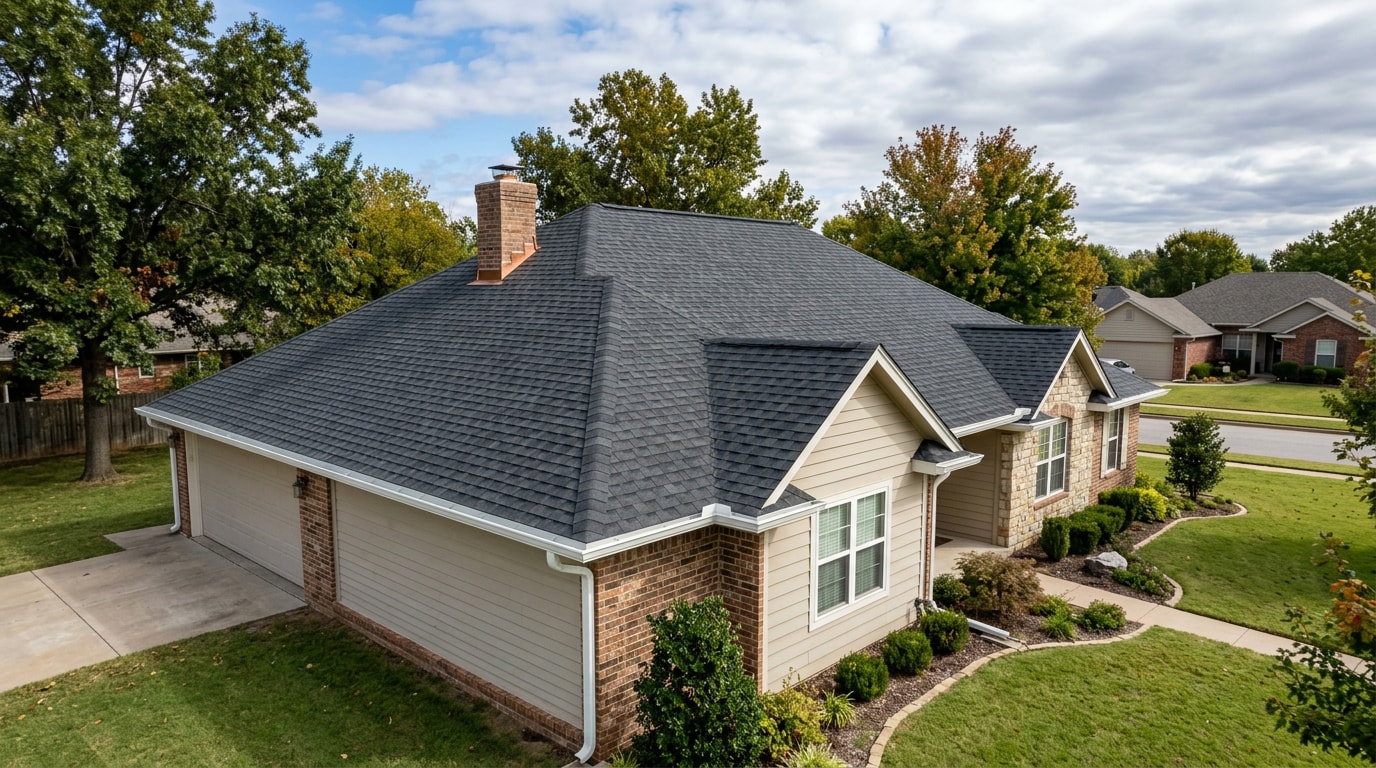
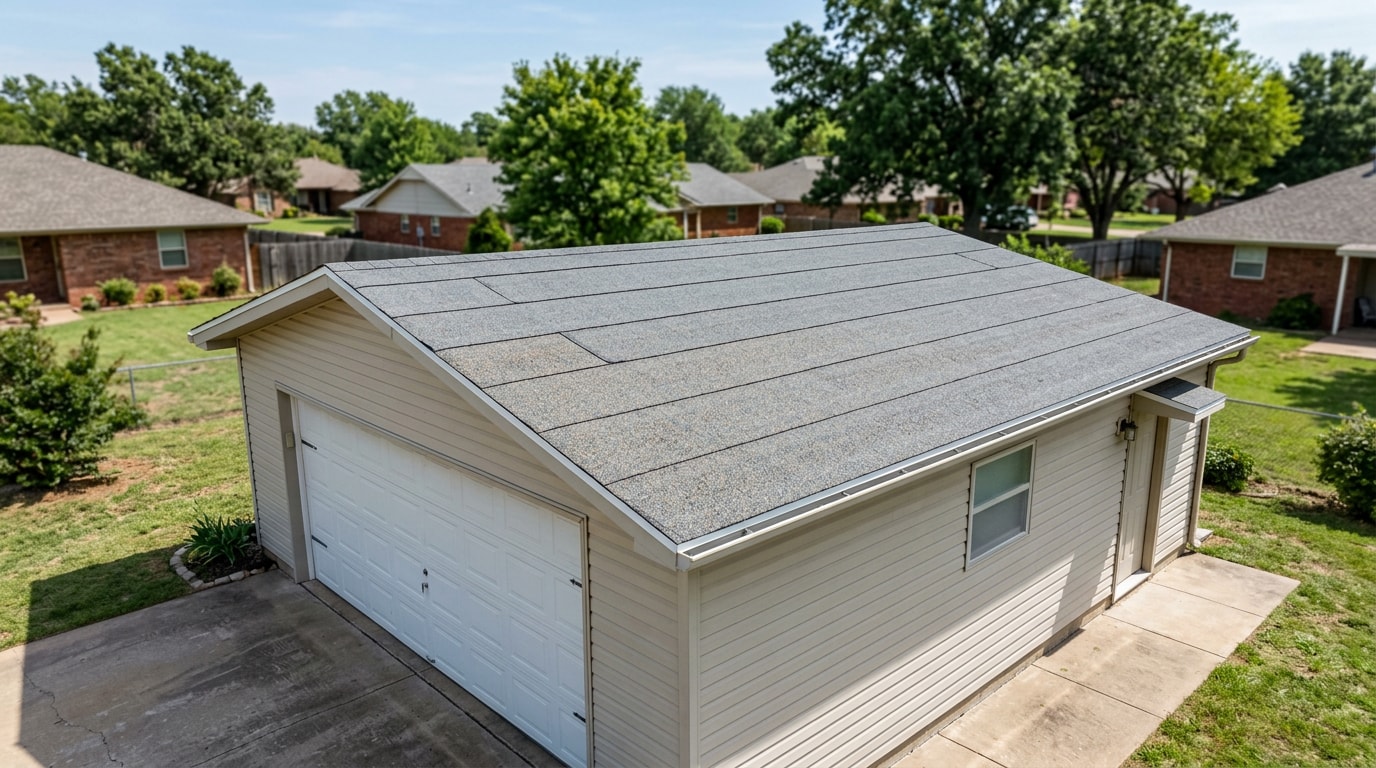
Roll roofing in Moore, OK is the budget-friendly asphalt material most homeowners reach for on sheds, garages, and other low-slope structures the main house roof doesn't cover. It costs less than shingles and installs fast, but it still has to meet a minimum code slope and tight seam work to hold up through Oklahoma hail and wind. Here's what it costs in 2026, how it's installed, and when it's actually the right call.
What Is Roll Roofing?
Roll roofing is an asphalt-based roofing material sold in long rolls that each cover about 100 square feet, known as one roofing square. It's built for low-slope roof sections, sheds, porches, garages, additions, where standard shingles aren't a practical fit.
Homeowners asking about roll roofing in Moore are usually dealing with exactly that kind of structure. A detached garage, a covered patio, or a backyard shed rarely has enough pitch for architectural shingles to shed water properly, and that's where rolled roofing earns its keep.
The material is made from a fiberglass or organic mat saturated with asphalt, then coated with mineral granules for weather resistance. It goes down flat in long overlapping strips, rather than the layered, textured look of dimensional shingles. It's a functional, budget-friendly low-slope material, not a substitute for a full shingle roof on the main house.
For larger, steeper roof sections, a full roofing contractor is usually the better long-term investment.
How Much Does Roll Roofing Cost?
Cost is the main reason most homeowners look into roll roofing in the first place. Below is per-square-foot pricing, per-square pricing, and the factors that push the number up or down for a typical Moore structure.
| Scope | Material Only | Fully Installed |
|---|---|---|
| Material-only, DIY (per square) | $50–$90 | — |
| Professionally installed (per square) | $50–$90 | $200–$500 |
| Typical 10x12 shed roof (1.2 squares) | $60–$110 | $240–$600 |
| Typical one-car garage roof (2.5 squares) | $125–$225 | $500–$1,250 |
These ranges reflect standard mineral-surfaced rolls; self-adhering and modified bitumen products run higher. Get a free estimate for an exact number on your structure.
Factors That Affect Roll Roofing Cost
Several variables move the price beyond the base material rate:
- Roof size and complexity – more cuts, valleys, and penetrations mean more labor hours and material waste.
- Material grade – standard asphalt rolls sit at the low end, while fiberglass-reinforced or self-adhering products cost more per square but hold up better.
- Tear-off cost – removing an old roof covering first adds to the total.
- Local labor demand – pricing can shift with contractor demand and time of year; spring and early summer tend to be busier in the Moore area.
Roll Roofing Cost Per Square Foot
Material alone typically runs $0.50 to $1.50 per square foot, while professional labor adds roughly $1.50 to $3.50 per square foot. That puts most fully installed roll roofing in the $2.00 to $5.00 per square foot range, depending on roof access and prep work.
| Cost Component | Price Range (per sq ft) |
|---|---|
| Roll roofing materials | $0.50–$1.50 |
| Labor | $1.50–$3.50 |
| Total installed cost | $2.00–$5.00 |
A short-handled aluminum shed roof in Moore might run a few hundred dollars start to finish; a garage with multiple penetrations and a full tear-off can push past $1,000. For industry-wide cost and lifespan data to sanity-check local quotes, NRCA is the voice of roofing professionals and leading authority in the roofing industry for information, education, technology and advocacy, representing contractors, manufacturers, and engineers nationwide , and its roofing guidelines library is a useful reference point.
Types of Roll Roofing
Roll roofing isn't a single product, it's a category. The two types a Moore homeowner is most likely to encounter are mineral-surfaced asphalt rolls and bitumen or modified bitumen rolls.
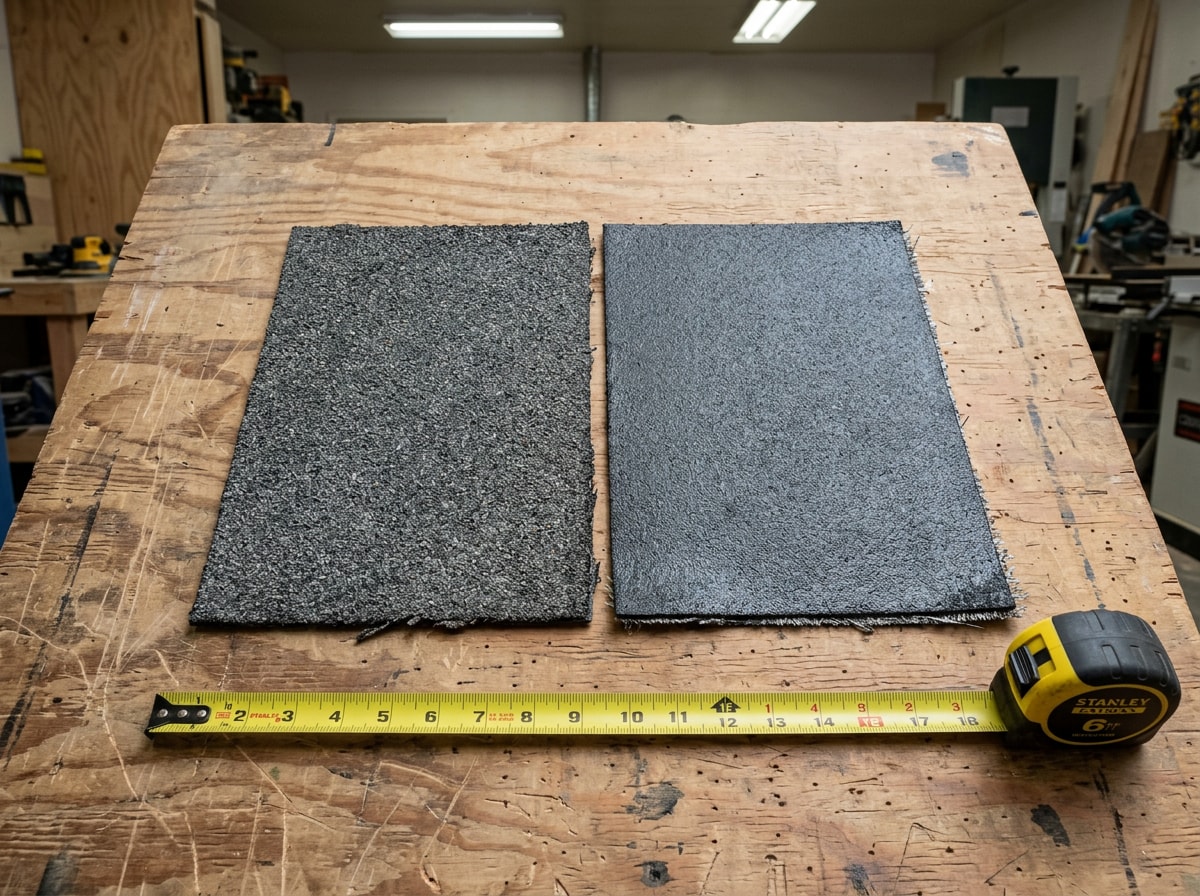
Mineral surface roofing is the standard, budget option: granule-coated asphalt rolls installed with roofing cement or nails. Modified bitumen is the upgraded version, built for better flexibility and longer service life.
Bitumen Rolled Roofing
Bitumen rolled roofing, often sold as modified bitumen roofing, is reinforced with polymer additives that improve flexibility and crack resistance compared to standard asphalt rolls. It typically applies with a torch, hot asphalt, or self-adhesive backing rather than just roofing cement.
It costs more upfront than standard roll roofing, but the added lifespan, often 15 to 20 years versus 5 to 10 for basic asphalt rolls, can make it the better value over time for structures that see heavy sun or frequent foot traffic.
Pros and Cons of Roll Roofing
Roll roofing is a trade-off material. It wins on affordability and speed, but it gives up some ground on longevity and curb appeal compared to shingles or metal.
Rolled Roofing Pros
- Affordable. Roll roofing is among the cheapest roof coverings available per square foot, which matters for sheds, garages, and other secondary structures where a premium material doesn't make financial sense.
- Versatile installation. Depending on the product, installation can use roofing cement, self-adhesive backing, or torch-applied methods, giving contractors flexibility on different deck types.
- Lightweight and simple. Many handy homeowners attempt DIY roll roofing on small, simple structures, though a professional install still produces tighter seams and fewer long-term leaks.
Rolled Roof Cons
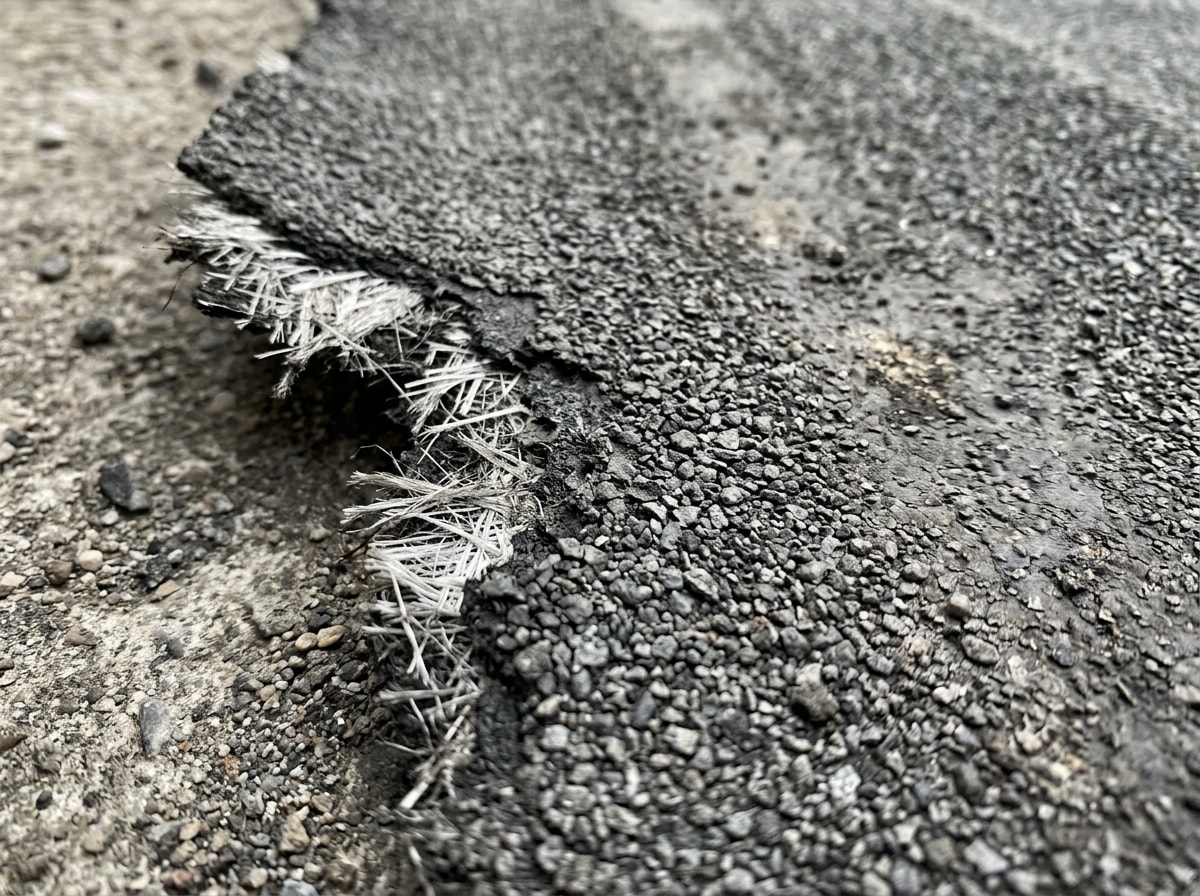
The biggest drawback is lifespan. Standard asphalt rolls typically last 5 to 10 years, noticeably shorter than the 20-plus years common with architectural shingles.
On a recent Moore shed reroof, our crew tore off roll roofing that had failed at the seams after only six years, not because the material was bad, but because the original installer had skipped proper fastening and overlap at the laps. Installation technique affects lifespan as much as material grade does.
Oklahoma's mix of summer heat, hail, and high wind events can shorten that window further, since roll roofing has less impact resistance than thicker shingle products. Color and style options are also limited; most rolls come in a handful of neutral tones.
How to Install Roll Roofing
A rolled roofing project starts with measuring the roof area, length times width in feet, to calculate how many squares of material are needed, then prepping a clean, dry deck surface.
For anything beyond a small shed or storage building, bringing in a roof installation crew helps avoid the seam and drainage mistakes that cut a roll roof's life short.
Installing the Roll Roofing
- Start at the lowest edge of the roof and work upward in courses.
- Overlap each course by several inches so water keeps moving downhill and off the seams.
- Seal seams with roofing cement, adhesive, or a torch, depending on the product.
- Fasten with nails or adhesive, paying extra attention to edges, valleys, and any roof penetrations.
Large commercial-scale applications sometimes use spray-applied systems, but that requires specialized equipment most homeowners won't have on hand. If you'd rather tackle a small structure yourself, our step-by-step DIY roll roofing guide walks through the full process in more detail.
Where Roll Roofing Works Best
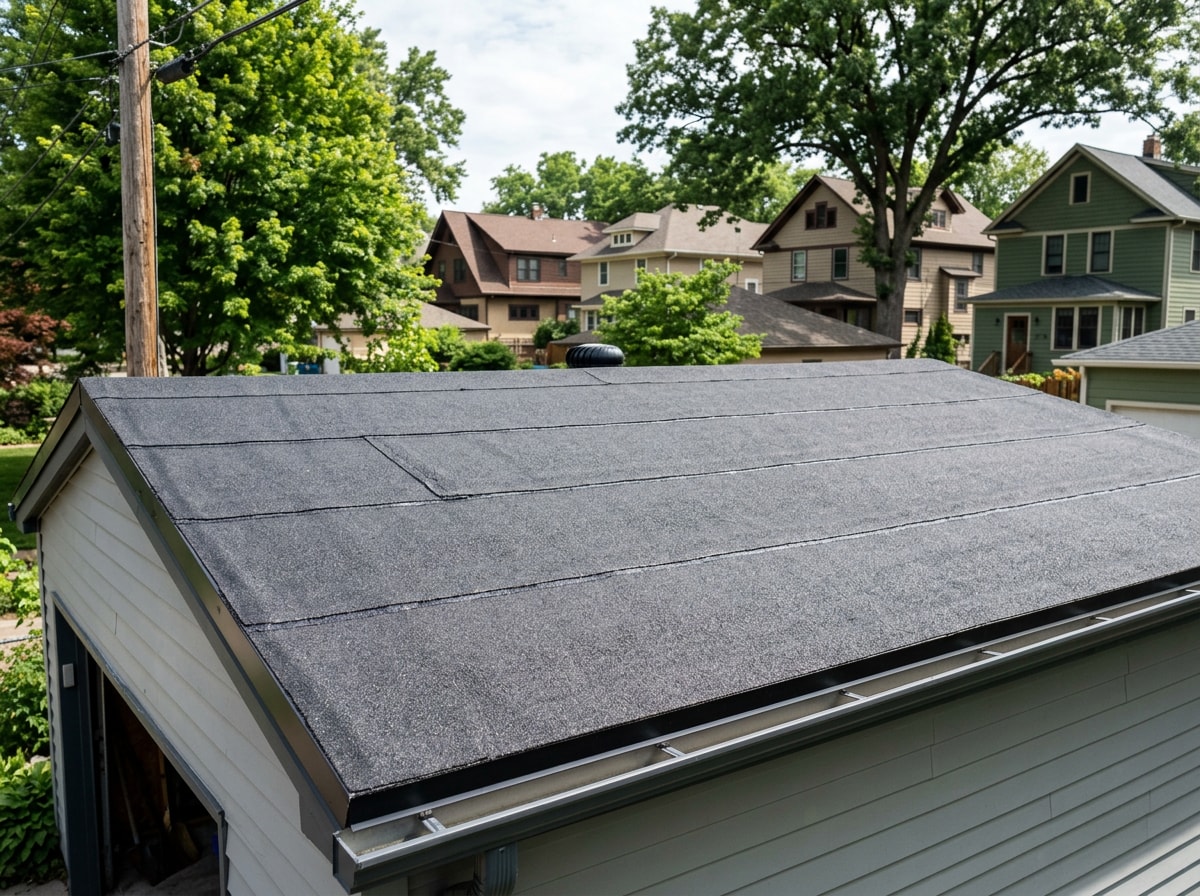
Roll roofing works best on roofs with a slope between roughly 1-in-12 and 3-in-12, too flat for standard shingles, but not flat enough to need a full membrane system. That covers most sheds, detached garages, porch roofs, and low-pitched additions found throughout Moore neighborhoods.
Below that range, a true low-slope membrane material is usually the safer, longer-lasting choice. Above it, standard shingles typically perform better and look more consistent with the rest of the house. Building codes get specific here: the International Residential Code's commentary notes a minimum slope of 1:12 is mandated for roof decks that are covered with mineral-surfaced roll roofing , so anything flatter than that needs a different covering entirely. A roof inspection can confirm which category a given roof section falls into before material is ordered.
Roll Roofing vs. Other Roofing Materials
Roll roofing is one option among several for low-slope applications. Here's how it stacks up against the materials homeowners most often compare it to.
Roll Roofing vs. Modified Bitumen
Standard roll roofing costs less upfront and installs faster, using simple cement-and-overlap techniques. Modified bitumen roofing costs more and often needs torch-down or hot-asphalt application, but it delivers meaningfully better durability and a longer service life in exchange for that higher price.
Roll Roofing vs. TPO Roofing
TPO is a reflective, heat-welded membrane rather than an asphalt product, and it generally outlasts standard roll roofing by a wide margin. A reflective roof surface can also reduce air conditioning costs inside a building on a hot day , which matters on detached structures that bake in Oklahoma summers. Roll roofing remains the cheaper, simpler option for smaller, lower-budget projects.
Roll Roofing vs. Metal Roofing
Metal roofing costs significantly more to install than roll roofing but can last 40 years or longer with minimal maintenance. For a secondary structure with a limited budget, roll roofing often makes more sense; for a primary structure where longevity matters, roof replacement is worth comparing against the upfront savings.
Not sure which direction fits your structure? Request a free estimate and we'll walk the roof with you before you commit to a material.
FAQ
What is the average cost of replacing a roof in Oklahoma?
Full roof replacements in Oklahoma are commonly quoted in the $8,000 to $20,000 range, depending on home size and material, though larger or premium-material roofs can cost more. Roll roofing stays well below that range when it's used appropriately on qualifying low-slope sections rather than a full home roof.
What is the minimum roof slope for roll roofing?
Code commentary on mineral-surfaced roll roofing sets a 1-in-12 minimum slope for drainage. Anything flatter needs a true low-slope membrane system instead; your local permitting office can confirm exact requirements for your address.
How long does roll roofing last on a shed or garage?
Standard mineral-surfaced roll roofing typically lasts 5 to 10 years. Modified bitumen versions can reach 15 to 20 years. Actual lifespan depends heavily on installation quality, sun exposure, and how much foot traffic the roof sees.
What is the 25 percent rule in roofing?
The "25 percent rule" is a common code-related guideline suggesting that once more than 25 percent of a roof needs repair or replacement within a set period, the whole roof section should be brought up to current code. It varies by jurisdiction, so local permitting rules should always be confirmed directly.
Is $30,000 too much for a roof?
A $30,000 roof can be reasonable for a large home with a premium material like metal, slate, or high-end architectural shingles. For a standard-size home with asphalt shingles, that price is on the high end, and getting a second quote is a smart move. Roll roofing, by comparison, sits at the budget end of the roofing spectrum for qualifying low-slope sections.
Homeowners anywhere in the Moore, OK service area can request a project-specific quote, including a look at our recent projects, before deciding which material fits their roof. Visit the homepage to see our full range of roofing and exterior services.