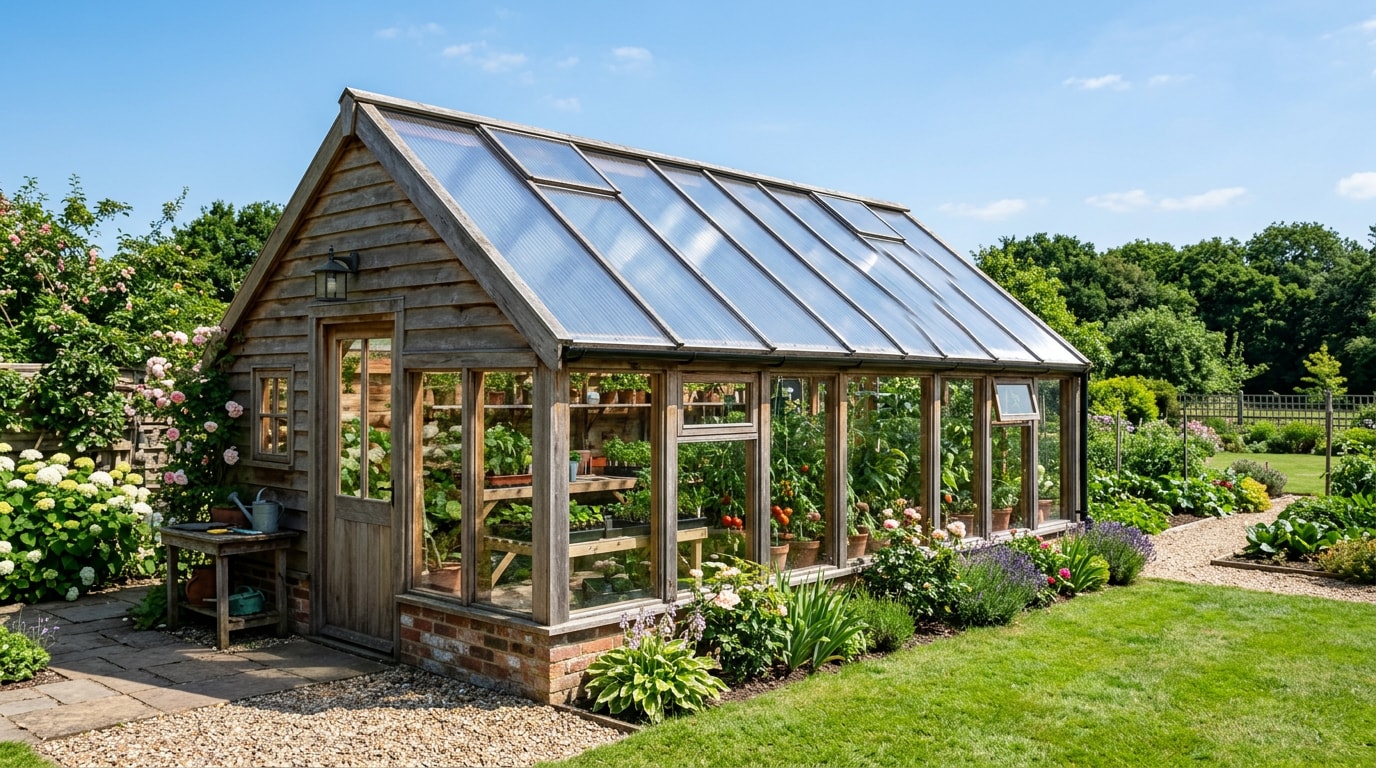
Greenhouse roofing Tulsa, OK growers pick has to survive hail, 100-degree summers, and sudden freezes in the same calendar year. Glass, polycarbonate, fiberglass, and poly film all handle that differently, and the wrong pick means repairs within a season. Here's what actually holds up on Oklahoma greenhouses, and what the panel aisle won't tell you.
Why Tulsa's Weather Changes the Greenhouse Roofing Equation
Most national greenhouse guides are written for mild coastal climates. Tulsa isn't that.
The Tulsa area is occasionally subjected to large hail and violent windstorms which occur mostly during the spring and early summer, although occurrences have been noted throughout the year. That single fact should drive most of your material decision. A glazing panel that looks great on a greenhouse kit website in California may crack under the first April hailstorm here.
Winters add a second stress test. Generally the winter months are mild, and temperatures occasionally fall below zero but only last a very short time. That swing between brief hard freezes and long mild stretches means your roofing has to insulate well enough to protect tender crops overnight, without trapping so much heat that you're running fans all summer.
Our crews at AH Roofing Contracting have repaired and reglazed backyard greenhouses and sunroom-style structures across Tulsa, Broken Arrow, and Owasso after spring hail events. The damage pattern we see most often isn't a bad panel. It's mismatched fasteners and sealant left over from a prior DIY re-roof that never sealed properly in the first place.
Full Greenhouse Rebuild or Just a New Roof?
Before shopping for panels, figure out whether you need a full rebuild or just new roofing.
- Inspect the frame for rot, rust, or bent supports first.
- A sound frame usually means a straightforward re-roof.
- A compromised frame makes a full greenhouse roof replacement the smarter long-term choice.
One detail trips up a lot of DIYers: reusing old fixings when switching to a different sheet thickness or manufacturer. Mismatched hardware can void panel warranties and create gaps that leak during Oklahoma's heavier downpours. If you're unsure which route fits your structure, a quick professional roof inspection can save money down the line.
Choosing the Right Greenhouse Roofing Material for Tulsa, OK
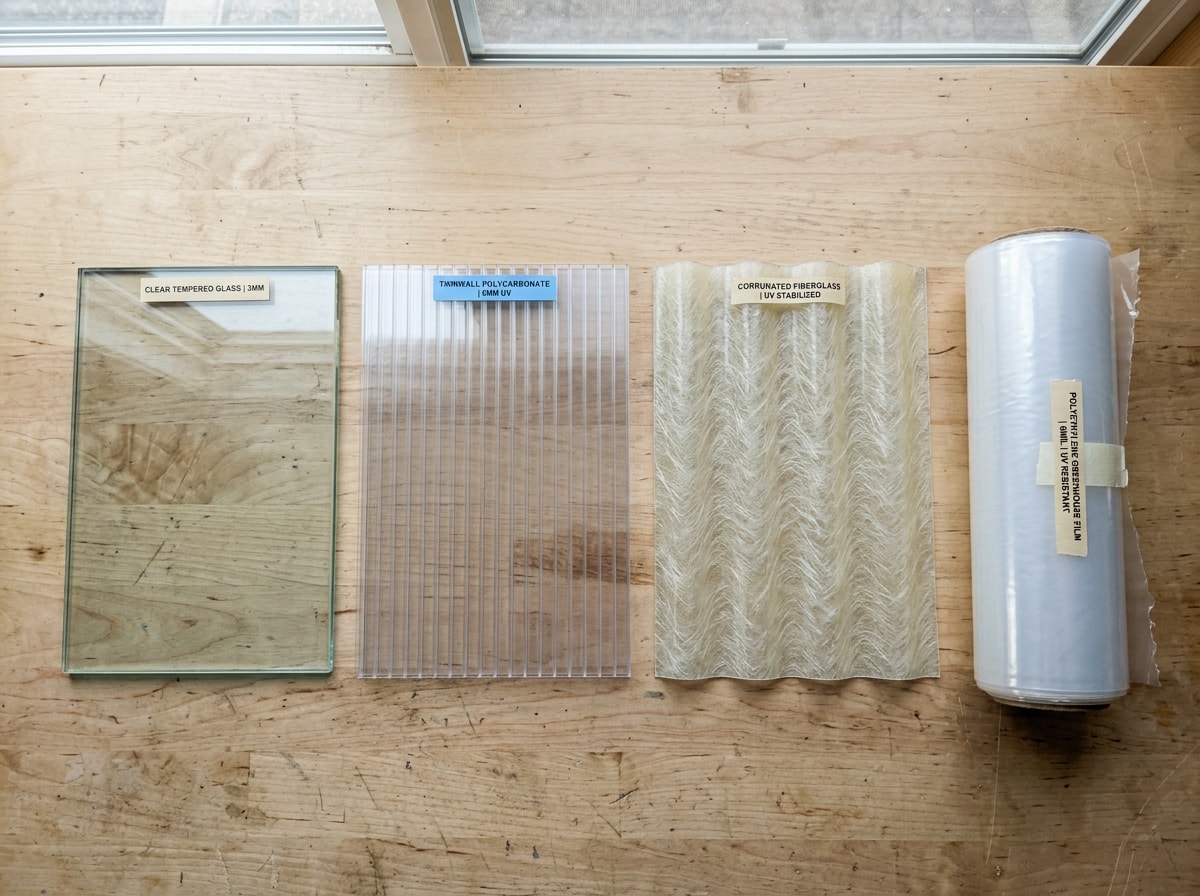
Four glazing categories dominate the market: glass, polycarbonate, fiberglass, and polyethylene film. Each performs differently across light transmission, insulation, durability, and cost. The right pick depends on your frame's weight capacity, your crop's light needs, and your budget.
| Material | Light Transmission | Approx. Lifespan | Relative Cost |
|---|---|---|---|
| Glass | 90%+ | 20-25+ years | High |
| Polycarbonate | 80-90% | 10-20 years | Medium |
| Fiberglass | 85-90% | 10-15 years | Medium |
| Polyethylene film | 85-90% | 3-5 years | Low |
Glass Roofing
Glass greenhouse roofing comes in two main forms: tempered and laminated. Tempered glass is the more common choice because it shatters into small, relatively safe pieces rather than sharp shards. Laminated glass adds an interlayer that holds broken glass together during impact.
Glass offers the clearest light transmission of any glazing option, which many growers value for sun-loving crops. That clarity comes with trade-offs:
- Poor insulation value compared to multiwall materials.
- Higher upfront cost than polycarbonate or film.
- Real leak risk if seams and seals aren't installed correctly.
Hail-prone areas like Tulsa make that installation quality especially important.
Polycarbonate Roofing
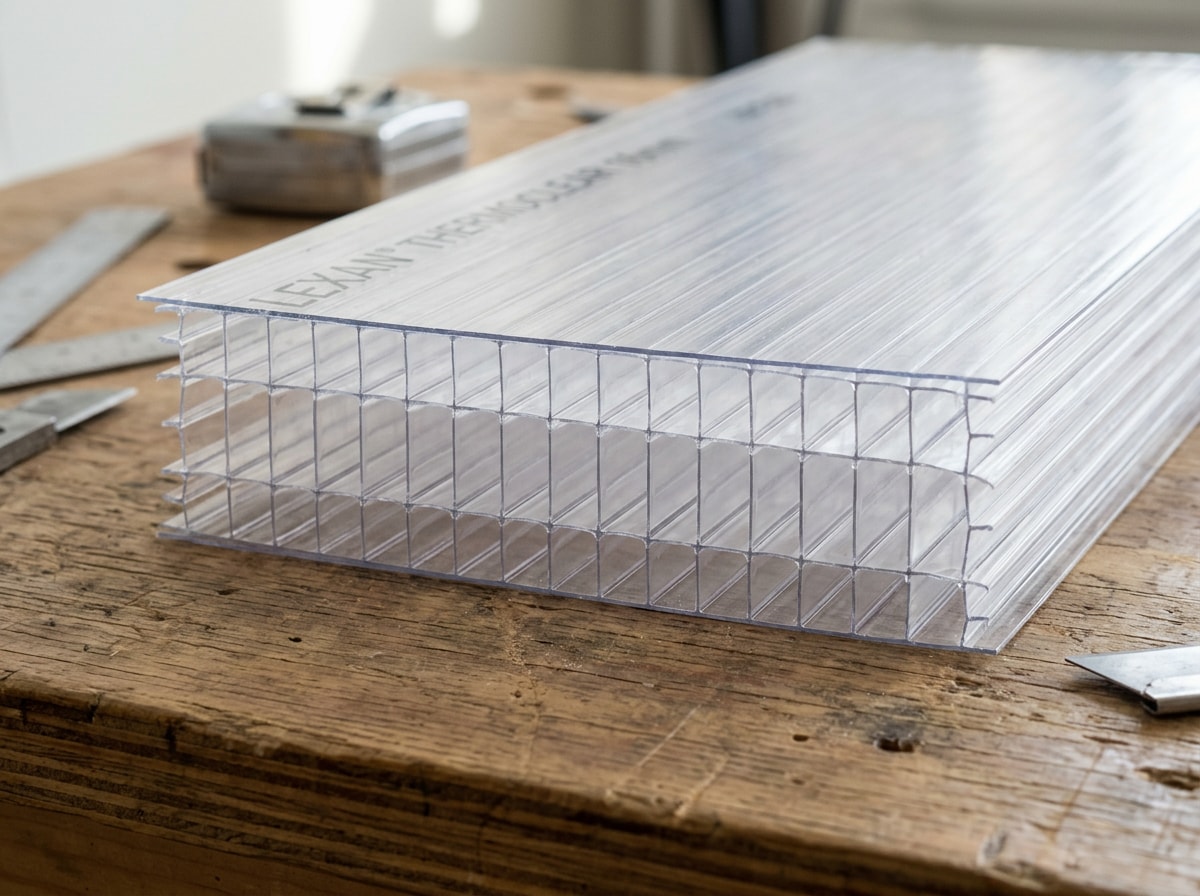
Polycarbonate is generally the best fit for Tulsa-area greenhouses that need to survive hail and wind without the fragility of glass. It holds up to impact far better than glass, and multiwall varieties trap air between layers for noticeably better insulation. Industry technical guides note that polycarbonate sheets can be up to 250 times stronger than glass of the same thickness , which is a meaningful advantage during hail season.
The main downside is gradual yellowing or UV degradation over years of sun exposure, especially on lower-quality sheets without a proper coating.
Not all polycarbonate is the same:
- Solid polycarbonate behaves more like glass in clarity and strength but offers little insulation.
- Corrugated polycarbonate is lightweight and budget-friendly but has fewer insulating air channels.
- Twinwall and multiwall polycarbonate (triple or five-wall) trade a little light transmission for noticeably better thermal performance.
| Panel Type | Typical Thickness | Approx. R-Value | Expected Lifespan |
|---|---|---|---|
| Solid polycarbonate | 2-6mm | R-1 to R-1.5 | 15-20 years |
| Corrugated polycarbonate | 0.8-1.5mm | R-1 | 10-15 years |
| Twinwall/multiwall | 4-16mm | R-1.5 to R-2.5 | 10-20 years |
For Tulsa's hail and straight-line wind exposure, thicker twinwall or multiwall panels (8mm and up) tend to hold up better than thin corrugated sheets, which can crack under repeated impact. Commercial-grade multiwall products built specifically for greenhouse use, such as Green-Tek's ThermaGlas polycarbonate sheeting, are rated for 99.5% UV protection and designed to reduce winter heating costs through their cellular structure. That's the kind of spec sheet worth comparing before you commit to a thickness or brand.
Fiberglass Roofing
Fiberglass greenhouse panels weigh less than glass, which means lighter framing requirements and often an easier installation overall. They also diffuse light more evenly across the growing space, reducing harsh hot spots that can stress certain plants.
Maintenance deserves a mention here. Fiberglass can degrade and become brittle over time, sometimes shedding fine fibers, and resin coatings may need reapplication to keep panels translucent. Cutting fiberglass on-site also calls for gloves and a respirator, since the fibers released during cutting are sharp and irritating to skin and lungs.
Polyethylene / Plastic Film Roofing
Polyethylene greenhouse film is the lowest-cost glazing option, and its flexibility makes it a natural fit for arched or hoop-style frames. It's easy to install and replace, which appeals to seasonal growers who don't want a large upfront investment.
The trade-off is longevity. Most hoop house film needs replacing every three to five years, far sooner than rigid panel options. Given Tulsa's seasonal severe storms and hail, film works best for temporary or seasonal structures rather than a permanent year-round greenhouse where storm exposure is a real risk.
Cost Factors to Consider
Total project cost involves more than the price per square foot of roofing material. Frame repairs or upgrades, labor, fasteners, expected replacement cycle, and ongoing heating needs all factor into your real greenhouse roofing cost.
A cheaper panel that needs replacing in five years may cost more over time than a pricier one that lasts fifteen.
Heating cost is often the overlooked line item. A lean-to greenhouse has less glass or other exposed covering, so heating costs are less than for a free standing greenhouse , according to Oklahoma State University Extension's greenhouse guide. That same principle applies to glazing choice: better-insulated multiwall polycarbonate reduces the energy needed to keep plants comfortable through Tulsa winters compared to single-pane glass or thin film.
Don't forget that thicker, multiwall panels generally cost more upfront but spread that cost over a longer service life, which can make them the better value for a permanent structure.
Fixings and Accessories You'll Need
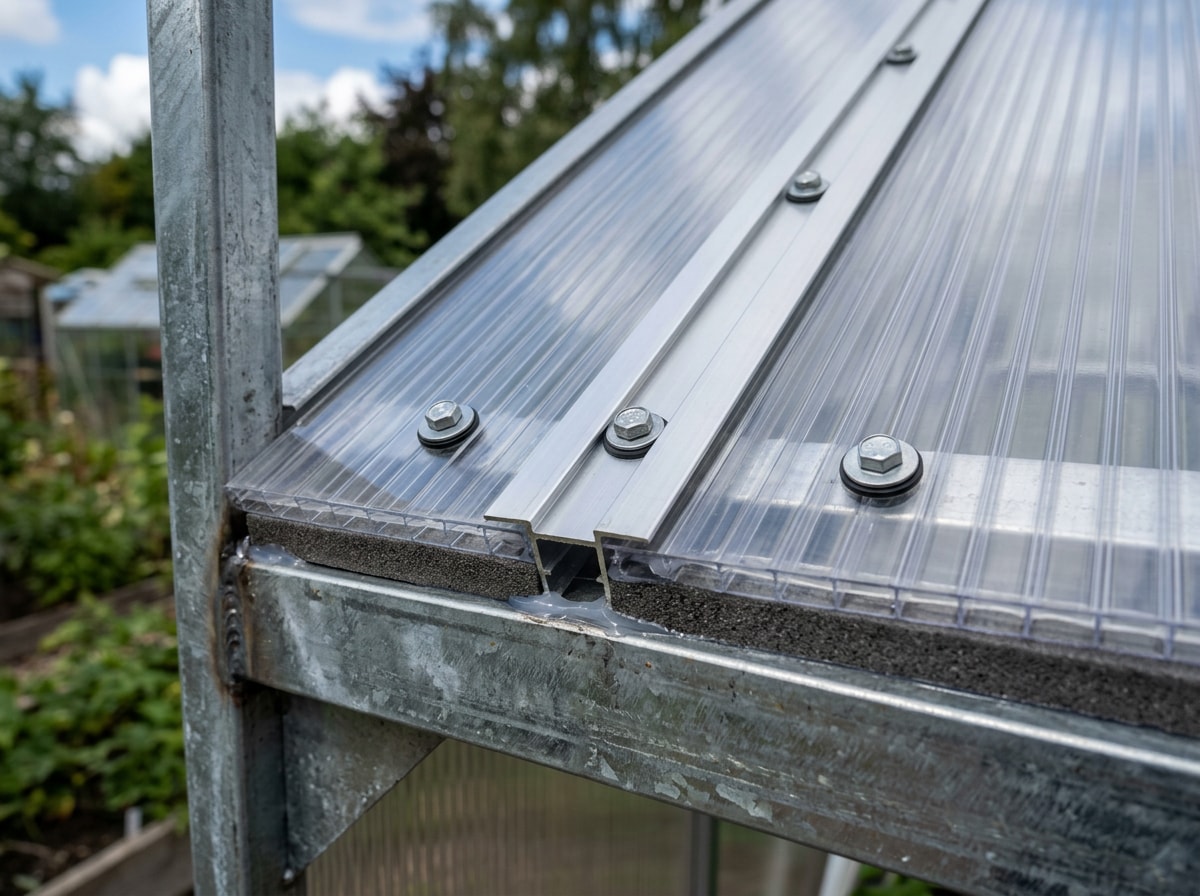
New panels rarely arrive ready to install on their own. Most re-roofing projects also need:
- Ridge caps
- H-profile and U-profile edge trims
- Foam closures
- Weather-sealing tape
These greenhouse roofing accessories matter as much as the panels themselves for a leak-free result.
It's generally best to replace fixings rather than reuse old ones, especially when switching panel manufacturers. Fasteners and sealing tape are inexpensive compared to the panels, and using matched hardware helps preserve warranty coverage while ensuring a properly weather-tight fit. If you're planning a full reroof of a backyard structure, our roof replacement team can walk through matched hardware options before you order panels.
Can You DIY a Greenhouse Roof Replacement?
A DIY greenhouse roof installation can work well on smaller, low-slope structures with lightweight panels like twinwall polycarbonate or film. If your frame is easy to access and in good shape, swapping panels is a manageable weekend project for many homeowners.
Steeper pitches, large commercial greenhouses, structural frame damage, or any work at meaningful height usually call for a professional instead. Incorrect installation, like overtightened screws, missed expansion gaps, or panels installed in the wrong orientation, is a common cause of early panel failure.
The same vetting standards apply whether you're hiring for a greenhouse reglaze or a full tear-off on your main house. Our guide to slate roofing contractors in Tulsa, OK covers the licensing and insurance questions worth asking any contractor before they're on your roof.
If your project checks any of those boxes, request a free estimate before you start cutting panels.
Serving Greenhouse and Roofing Projects Across the Tulsa Metro
AH Roofing Contracting handles roof inspections, repairs, and full replacements on greenhouses, sunrooms, and primary roofs throughout the metro, including:
If hail or straight-line wind already took a toll on your glazing, get a free estimate and we'll tell you honestly whether a patch, a re-roof, or a full rebuild makes sense for your structure.
FAQ
What is the best material for a greenhouse roof?
There's no single best greenhouse roof material. The right choice depends on your budget, how permanent the structure is, and your local climate. For most Tulsa-area greenhouses, multiwall polycarbonate balances impact resistance, insulation, and cost better than glass, fiberglass, or film.
How long does polycarbonate roofing last on a greenhouse?
Polycarbonate roofing typically lasts 10 to 20 years, with multiwall panels often outlasting thin corrugated sheets. UV coating quality is the biggest factor in how long polycarbonate lasts, so check manufacturer warranty and technical spec sheets, like Laird Plastics' polycarbonate guide, before buying.
Will polycarbonate turn yellow over time?
Lower-quality panels without UV protection tend toward noticeable yellowing within a few years of sun exposure. UV-protected polycarbonate with a quality coating resists discoloration far longer, often matching the panel's full rated lifespan.
Does polycarbonate scratch easily?
Polycarbonate scratch resistance is better than acrylic, but the surface can still scratch with abrasive cleaning. Stick to mild soap, water, and a soft cloth when cleaning panels, and avoid scrapers or rough brushes that can dull the surface over time.
How much does it cost to replace a greenhouse roof in Tulsa?
Cost depends on structure size, glazing material, frame condition, and labor, so there's no single accurate number without seeing the project. A cheap film roof costs far less upfront than multiwall polycarbonate but needs replacing every few years, which changes the real cost over time. Contact us for a free, no-pressure estimate specific to your structure.
Is polycarbonate or glass better for a Tulsa greenhouse?
Polycarbonate generally performs better for Tulsa's hail and wind exposure since it resists impact far better than glass and insulates more effectively in multiwall form. Glass offers clearer light transmission and a longer rated lifespan, but it costs more and carries real breakage risk during spring storms.