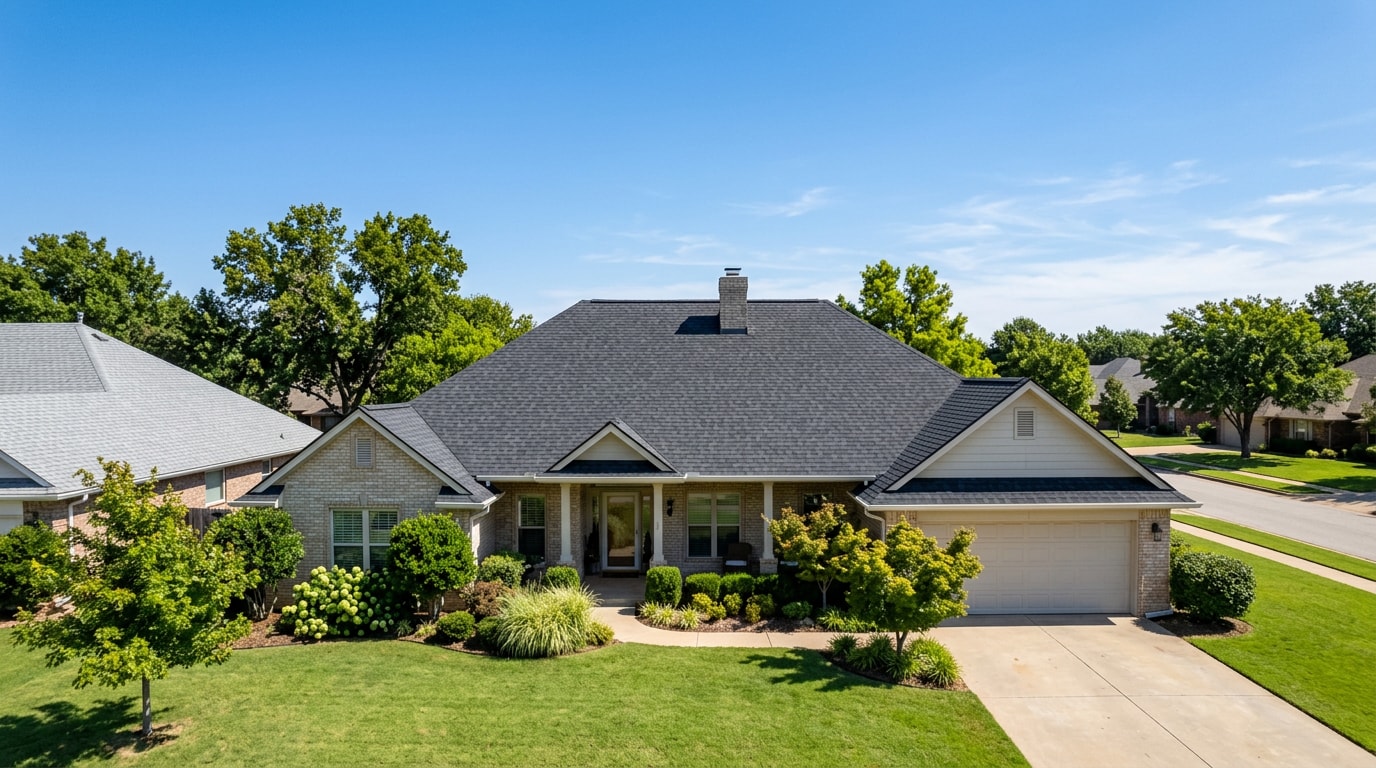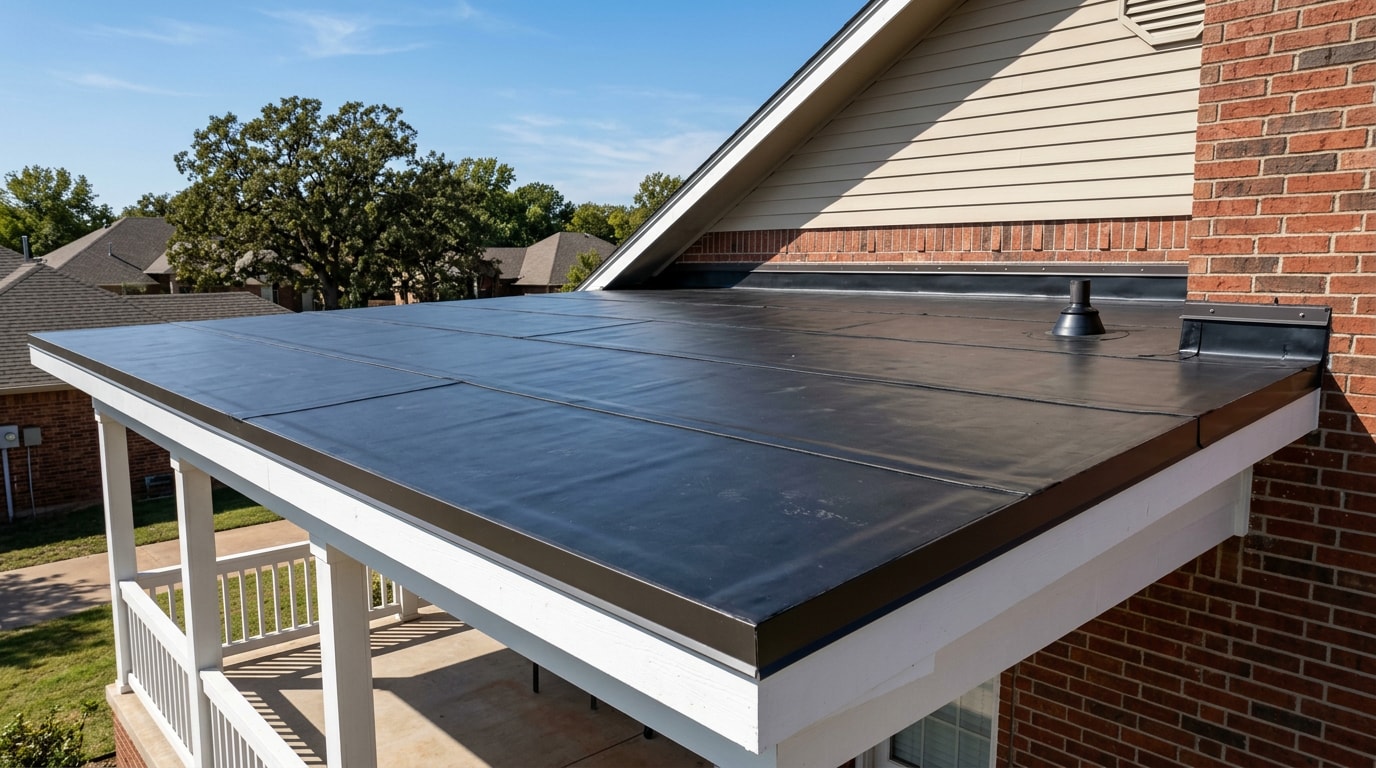
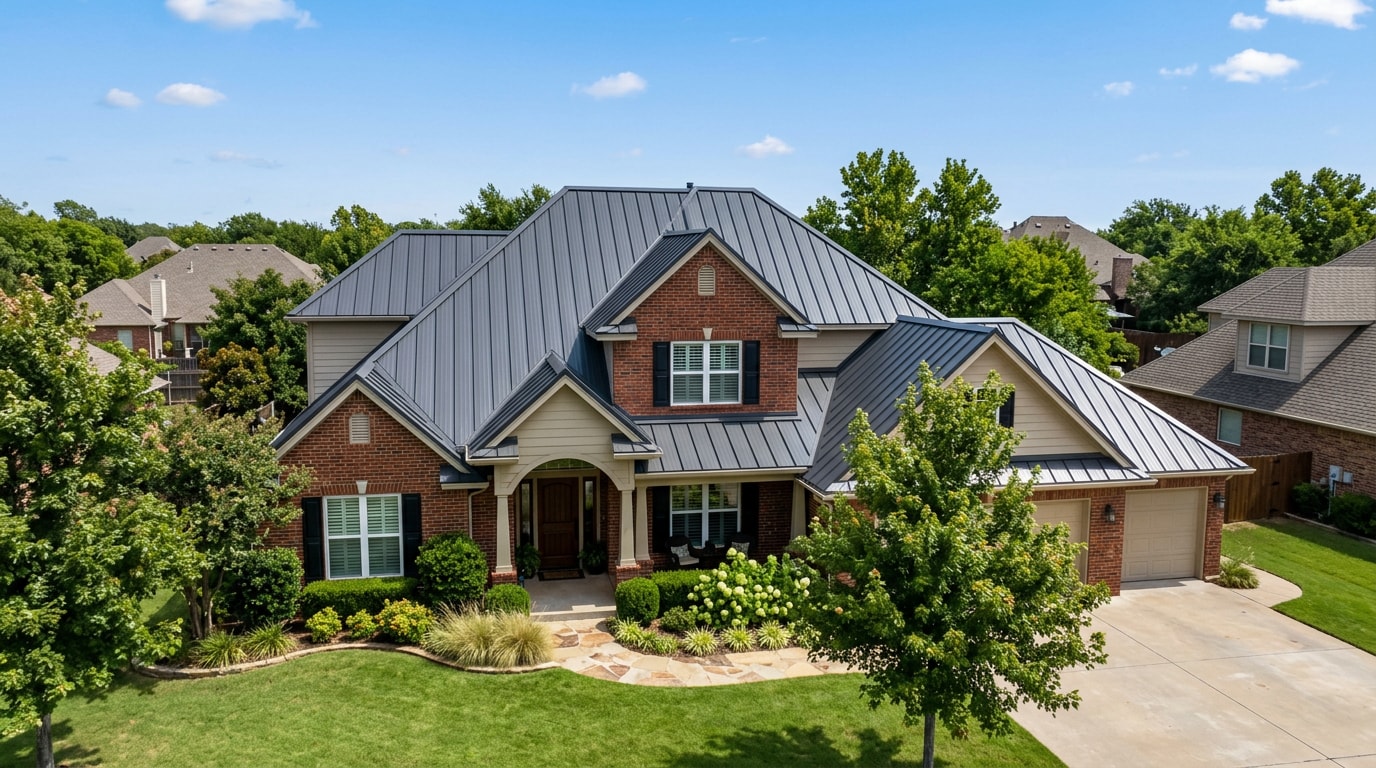
Metal roof over shingles problems in Moore, OK usually trace back to one thing: skipping the inspection that should happen before the first panel goes up. Hail, strict city wind standards, and decades of rebuilt shingle roofs from Moore's tornado history make this decision riskier here than in most towns. This guide breaks down the real problems, the code rules Moore actually enforces, and what an overlay costs compared to a full tear-off.
Quick Answer: Can You Put a Metal Roof Over Shingles in Moore, OK?
Yes, in most cases, provided the shingle layer count stays within code limits, the deck underneath is sound, and flashing points get addressed correctly. It's a conditional yes, not an automatic one. The condition of what's hiding under the shingles is what actually determines whether an overlay is a smart move or an expensive mistake waiting to surface.
A roof with one clean shingle layer and a solid deck is a completely different project than one with two layers, soft spots, or hidden water damage. In our inspections across Moore's post-2013 rebuild neighborhoods, we regularly find homes that already carry two shingle layers from earlier storm repairs, which rules out an overlay before cost ever enters the conversation. That's exactly why the next section matters more than any sales pitch.
Common Metal Roof Over Shingles Problems (and How to Avoid Them)
The most frequent metal roof over shingles problems Moore, OK homeowners run into are trapped moisture, granule abrasion, a visibly wavy panel surface, and code violations from skipped layer limits. Almost all of these come from rushed installs or contractors cutting corners on prep work, not from a flaw in metal roofing itself.
Condensation and Trapped Moisture
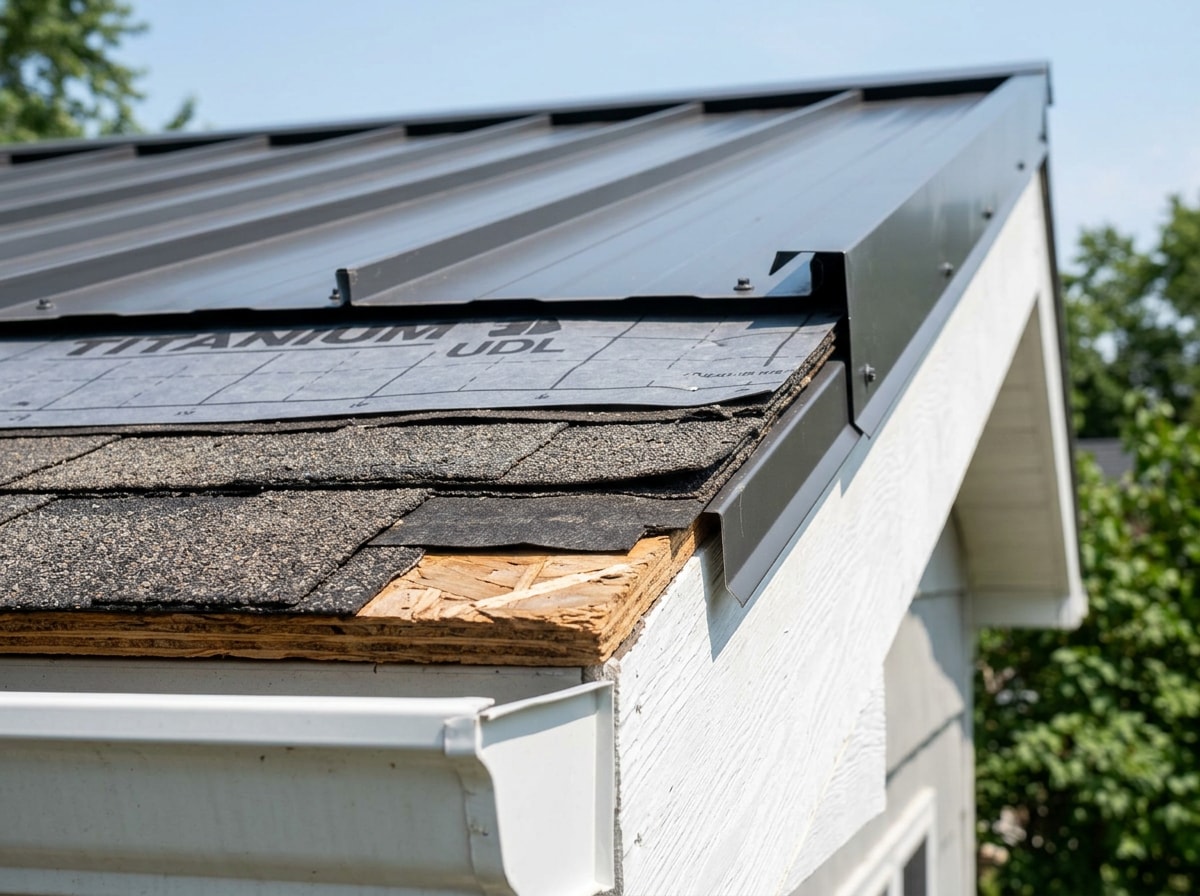
Metal panels installed directly against old shingles, with no separating layer, can trap moisture between the two surfaces. Over time, that trapped humidity has nowhere to escape and can slowly rot the wood deck underneath, a problem that often isn't visible until the damage is advanced.
This is the main reason installers use a slip sheet or synthetic underlayment instead of fastening metal straight to shingles. The barrier gives moisture somewhere to go instead of sitting against the wood indefinitely. Oklahoma's humidity swings make this risk more pronounced than it would be in a drier climate.
Abrasion From Shingle Granules
Loose granules sitting under a metal panel can cause slow abrasion against the underside of the metal over months and years. Homeowners sometimes notice squeaking or faint vibration during wind or temperature changes, which traces back to this friction.
Left unaddressed, that abrasion can wear through protective coatings on the panel's underside. It's a slower-moving issue than moisture damage, but it still shortens the roof's useful life if the prep work wasn't done correctly.
An Uneven, Wavy Finished Look
Shingles have a textured, three-dimensional surface, and thin metal panels can telegraph that pattern once installed directly over them. The result is a visibly wavy or rippled roofline that's hard to miss from the street or a neighbor's yard.
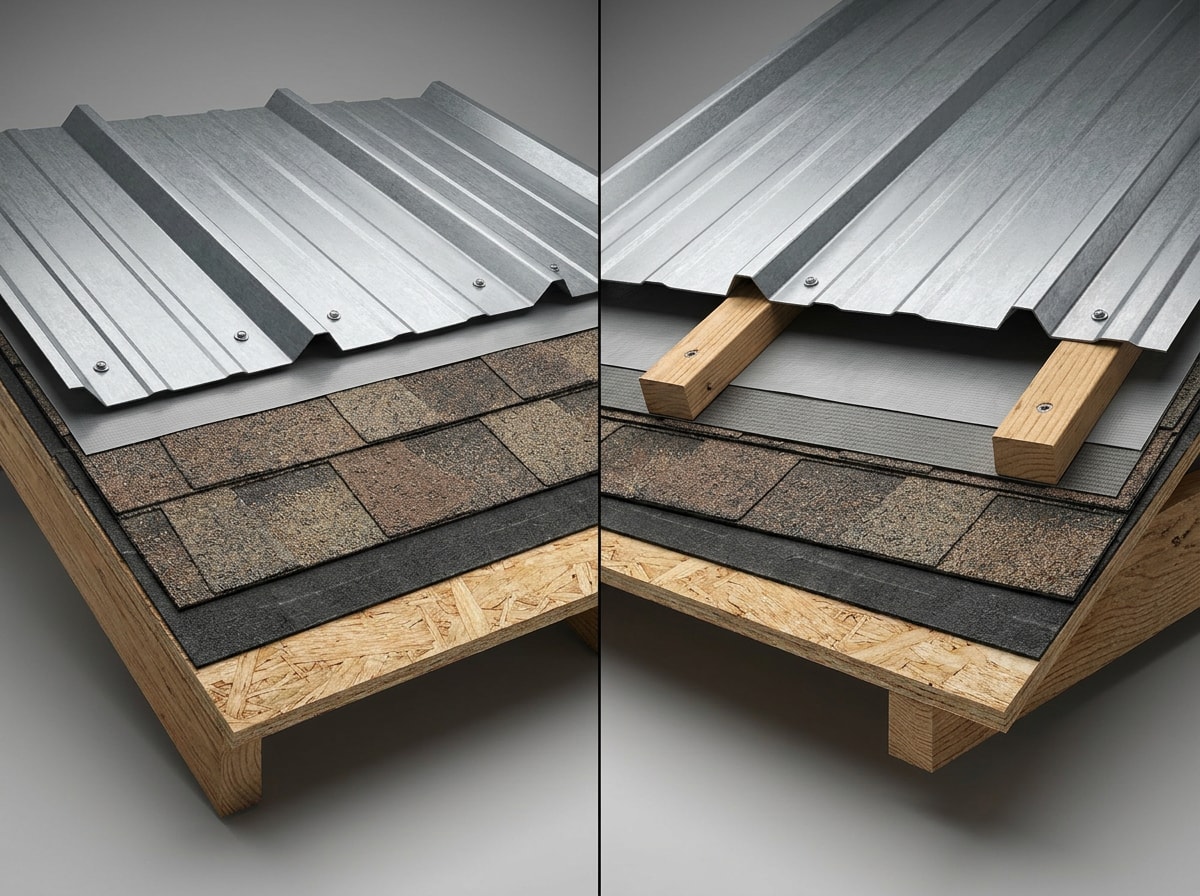
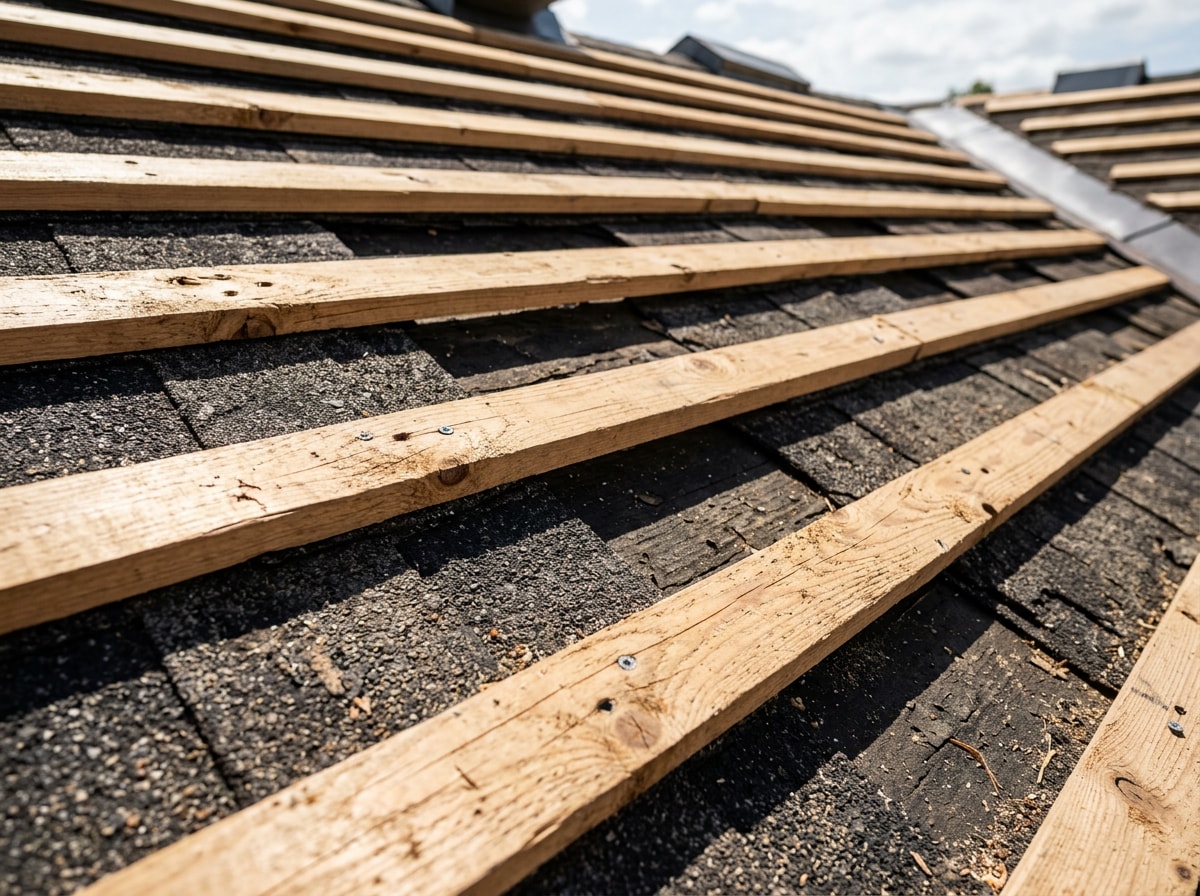
Furring strips largely solve this by creating a flat, even plane for the panels to attach to, separate from the shingle texture below. Skipping that step to save labor cost is one of the more common corners cut on budget overlay jobs.
Skipping Code and Layer Limits
Some installers overlay a metal roof onto a deck that already has two shingle layers, exceeding what code allows. That can fail a building inspection outright, and it can create problems at resale when a home inspector flags the violation.
Beyond the inspection risk, too many layers add weight the structure wasn't designed to carry long-term. A contractor who skips this check to close a sale faster is handing the homeowner a problem that surfaces later, not sooner.
When an Overlay Makes Sense (and When It Doesn't)
Not every roof qualifies for an overlay, regardless of what a salesperson promises on the first visit. A proper assessment has to happen before anyone commits to a method, because the roof's actual condition, not the homeowner's preference, determines whether overlay is even an option.
An overlay tends to make sense when:
- The existing roof has a single, well-adhered shingle layer
- The deck is structurally sound with no give or softness
- There are no active leaks or visible water staining in the attic
- The budget favors skipping tear-off labor and disposal costs
Tear-off should happen first when you see:
- Multiple existing shingle layers already on the roof
- Soft, spongy, or sagging deck sections found during inspection
- Active leaks or water staining in the attic
- Widespread curling, cracking, or missing shingles
- Previous storm or hail damage that wasn't fully repaired
Any one of these conditions can undermine a metal overlay's performance even if the installer does everything else correctly. A reputable roof replacement team should flag these issues during the initial walkthrough, not after the panels are already up. If you're dealing with an active leak right now rather than planning ahead, start with emergency roof repair instead of an overlay decision.
Is Your Roof Actually a Candidate? The Four-Point Assessment
Before quoting an overlay, a qualified contractor checks four things: deck soundness, existing shingle layer count, flashing condition around penetrations, and roof slope or drainage patterns. Skipping any of these is how avoidable problems end up buried under a brand-new metal roof.
Deck soundness gets checked by walking the roof and probing suspect areas for give or softness. Layer count usually requires pulling a small sample or reviewing permit history. Flashing around chimneys, vents, and valleys gets inspected for rust or gaps, and slope is evaluated to confirm drainage will still work once the new panels add height. A free roof inspection is the right first step before agreeing to any overlay quote, and it's the same walkthrough we'd recommend before a full roof replacement if tear-off ends up being the safer call.
What Moore, OK Building Code Actually Says About Metal Overlays
Local permitting rules and layer-count limits, not personal preference, decide whether a metal roof overlay is legal for a given home in Moore. The City of Moore has adopted the 2018 International Residential Code, along with the 2018 International Building Code and related codes, as amended by the city and the Oklahoma Uniform Building Code Commission, with its current revision dated April 13, 2026 . That's the code book your contractor's permit actually gets checked against, not a generic national standard.
The Layer Rule and When Recover Isn't Allowed
Under the IRC framework Moore enforces, a roof recover (installing a new covering over an existing one without tearing off) is generally permitted, but it is not allowed under specific conditions. Per the IRC, a roof recover shall not be permitted where the existing roof covering is water soaked or deteriorated beyond use as a base for additional roofing, or where the existing roof covering is slate, clay, cement, or asbestos-cement tile . A separate provision also bars recover where the existing roof has two or more applications of any type of roof covering .
There's a nuance most overlay articles skip entirely: the code treats engineered metal systems differently from a basic recover. Complete and separate roofing systems, such as standing-seam metal roof systems, that are designed to transmit the roof loads directly to the building's structural system and do not rely on existing roofs and roof coverings for support, shall not require the removal of existing roof coverings . In plain terms, a properly engineered standing-seam system that bears on the structure itself, rather than resting on the old shingles, can sometimes be installed in situations a standard screw-down panel couldn't. This is a detail worth raising with your contractor and the city's inspections office directly, since local amendments can tighten it further.
Permits Aren't Optional
Permits are required for this type of work in Moore. The city's building division reviews the scope, confirms the layer-count claim, and inspects fastening patterns before signing off. Any contractor suggesting the permit step can be skipped is asking a homeowner to carry legal and insurance risk that isn't theirs to carry.
HOA Restrictions in the Moore Area
City code allowing an overlay doesn't mean a homeowners association will. Many Moore-area neighborhoods have covenants restricting panel style, color, or finish even when the construction method is perfectly legal under city rules. Pull the HOA's architectural guidelines before finalizing panel selection, not after ordering materials. Some associations require board approval with sample submissions, which can add weeks to a timeline.
The Two Main Ways Metal Roofing Gets Installed Over Shingles
Contractors generally use one of two legitimate methods. Which one gets used directly affects both the wavy-panel issue and the moisture risk covered earlier.
| Method | How It Works | Best For | Watch-Out |
|---|---|---|---|
| Direct overlay with slip sheet | Metal fastened over shingles with only a synthetic underlayment between layers | Single, well-adhered shingle layer, tighter budget | Shingle texture can still telegraph through; limited ventilation |
| Furring strip (purlin) system | Horizontal strips create an air gap before panels attach | Oklahoma's humidity and temperature swings | Costs more in labor and material |
Method 1: Direct Overlay With Underlayment Barrier
This method fastens metal panels over the shingles with only a slip sheet or synthetic underlayment in between, no furring strips. It's faster and cheaper, and the underlayment barrier does meaningfully reduce abrasion and moisture transfer compared to skipping it entirely. It's still not a flat installation, though. The shingle texture underneath usually shows through to some degree, and ventilation stays limited to whatever gaps exist naturally.
Method 2: Furring Strip (Purlin) System
Furring strips, sometimes called purlins, are horizontal wood or metal strips attached over the shingles before the panels go on. They create a small air gap that flattens the installation surface and allows for passive ventilation underneath the panels. That air gap matters more in Oklahoma than in milder climates, given how often the region swings between humid summers and freezing winter nights. It costs more upfront, but it addresses two of the most common overlay problems, waviness and moisture, at the same time.
Ventilation and Moisture: The Risk Most Articles Skip
Most overlay guides mention moisture in passing, but ventilation is really the structural issue behind it. Adding a metal layer over shingles doesn't change or reduce the attic's baseline intake and exhaust ventilation requirements. Ridge vents, soffit vents, and any powered or passive exhaust systems already in place still need to function correctly after the overlay goes in.
The U.S. Department of Energy's guidance on attic performance notes that controlling moisture and ventilation is central to building a durable attic, and improper ventilation can allow moisture to build up over time . Contractors sometimes block or cover existing vents during an overlay install without replacing that airflow path elsewhere. Ask your contractor, in writing, how they plan to preserve or improve attic ventilation as part of the overlay scope. You can review the Department of Energy's attic durability guidance directly before signing anything.
How Moore's Weather Makes This Decision Different
Moore sits in an area that deals with frequent hail, high wind events, and wide seasonal temperature swings, all of which affect which overlay method and panel gauge actually make sense here.
Hail Exposure in Central Oklahoma
Central Oklahoma is part of the country's most hail-active corridor, and the National Weather Service's Storm Prediction Center, which forecasts severe thunderstorm and hail risk nationwide, is headquartered in Norman, Oklahoma , just down the road from Moore. That proximity isn't trivia. It reflects how central this region is to the country's severe-weather research and tracking. Thinner, budget-gauge panels are more prone to denting and coating damage during hail events common to the metro, which is why heavier-gauge, impact-rated panels are worth the added upfront cost here even on an overlay.
Wind Load and Tornado Alley
Fastening requirements here are stricter than in calmer regions, and that applies to overlay installs just as much as new construction. An overlay's attachment points have to penetrate through an extra layer of material compared to a tear-off install, which makes fastener length and spacing even more important to get right. This is a detail that's easy for a rushed installer to shortcut.
Temperature Swings and Material Expansion
Metal panels expand and contract with temperature changes more noticeably than asphalt shingles do, and Oklahoma's swings between summer heat and winter cold make this a real factor. Fastening systems designed to allow for that movement, rather than fixing panels rigidly in place, prevent long-term buckling or fastener fatigue. This matters more over an existing shingle layer, since the extra material between the panel and the deck changes how much flex the fastening system needs to tolerate.
Metal Over Shingles vs. Full Tear-Off: Cost Breakdown
The upfront savings of an overlay are real, but they don't always hold up once long-term costs are factored in. Here's how the numbers typically compare for a mid-size Moore-area home.
| Cost Factor | Metal Overlay | Full Tear-Off |
|---|---|---|
| Labor (avg. per square) | $350–$450 | $450–$600 |
| Tear-off / dumpster fees | None | $800–$1,800 |
| Underlayment or furring materials | $0.75–$1.50/sq.ft. | $0.50–$1/sq.ft. |
| Typical project timeline | 2–4 days | 4–7 days |
| Estimated total (2,000 sq.ft. roof) | $14,000–$18,000 | $17,000–$23,000 |
Skipping the tear-off and dumpster fees is where most of the real savings come from, not the metal itself, which costs roughly the same either way. If you'd rather see installation steps and permit timing laid out for a comparable project, our shingle installation guide for Moore, OK walks through the same permitting process from the tear-off side.
The savings can disappear if the overlay shortens the roof's effective lifespan or complicates a future tear-off. Removing an old metal-over-shingle system later typically costs more than removing shingles alone, since crews have to deal with two bonded layers instead of one. Resale can get complicated too. Some buyers' inspectors flag overlay installs as a point of negotiation, and certain insurers ask more questions about an overlaid roof's age and condition than they would about a straightforward replacement.
Honest Pros and Cons for Moore Homeowners
Both paths have legitimate tradeoffs, and the right answer depends on the roof's condition and your timeline more than any universal rule.
Genuine advantages of a metal overlay:
- Lower upfront labor and disposal cost
- Faster installation with less disruption to the household
- Less debris sent to landfills
- An added insulating layer from the retained shingles
Limitations to understand before signing:
- Shorter effective lifespan than a tear-off metal install
- Possible resale disclosure or inspection friction
- Fewer options if deck issues surface later and need addressing
- Some manufacturers offer reduced warranty terms for overlay installs
How to Choose the Right Contractor for This Job
Contractor selection matters more for an overlay than a standard replacement, because mistakes made underneath the panels are much harder to spot or fix after the fact.
Ask every contractor for proof of licensing and insurance, confirmation they'll pull the permit directly, specific experience with overlay installs (not just new roofs), and written manufacturer installation specs for the chosen panel system. A contractor who hesitates on any of these is worth reconsidering. Get answers in writing, not just verbally during the sales pitch, so you have something to point to if a dispute comes up later.
After major hail events, Moore and the surrounding metro tend to see a spike in door-to-door "storm chaser" contractors offering fast, cheap overlay work. Common warning signs include pressure to sign same-day, reluctance to pull a permit, and no verifiable local address or past project history. Working with an established local team that actually services the Moore, OK area long-term is safer than a crew that showed up after a storm and plans to leave town once the work is done.
If your current roof is already showing the leak or sagging-deck red flags covered earlier, it's worth starting with roof repairs or a new roof installation conversation rather than an overlay quote. You can see examples of completed work on our projects page, and our team at AH Roofing & Contracting walks every Moore homeowner through the deck, layer, and code check before quoting either option. Get a free estimate and we'll tell you honestly whether your roof qualifies for an overlay or needs a tear-off.
FAQ
What are the downsides of installing a metal roof over shingles?
The main downsides are trapped moisture that can rot the deck, granule abrasion under the panels, a wavy cosmetic finish, and potential code violations if the shingle layer count is skipped over. Most are avoidable with a proper inspection and the correct installation method, covered earlier in this guide.
How many shingle layers can be under a metal roof in Moore, OK?
Most local building officials require no more than a single existing shingle layer before approving a metal overlay, since code does not permit a recover where the existing roof already has two or more applications of any type of roof covering . Moore's inspections division confirms the actual layer count before signing off on a permit.
Is a metal overlay a good idea given Moore's hail risk?
It can be, provided you choose a heavier-gauge, impact-resistant panel and the installer uses proper fastening for the region's wind load requirements. Given how hail-active central Oklahoma is, cutting corners on panel quality to save money upfront is a riskier tradeoff here than in lower-hail regions.
Does insurance treat an overlay differently than a new roof?
Sometimes. Overlays can raise questions during a claim if the insurer wants documentation of what's underneath the metal, and discount eligibility for impact-resistant roofing varies by carrier and state. It's worth disclosing the overlay method to your carrier upfront rather than after a claim.
How long does a metal roof over shingles last compared to a tear-off install?
A well-installed overlay commonly lasts a few decades, somewhat less than a full tear-off metal install under the same conditions. The gap mostly comes down to deck condition and moisture exposure, both of which are harder to manage once an existing shingle layer is sealed underneath.
Do I need a permit for a metal roof overlay in Moore?
Yes. Moore's building division requires a permit for re-roofing work, including overlays, and will review the layer count, materials, and fastening pattern before approving it. Skipping this step puts the legal and insurance risk on the homeowner, not the contractor.