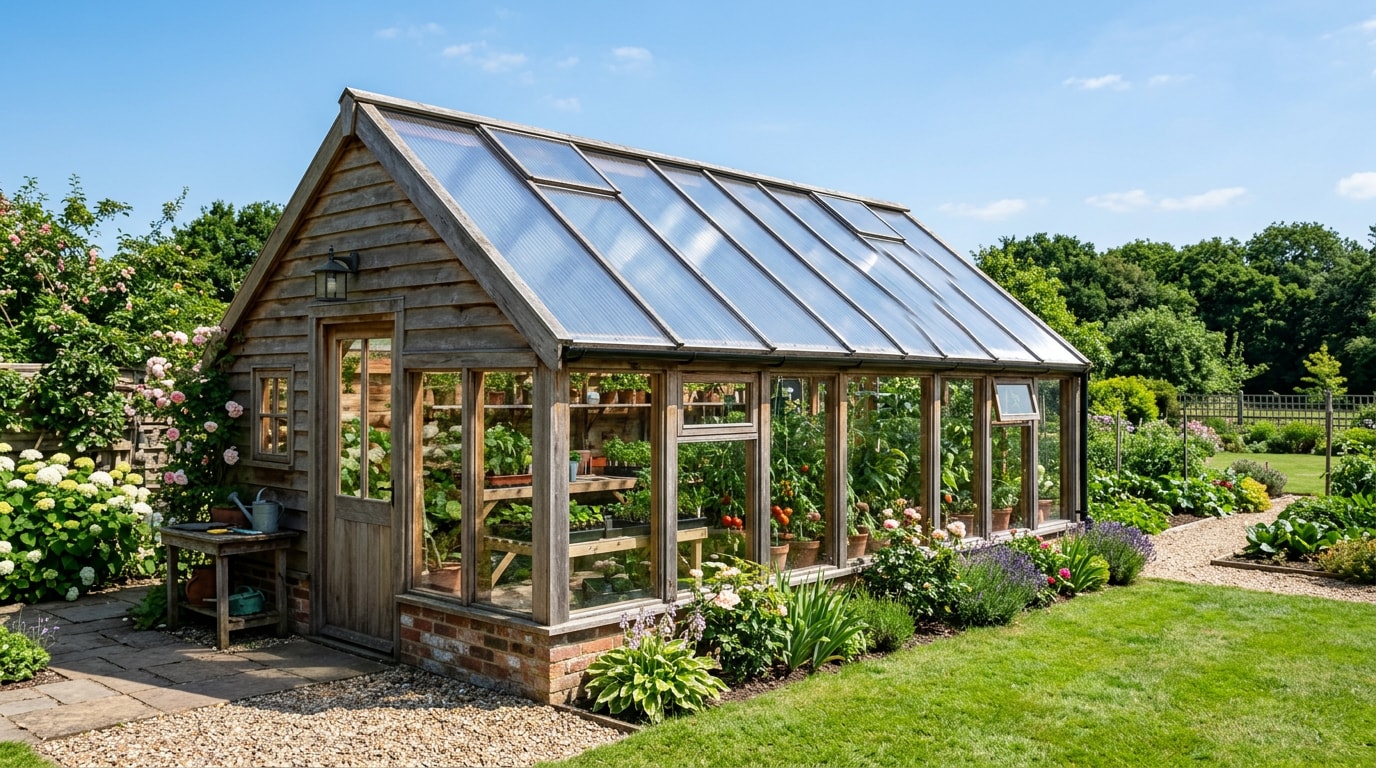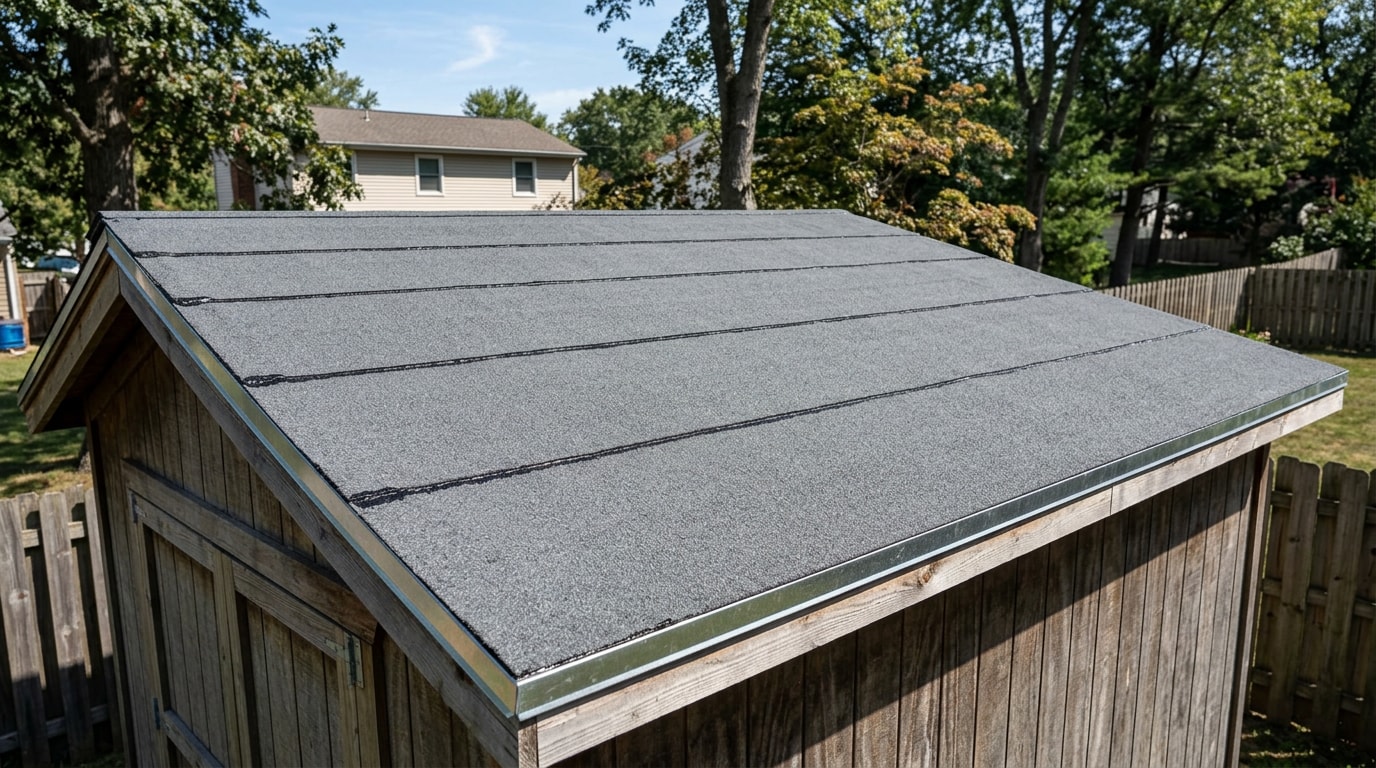
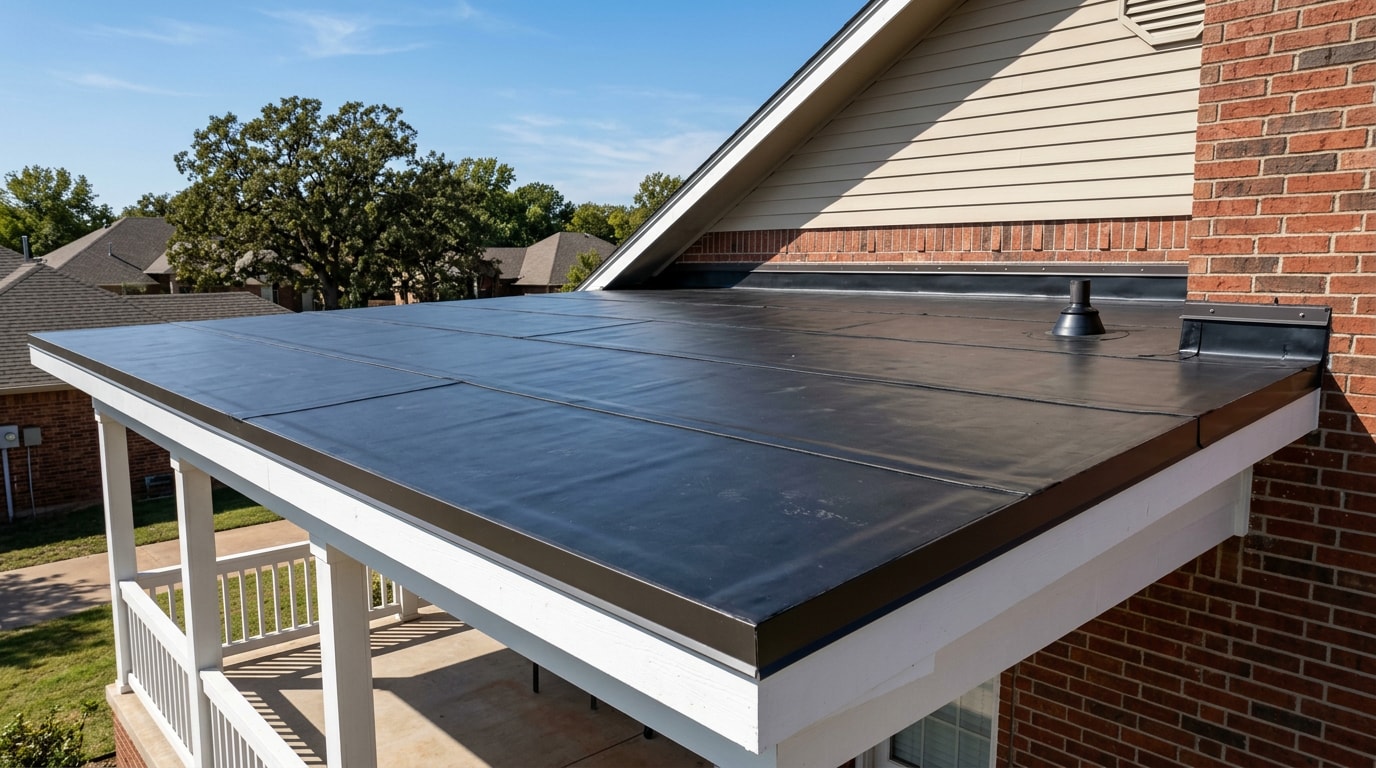
Rubber roofing in Piedmont, OK is the go-to fix for flat porch roofs, garage additions, and low-slope sections that shingles can't properly seal. EPDM membrane has a decades-long track record, a straightforward install, and a price tag that fits most budgets. Here's what it actually costs in 2026, how it holds up against Oklahoma's hail and heat, and how it stacks up against TPO and PVC.
What Is Rubber Roofing (EPDM)?
Rubber roofing, formally known as EPDM (ethylene propylene diene monomer), is a synthetic rubber membrane installed in large rolled sheets to waterproof flat or low-slope roofs. It's one of the oldest and most widely used single-ply roofing materials in the country, prized for flexibility and simple installation.
In Piedmont and the broader NW Oklahoma City metro, this material shows up most on flat porch roofs, home additions, detached garages, sheds, and the commercial buildings popping up as the area grows. It's not the same as TPO or PVC. Those are plastic-based single-ply membranes with different installation methods, covered in the comparison section below.
The material's minimum quality requirements are set by a formal industry standard: ASTM D4637, the specification for EPDM sheet used in single-ply roof membranes. This standard covers flexible sheet made from ethylene-propylene-diene terpolymer (EPDM) intended for use in single-ply roofing membranes exposed to the weather , which is what separates a code-grade membrane from a bargain-bin roll.
Rubber Roofing Cost in 2026
Rubber roofing in Piedmont, OK typically runs $4.50 to $9.00 per square foot installed in 2026, depending on membrane thickness and attachment method.
A standard 45-mil membrane sits at the lower end. Thicker 60-mil and 90-mil sheets resist punctures and UV exposure better, which pushes costs higher.
For a typical 1,000-square-foot flat roof section, common on a residential addition or garage, that translates to roughly $4,500 to $9,000 total, including labor, fasteners or adhesive, and basic flashing work. Larger commercial sections generally see a lower per-square-foot rate due to economies of scale, though complexity like drains, HVAC curbs, and parapet walls can push numbers back up.
Several factors drive the final number:
- Membrane thickness — 45-mil, 60-mil, or 90-mil options, with thicker sheets costing more upfront but lasting longer
- Attachment method — fully adhered, mechanically fastened, or ballasted systems each carry different labor costs
- Roof size and complexity — more penetrations, drains, and edge detail mean more labor hours
- Insulation requirements — code-driven insulation upgrades add to material cost
- Local labor rates — Oklahoma labor costs tend to run moderate compared to coastal markets
| Membrane Thickness | Cost per Sq Ft (2026) | 500 Sq Ft Total | 1,000 Sq Ft Total | 2,000 Sq Ft Total |
|---|---|---|---|---|
| 45-mil | $4.50–$6.00 | $2,250–$3,000 | $4,500–$6,000 | $9,000–$12,000 |
| 60-mil | $5.50–$7.50 | $2,750–$3,750 | $5,500–$7,500 | $11,000–$15,000 |
| 90-mil | $7.00–$9.00 | $3,500–$4,500 | $7,000–$9,000 | $14,000–$18,000 |
For a closer look at how these numbers apply to a full tear-off and reroof, see our roof replacement services page, or get a free estimate based on your actual roof dimensions.
Types of EPDM Rubber Roof Systems
Contractors typically quote one of three attachment methods.
- Fully adhered — the membrane is glued directly to the roof deck or insulation for a clean, low-profile finish. Resists wind uplift well but costs more.
- Mechanically fastened — the sheet is secured with screws and plates under the seams. Installs quickly and cheaply, but shows slight fastener ridging.
- Ballasted — loose stone or pavers hold the membrane down without adhesive or fasteners. Durable, but adds significant roof load that isn't ideal for every structure.
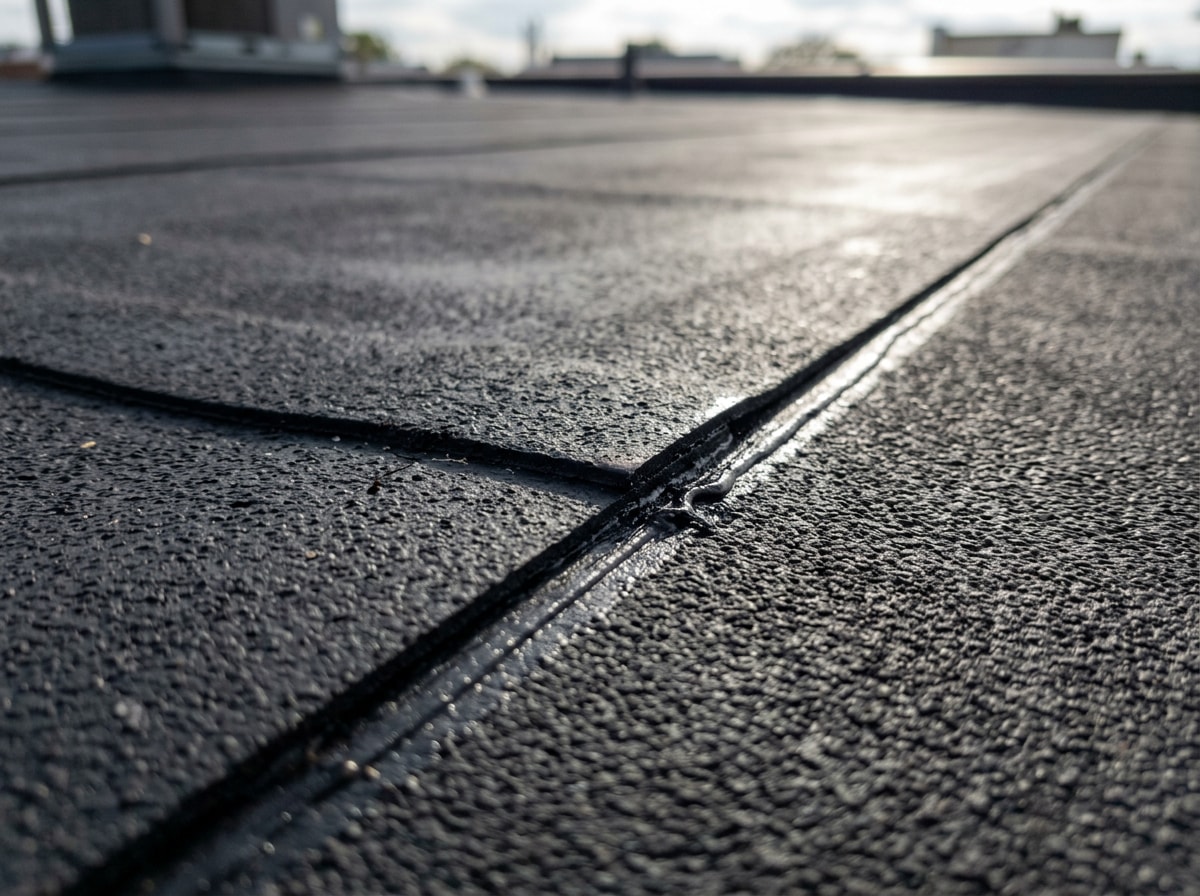
Regardless of which system goes down, seam quality matters more than the system itself. Poorly sealed seams are the single most common failure point across all three EPDM attachment methods. Our roof installation team walks every seam before calling a job finished, because that's where callbacks come from.
Benefits and Drawbacks of Rubber Roofing
Like any roofing material, EPDM has real strengths and real limitations. Weighing both against your roof's slope, sun exposure, and budget is the smart way to decide if it fits your Piedmont property.
Pros of EPDM Rubber Roofing
- Strong value through affordability and a multi-decade service record
- Wide temperature tolerance, from summer heat to winter cold snaps
- Patches easily and installs quickly thanks to lightweight rolled sheets
- Resists UV degradation better than many budget materials
- White or light-colored EPDM can improve energy efficiency by reflecting solar heat instead of absorbing it
That last point is backed by federal research. ENERGY STAR notes that a cool roof is made of a material or has a coating that can lower the roof surface temperature, decreasing the amount of heat transferred into a residential or commercial building, since traditional roofs absorb sunlight during the day, heating the building and the surrounding air . A white EPDM membrane captures that benefit; standard black EPDM does not.
Cons of EPDM Rubber Roofing
- Seam vulnerability — most leaks start at seams if installation or maintenance falls short
- Standard black EPDM absorbs heat rather than reflecting it, raising attic and interior temperatures during hot stretches
- Limited aesthetics — mostly black or white sheets, no varied colors or textures
- Vulnerable to punctures from foot traffic, falling branches, or hail
- Not designed for steep-slope applications, where shingles or metal panels perform better
EPDM vs TPO vs PVC
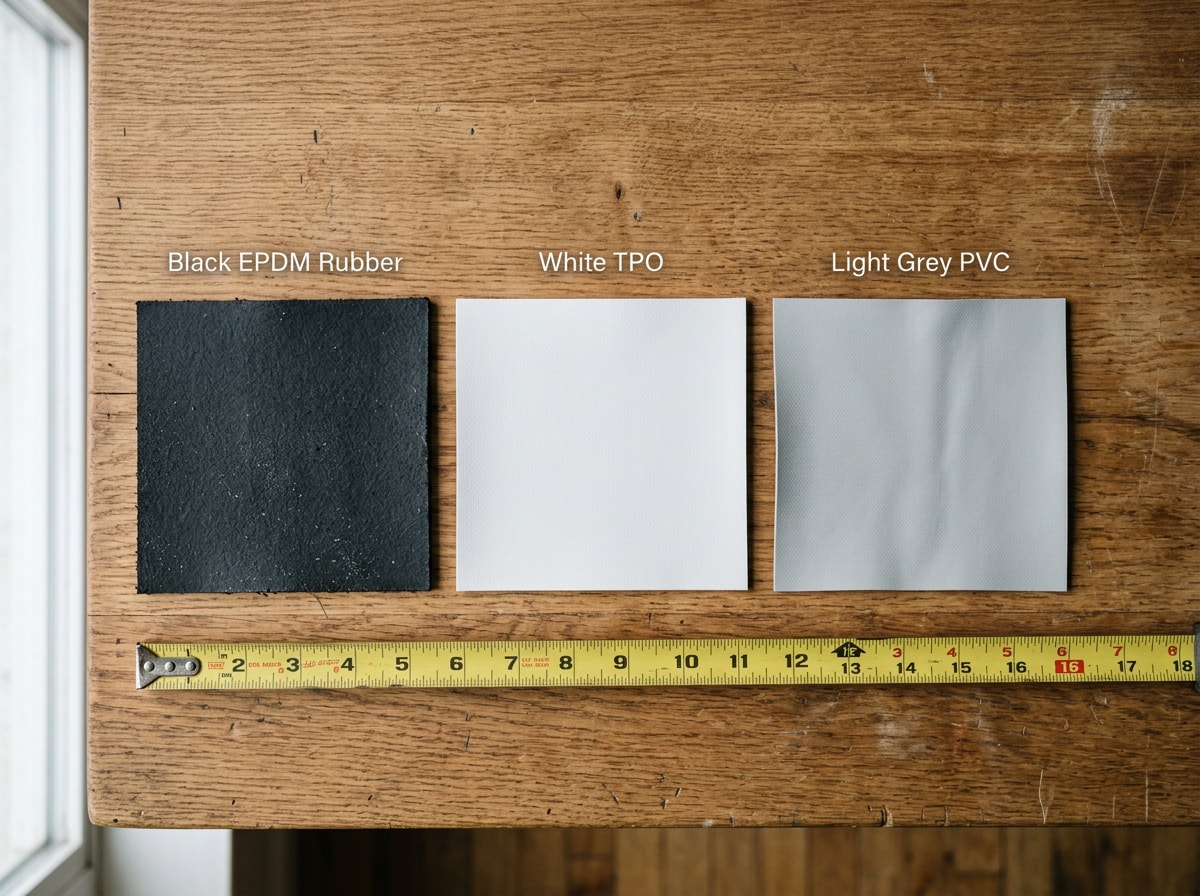
Choosing between EPDM, TPO, and PVC comes down to budget, climate priorities, and how the seams are built. EPDM uses adhesive or taped seams and costs less upfront. TPO and PVC use heat-welded seams, which create a stronger bond but typically cost more per square foot.
| Factor | EPDM | TPO | PVC |
|---|---|---|---|
| Cost per sq ft (2026) | $4.50–$9.00 | $5.50–$8.50 | $6.00–$10.00 |
| Typical lifespan | 20–30 years | 15–25 years | 20–30 years |
| Energy efficiency | Low (black) / Moderate (white) | High (reflective) | High (reflective) |
| Seam method | Adhesive/tape | Heat-welded | Heat-welded |
| Best use case | Budget-conscious flat roofs | Hot-climate energy savings | Chemical/grease exposure, commercial |
In Oklahoma's climate of hailstorms, high summer heat, and sharp temperature swings, TPO's reflective surface often edges out standard black EPDM for cooling costs, while EPDM's flexibility holds up well against thermal expansion and contraction. White EPDM narrows that efficiency gap. See our roofing contractor services page for guidance on which membrane fits your building, or read our breakdown of sustainable roofing options in Jenks, OK for more on reflective and eco-friendly materials.
How Long Does Rubber Roofing Last in Piedmont's Climate?
A well-installed EPDM roof typically lasts 20 to 30 years, depending heavily on membrane thickness, installation quality, seam condition, and maintenance consistency. Thicker membranes and fully adhered systems tend to outlast thinner, mechanically fastened options.
Oklahoma's weather adds a regional wrinkle. The National Weather Service's Norman office, which covers the Piedmont area, has documented large hail events close to home for decades. One office record notes that a severe thunderstorm produced large hail and destructive winds along a path from Manchester to Minco , towns just a short drive from Piedmont. That kind of storm track is common across Canadian County, and it's exactly the sort of event that stresses flat roof membranes and tests seam integrity.
In our own inspections across Piedmont's flat porch additions and detached garages, failed seams and ponding water cause far more call-backs than the membrane itself wearing out. Routine inspections after major storms catch small punctures before they turn into larger leaks, extending the practical lifespan well beyond the minimum end of that range. If it's been a while since your last check, our Roofing Inspection Checklist for Piedmont, OK Homeowners walks through exactly what to look for.
Rubber Roofing Maintenance and Repair
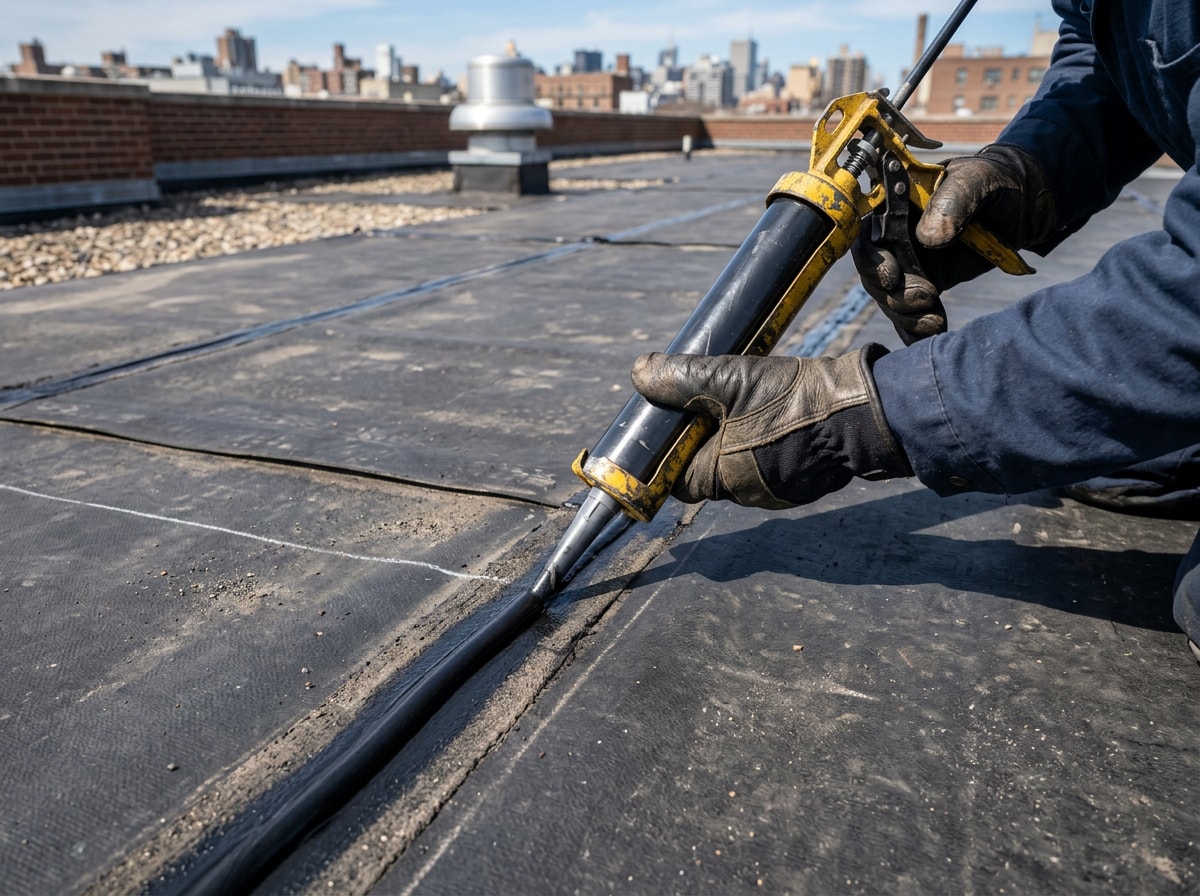
A twice-yearly inspection, plus a check after any major hailstorm or windstorm, is the simplest way to catch problems early. Seams and edge metal are the most common failure points, so those areas deserve the closest attention during any walkthrough.
Minor punctures or seam separations are usually patchable, with repair costs generally running a few hundred dollars depending on size and accessibility. Widespread seam failure, membrane shrinkage, or repeated leaks in multiple areas usually signal it's time to discuss full replacement rather than another round of patching.
Our roof repair services page covers what a typical patch-repair visit involves, and our roof inspection service is the fastest way to find out which category your roof falls into. If a storm just rolled through and water is already coming in, our emergency roof repair team can get a tarp or temporary patch down the same day.
Is Rubber Roofing Right for Your Piedmont Property?
If you've got a flat or low-slope section, EPDM is usually the most cost-effective, longest-proven option on the market. It's not the right call for a full steep-slope reroof, and it's not the most energy-efficient choice in black form, but for porches, additions, garages, and commercial flat sections, it remains the workhorse material contractors reach for first.
A licensed, local assessment is the only way to know your real numbers. A&H Roofing & Contracting holds Oklahoma Construction Industries Board license #80005784, is BBB A+ accredited, and brings 26+ combined years of roofing experience to flat-roof jobs across the OKC metro, including Piedmont. Get a free estimate and we'll tell you straight whether EPDM, TPO, or a repair is the right move for your roof.
Frequently Asked Questions
How much does EPDM roofing cost per square foot?
EPDM roofing typically costs $4.50 to $9.00 per square foot installed in 2026, depending on membrane thickness (45-mil to 90-mil) and attachment method. Thicker membranes and fully adhered installations sit at the higher end of that range.
Is rubber roofing good for residential homes?
Yes. Rubber roofing works well for residential homes with flat or low-slope sections, including additions, garages, porches, and modern flat-roof designs. It's less suited to traditional steep-slope main roofs, where shingles or metal are better fits.
What's the difference between EPDM and TPO?
EPDM is a black or white rubber membrane with adhesive or taped seams, while TPO is a reflective plastic membrane with heat-welded seams. TPO generally offers better solar reflectivity, while EPDM tends to cost less and has a longer proven track record.
How long does rubber roofing last in Oklahoma?
Most EPDM roofs last 20 to 30 years with proper installation and maintenance. Hail and wide temperature swings are the biggest local stressors, so thicker membranes and prompt post-storm inspections matter more here than in milder climates.
Can you repair a rubber roof yourself?
Small punctures and minor seam lifts can be patched with an EPDM repair kit, but getting a watertight, long-lasting seal takes practice. Widespread seam failure or recurring leaks are better handled by a licensed roofer who can diagnose the actual cause rather than just covering the symptom.
Does rubber roofing need special maintenance?
EPDM needs less upkeep than most materials, but it isn't maintenance-free. Twice-yearly inspections, prompt debris removal, and a post-storm check are enough to catch most issues before they become leaks.
Chris Archer is the owner of A&H Roofing & Contracting, LLC, a BBB A+ accredited, GAF Certified roofing contractor licensed with the Oklahoma Construction Industries Board (license #80005784) and based in Edmond, OK. He and the A&H team have handled flat-roof and EPDM installations across the Piedmont and OKC metro area for more than a decade.