Metal roof valley flashing in Tulsa, OK takes more punishment than any other part of the roof, because every drop of rain from two intersecting slopes funnels through that single seam. When it fails, the leak rarely shows up at the valley itself — it shows up later as a ceiling stain, a soaked wall cavity, or a damp attic. Here's how valley flashing actually works, what failure looks like, and when repair beats a full tear-off.
How Metal Roof Valley Flashing Works
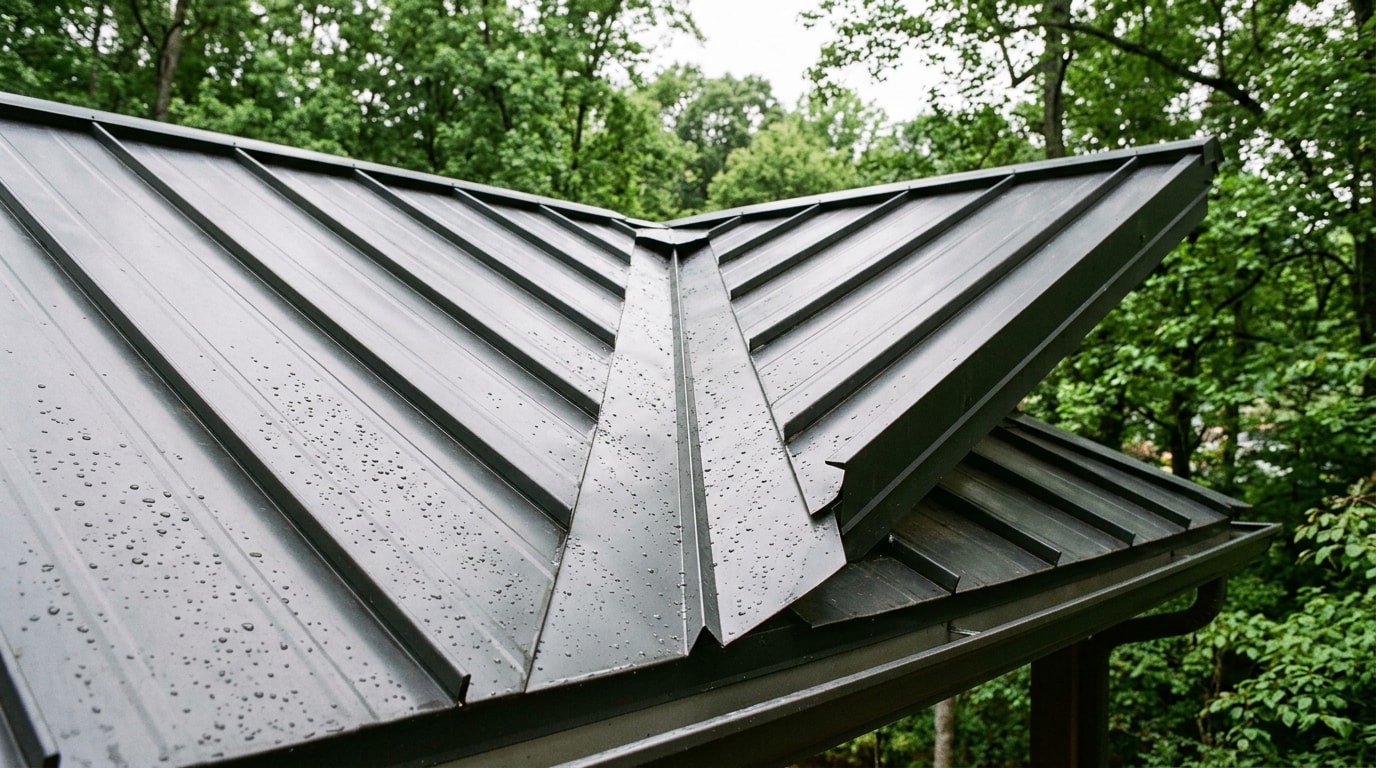
Valley flashing is the metal channel installed where two roof slopes meet, carrying the combined runoff from both planes down to the gutters. Because it concentrates more water volume than any flat section of roof, it's also the component most likely to fail first.
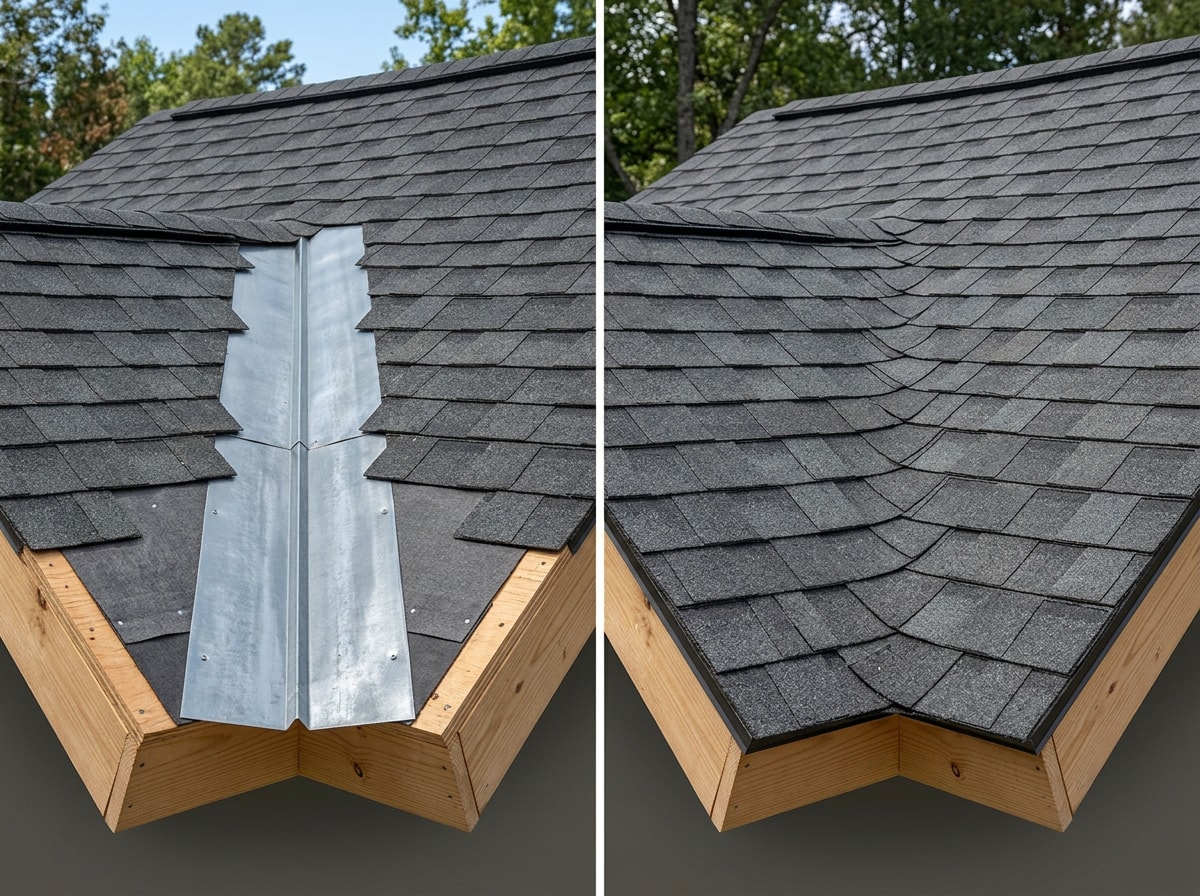
There are two common approaches. Open valley flashing leaves a visible metal channel between the panels. Closed (California) valley flashing tucks panels together over a hidden pan. Open valleys shed heavy water faster and are easier to inspect, which matters in Oklahoma given how quickly hail dents and debris accumulate in a tight closed valley.
Some valley pans use a raised center rib for a specific reason: a W valley is a type of roof flashing metal used to help prevent cross-wash, which can happen when water comes down the roof at a certain speed, enough to flow from one side of the roof across the valley and up beneath the slate, shingles or tile on the adjacent roof slope . That detail matters more in Tulsa than it looks on paper, since wind-driven thunderstorms push water sideways across a roof just as often as straight downhill.
Building codes set a baseline for how this metal has to perform. Under the International Residential Code, valley flashing shall be not less than 15 inches wide, and valley and flashing metal shall be a minimum uncoated thickness of 0.0179-inch zinc coated G90 . A contractor cutting corners on gauge or width is building in a future leak, even if the panels look fine on day one.
Other Flashing That Protects a Tulsa Metal Roof
Flashing isn't one product — it's a family of shaped metal pieces that each seal a different transition point on the roof.
Step Flashing
Step flashing seals the spot where a roofline meets a sidewall or dormer. Instead of one continuous piece, it's installed as individual overlapping pieces that step up the slope alongside each panel course, keeping water moving outward instead of behind the wall.
Counter-Flashing & Wall Flashing
Counter-flashing works as a partner to step flashing. It's set into the wall material above the step flashing and folded down over it, creating a second layer that keeps wind-driven rain from working behind the first. On a metal roof, this wall detail is often where masonry or siding meets the deck.
Chimney Flashing
Chimneys create their own leak risk, separate from valleys or walls. Chimney flashing wraps the base where masonry meets the roof plane, and because that joint sees constant movement from temperature swings, it's a common source of leaks once the seal degrades. A roof inspection typically checks this area right alongside the valleys.
Signs Your Valley Flashing Is Failing
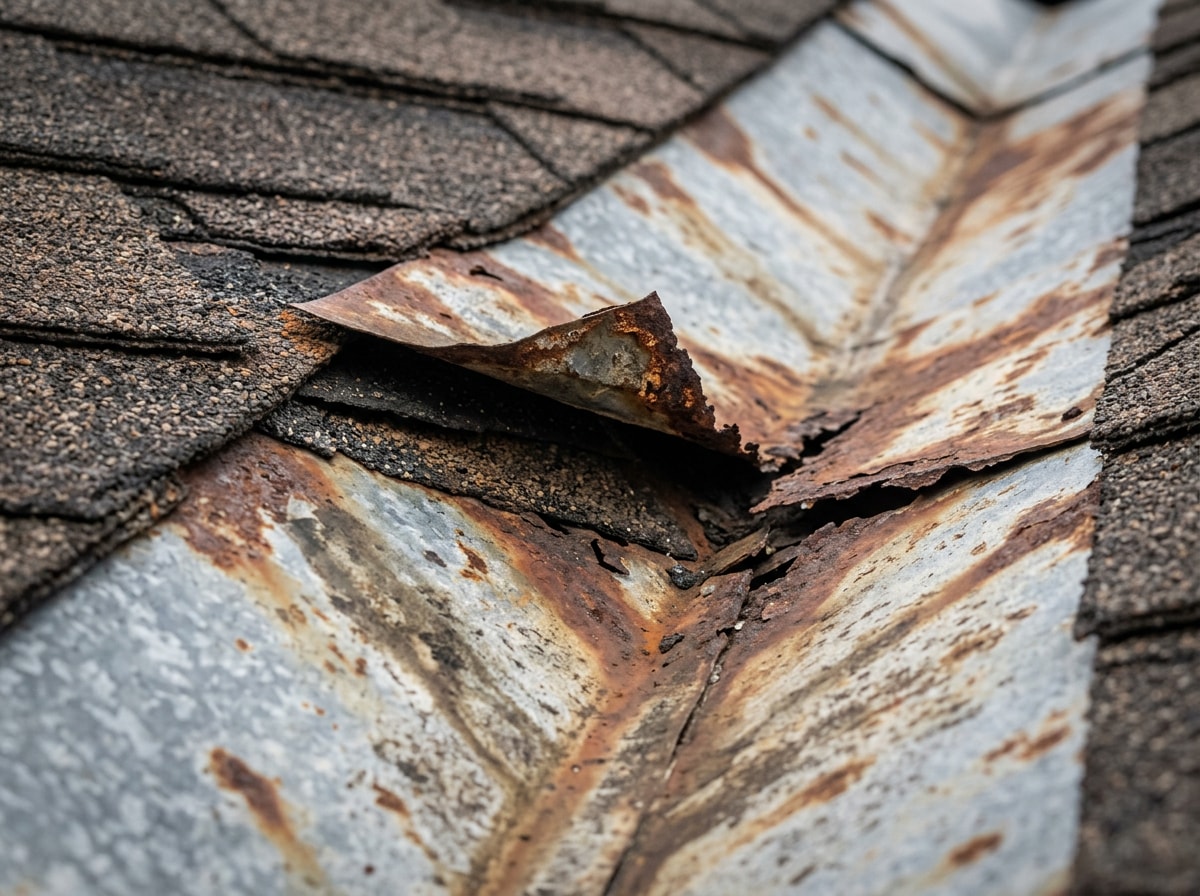
Failing flashing on a metal roof usually shows up in a few predictable ways:
- Rust streaking below seams or along the valley centerline
- Visible gaps or lifted edges where panels meet the flashing
- Metal shavings or granule-like debris collecting in gutters below a valley
- Interior ceiling stains that trace back to a valley or sidewall line
- Water marks on the attic deck directly under a valley run
These signs tend to appear near valleys first, since that's where water volume and movement are highest. If you spot any of them before the next heavy rain, an emergency roof repair visit is worth scheduling before a slow leak turns into decking damage.
How Valley Flashing Is Installed
Installing valley flashing correctly is part of a larger sequence, not a standalone fix. Understanding where it fits explains why a proper install costs more than a quick patch job.
Shop-Fabricated Trim
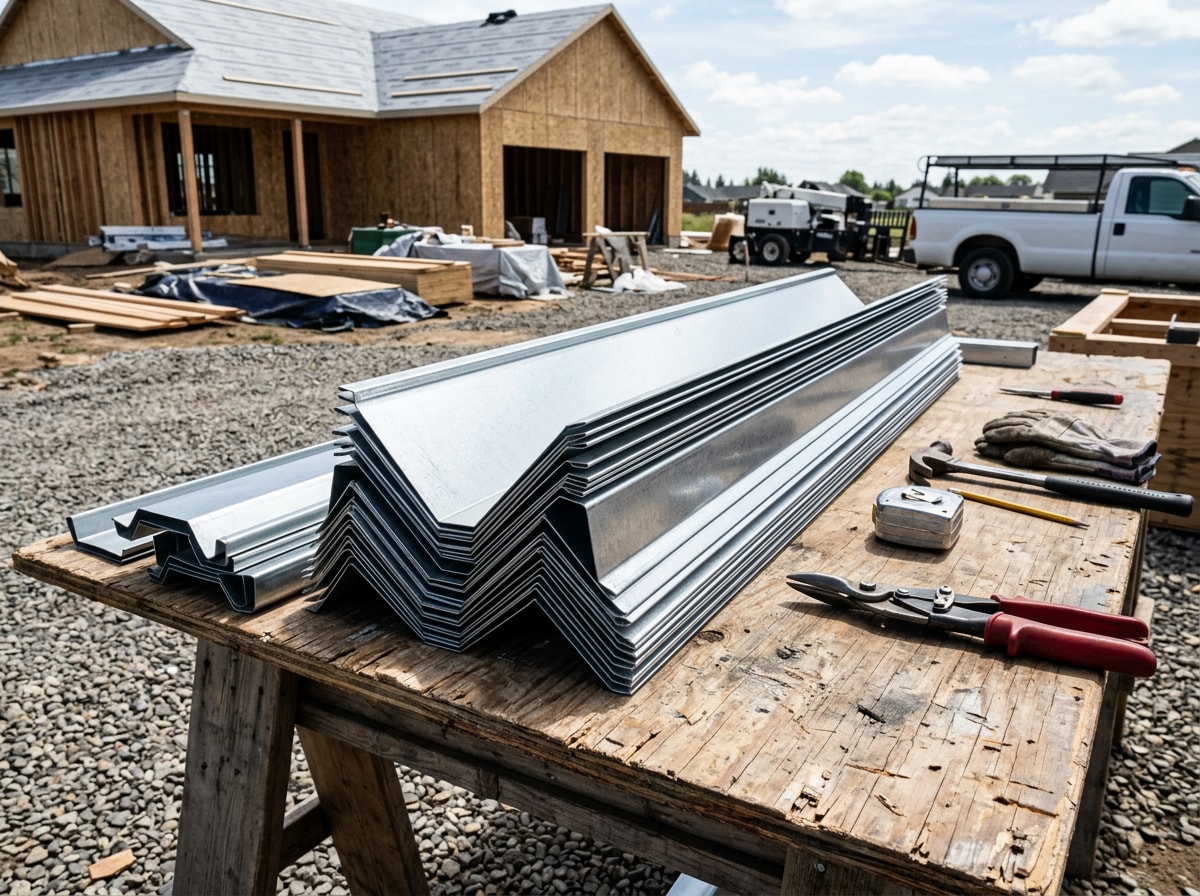
Quality valley flashing is shop-formed to match the exact pitch and dimensions of that specific roof rather than cut from generic stock. Most is formed from Galvalume-coated steel, chosen for its corrosion resistance, and this custom approach is what allows tight, consistent seams along the full length of the valley.
Tear-Off & Deck Prep
Before any flashing goes on, the old roofing material comes off and the decking underneath gets inspected. Tear-off exposes rot, soft spots, or old nail holes. Replacing damaged sheathing and adding proper underlayment gives the new flashing a stable, sealed surface to anchor into — a step some faster roof repairs skip to save time, which is exactly how early valley leaks start.
Panels, Sealant & Fasteners
With the deck prepped, panels are set working outward from the valley, and the flashing, drip edge, and trim pieces go in alongside them. Sealant, fastener spacing, and overlap details all matter here; a rushed roof installation at the valley is one of the most common causes of early leaks on an otherwise sound metal roof.
Repair or Replacement? Making the Right Call
The decision usually comes down to three factors: the flashing's age, how widespread the rust or gaps are, and whether that section has already been patched before.
| Factor | Points to Repair | Points to Replacement |
|---|---|---|
| Rust | Localized, surface-level | Rusted through in multiple spots |
| History | First-time issue | Already patched once or more |
| Age of flashing | Under 10 years old | Original flashing on a roof 20+ years old |
| Leak pattern | Single, traceable spot | Recurring or spreading to new areas |
A localized gap on newer flashing is often a straightforward repair. Flashing that's rusted through in multiple spots, or has a history of repeat leaks, is usually a better candidate for a full roof replacement of that section rather than another patch.
What Valley Flashing and a New Metal Roof Cost in Tulsa
Homeowners often ask one question but mean two different things: the cost of a whole new metal roof versus the cost of fixing failing flashing on an existing one.
A full metal roof varies in price based on panel type, roof pitch, and whether tear-off is needed, which is why estimates swing widely between homes. Per the National Association of Home Builders, metal roofing systems are generally expected to provide a service life of 50 years or more, whereas asphalt shingles typically require replacement after 15 to 20 years — a gap that changes the long-term math even when the upfront price is higher. The Metal Roofing Alliance is the leading voice for companies and professionals involved in the residential metal roofing industry and is a solid resource for researching panel types and manufacturer warranties before you request quotes.
Flashing repair costs far less than a full roof, since it addresses one specific seam rather than the whole system. Pricing depends on how much of the run needs replacing and whether the panels around it also need resealing, but it's typically a fraction of a reroofing project. Our contact page is the fastest way to get an exact number for your roof rather than guessing from a national range.
Why More Tulsa Homeowners Choose Metal Roofs
Hail, straight-line wind, and triple-digit summer heat put Oklahoma roofs through more stress than most climates. Metal roofing benefits include a longer lifespan, better wind-uplift resistance, and far less granule loss after a hailstorm compared to asphalt shingles. A metal roof is only as watertight as its weakest flashing detail, though, which is why the valley gets tested first in nearly every storm. Homes with properly flashed valleys and good gutter installation feeding the downspouts handle Tulsa's sudden downpours with far less stress on the decking.
If your home still has its original underlayment under an aging roof, it's worth reading up on felt paper for roofing in Tulsa before your next inspection, since underlayment condition affects how well new flashing seals to the deck.
Flashing & Metal Roofing Service Areas Near Tulsa
Flashing repair and metal roofing work covers the broader Tulsa metro, including Broken Arrow, Bixby, Jenks, and Owasso, in addition to Tulsa proper. Homeowners across these communities deal with the same hail and storm exposure, which makes flashing condition a shared concern regardless of zip code. Visit the A&H Roofing And Contracting homepage to see the full range of services we bring to each of these areas, or get a free estimate if you'd rather skip straight to a quote.
FAQ
What does valley flashing actually do on a metal roof?
It channels combined runoff from two roof slopes down to the gutters without letting water work its way under the panels on either side. It's a single seam doing the job of a drainage system, which is why it fails before flatter sections of roof.
Open valley or closed valley: which is better for Tulsa weather?
Open valleys generally hold up better here because they're easier to inspect and clear of debris, and they shed heavy rain faster. Closed valleys look cleaner but can trap hail debris and hide early rust until the leak is already inside.
How is a valley flashed on a metal roof?
Flashing goes in after deck prep, with a shop-formed metal channel running down the center of the valley before panels are set on either side and sealed to its edges. Code sets a baseline of at least 15 inches of width and a minimum G90 galvanized gauge for the valley metal itself , with fastener spacing and overlaps following manufacturer and local code requirements.
Do you need flashing with a metal roof?
Yes. Panels alone don't seal transitions, seams, or valleys — flashing is what actually stops water at those joints. Without it, even a well-installed panel system will eventually leak where two surfaces meet.
Does homeowners insurance cover flashing repair on a metal roof?
Storm or hail-related flashing damage is often covered under standard policies, though coverage details vary by insurer and policy terms. The Insurance Information Institute reports that wind and hail damage made up 38% to 48% of homeowners insurance losses each year from 2019 through 2023 , which is why most carriers take roof condition seriously at claim time. Review your policy's specifics with your provider, and the Insurance Information Institute is a solid starting point for understanding how roof condition factors into a policy.
How long does roof flashing last in Oklahoma?
Quality flashing can last for decades, but repeated hail impacts and heat cycling shorten that range faster here than in milder climates. Regular inspection catches early wear before it becomes a leak, which is the main reason flashing outlives its expected lifespan on some roofs and fails early on others.
Is a metal roof loud when it rains?
Properly installed decking, underlayment, and well-sealed flashing significantly reduce rain noise on a metal roof. Most homeowners report it's comparable to a shingle roof once these layers are in place correctly.