Flat roof coatings in Piedmont, OK reseal a worn low-slope membrane without the cost of a full tear-off. But they only work on roofs with sound decking and manageable wear, so not every roof qualifies. Here's how to tell which camp yours is in, which coating system fits, and what the project actually costs.
What a Flat Roof Coating Actually Does
A roof coating is a fluid-applied restoration system. It reseals and waterproofs an existing low-slope roof after a crew checks surface condition, moisture levels, and attachment.
It's not a universal fix. Coating works best on roofs that still have sound structure and manageable, surface-level wear — not roofs with saturated insulation or structural damage underneath.
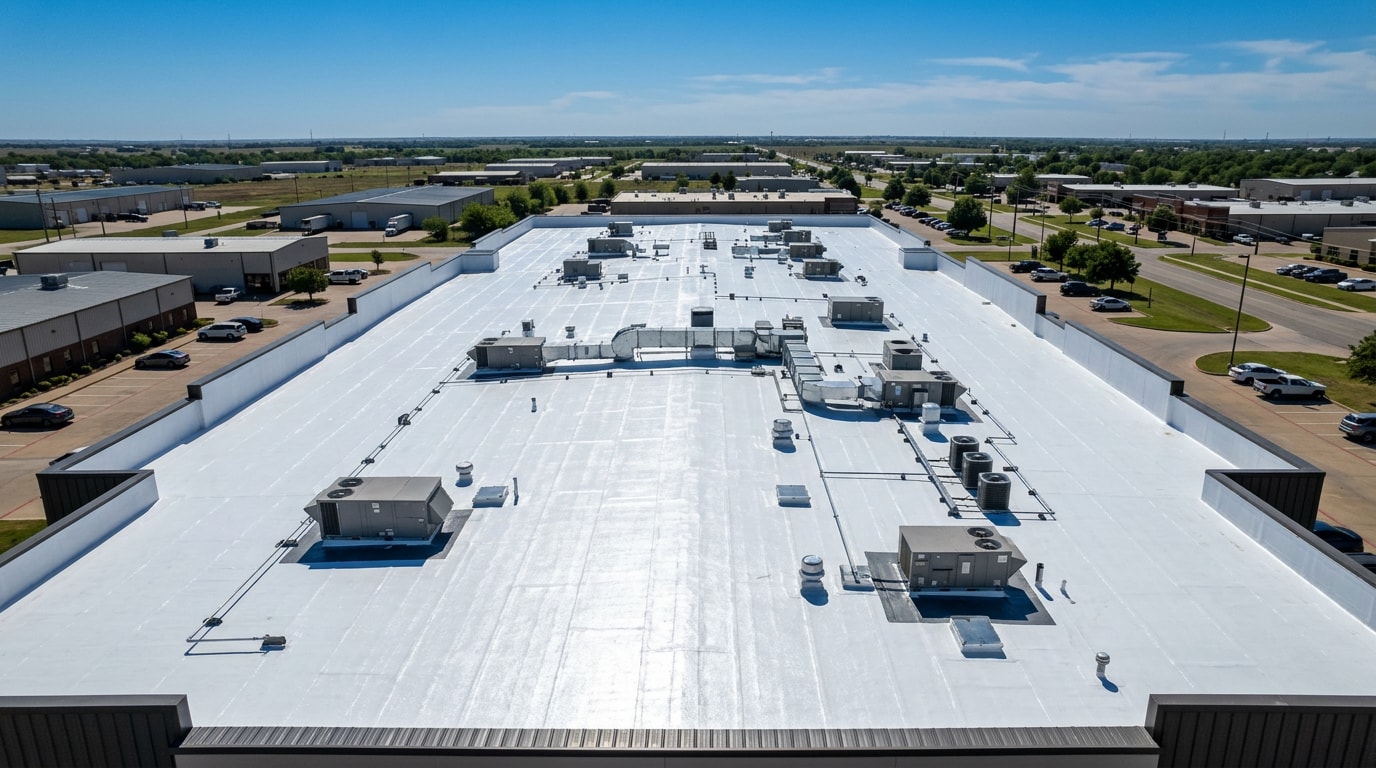
In Piedmont, the roofs that typically qualify include built-up roofing (BUR), modified bitumen, and single-ply membranes like TPO or EPDM. These systems show up on commercial buildings and on flat-roofed additions, porches, and shop buildings across the area. If your roof is one of these rubber or single-ply systems, our guide to rubber roofing in Piedmont covers lifespan and replacement timing in more depth.
"Scope" is simply figuring out, before a crew shows up, whether a roof is a good coating candidate or needs repair work first. That assessment drives every decision that follows, and it's the reason a roof inspection always comes before a coating quote.
Why Flat Roof Membranes Fail Faster in Oklahoma
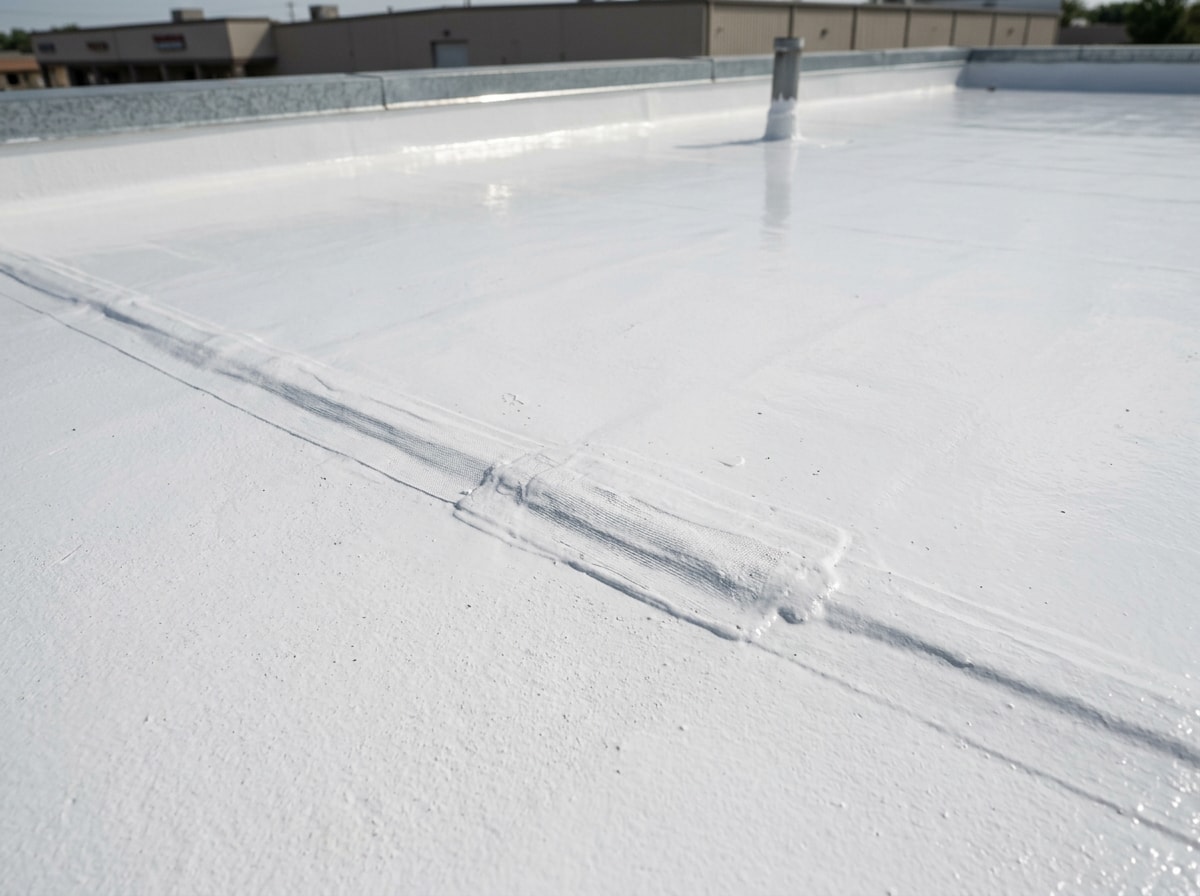
Flat roof membranes break down gradually. UV exposure dries out surface materials. Ponding water accelerates wear in low spots. Seams age faster than the rest of the field because they're the weakest mechanical point in the system.
Oklahoma's climate speeds this up. Freeze-thaw cycles through winter cause repeated expansion and contraction at seams and flashing details. Intense summer UV load bakes the membrane surface on top of that.
On flat-roofed additions we've inspected around Piedmont after a single hard winter, the seams are almost always where separation shows up first — well before anyone notices a drip inside. That combination is exactly why coating systems target seams and flashing details directly, rather than just recoating the open field.
A properly applied coating re-seals the membrane surface and reinforces those seams, restoring waterproofing without a full roof replacement.
Coating Types Compared: Acrylic, Silicone & Cool Roof Systems
Not every coating works the same way, and not every roof should be coated at all. Here's how the main systems used in Piedmont stack up.
| Coating Type | Best For | Ponding Water Resistance | Relative Material Cost | Reflective (Cool Roof) Option |
|---|---|---|---|---|
| Acrylic | Roofs with normal drainage, moderate budgets | Weak — not rated for standing water | Lower | Yes, white acrylic is common |
| Silicone | Roofs with poor drainage or chronic low spots | Strong — built to handle sustained moisture | Higher | Yes, typically high reflectivity |
| Cool/reflective topcoat | Any qualifying substrate needing lower surface heat | Depends on base chemistry | Varies | Primary purpose |
Acrylic systems
Acrylic coating adheres well to many substrates, cures quickly, and offers solid UV resistance. That makes it a frequent choice on Piedmont commercial flat roofs with normal drainage. It's generally a poor fit for roofs with chronic ponding, where a different chemistry holds up better over time.
Silicone systems
Silicone coating is built for moisture. Its defining strength is resistance to standing water, which makes it a common pick for roofs with poor drainage or low spots that never fully dry out.
The ASTM specification that governs this chemistry, D6694, covers a liquid-applied solvent dispersed elastomeric coating used as a roofing membrane whose principal polymer in the dispersion contains more than 95% silicone . That high silicone content is what gives the cured film its resistance to breaking down under sustained water exposure.
Cool roof and reflective coatings
A reflective coating lowers surface temperature instead of letting the membrane absorb solar heat. According to the EPA's ENERGY STAR program, cool roofing keeps buildings cooler on hot days, improving indoor comfort and safety , and can reduce air conditioning costs inside a building on a hot day while also helping cool the surrounding air . On a Piedmont commercial roof running an HVAC system through July and August, that translates into less strain on the equipment and a lower cooling bill.
When replacement is the better discussion
Coating isn't always the right call. Structural damage, saturated insulation beneath the membrane, or widespread membrane failure across most of the roof's surface usually mean replacement should be on the table instead.
The coating-versus-replacement decision comes down to how much sound material is still there to protect. A roof repair can sometimes buy time before that decision has to be made, but a roof with multiple failure points across the field isn't a good long-term coating candidate.
How the Flat Roof Coating Process Works
The process follows a consistent sequence, whether the job is a small residential flat section or a large commercial building. Industry guidelines for roof coating applicators lay out that same order: substrate evaluation, repairs and preparation steps before coating, then coating material selection and application .
- Check eligibility. A moisture inspection scans the substrate for trapped water, checks attachment, and assesses overall membrane condition. This determines whether coating is viable or whether repair needs go deeper first.
- Repair and prepare. Crews clean debris and contaminants, complete seam repair, and fix any flashing or penetration issues that could undermine the new system.
- Apply the restoration system. The coating goes down in multiple coats, with cure time between layers, building a continuous, seamless waterproof membrane across the roof surface.
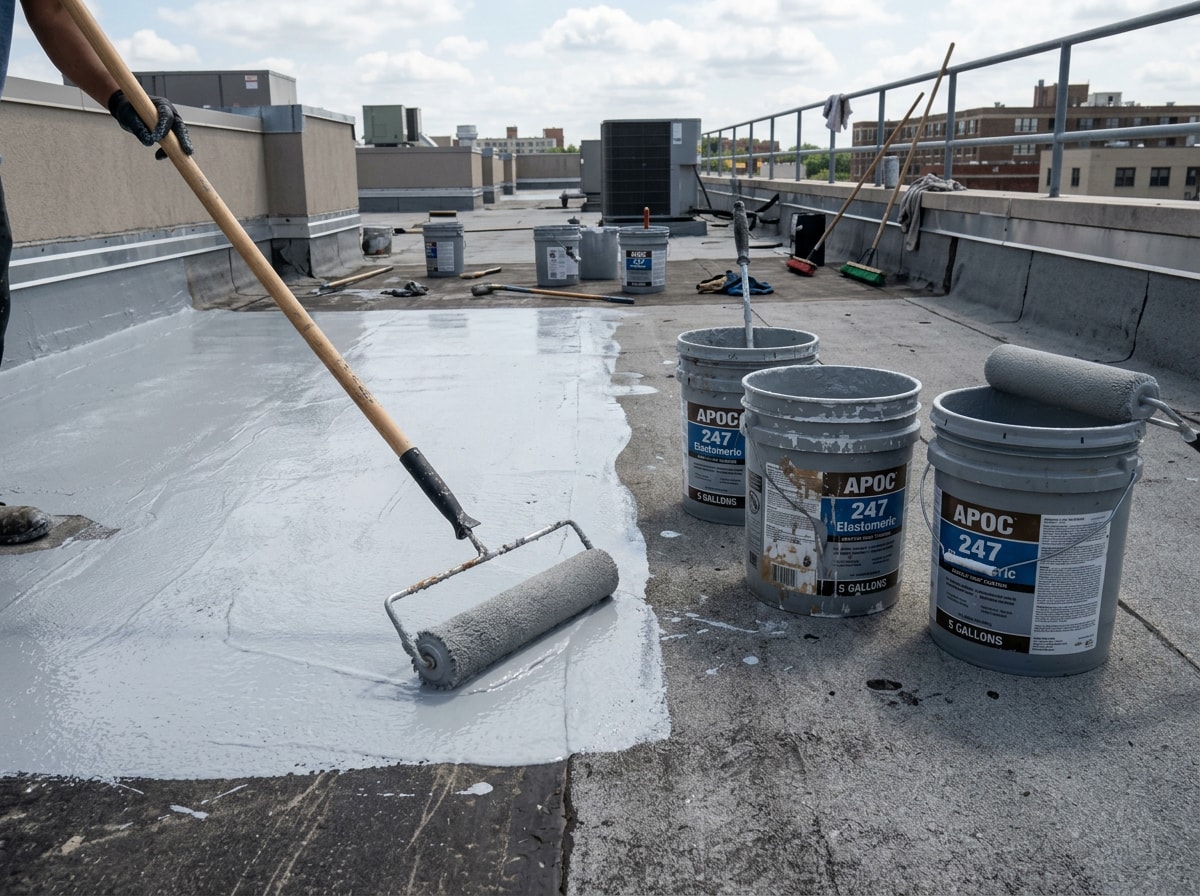
Property owners who want the full picture of what a Piedmont roofing project involves, from inspection through final sign-off, can start with our roofing contractor services.
What Drives Flat Roof Coating Cost in Piedmont
Roof coating cost depends on a handful of variables, not a flat per-square-foot rate:
- Total roof size — more square footage means more material and labor.
- Substrate repair needed — a roof with failed seams or soft spots costs more to prep than one in good shape.
- Coating type selected — acrylic generally costs less upfront than silicone.
- Number of coats — warranty terms and performance targets often require multiple reinforced coats.
A straightforward roof with minimal repairs lands toward the lower end of a price range. A roof needing extensive seam repair or multiple reinforced coats costs more. There's no single rate that applies everywhere, because pricing follows what the inspection finds.
For buildings that also need ongoing upkeep between coating cycles, property maintenance services or commercial repairs can catch small issues before they turn into coating failures. For an accurate number specific to your property, request a free roof coating estimate so a technician can evaluate size, condition, and coating type together.
FAQ
Will a roof coating stop leaks, including around HVAC units and penetrations?
A quality coating stops most leaks tied to membrane wear and minor seam gaps, but it isn't a cure for structural damage or severe deterioration. Around HVAC units and roof penetrations, crews apply extra reinforcement during prep since these spots carry the highest leak risk.
What types of roofs can be coated, including shingle roofs?
Most low-slope substrates, including built-up roofing, modified bitumen, single-ply, and metal, can be coated. Shingle roofs are different because they're steep-slope assemblies that shed water through overlap rather than a continuous membrane, so they typically don't use the same flat roof coating systems.
How long does the coating take to cure before rain exposure?
Cure time varies by product, but many coatings need roughly 24 hours of dry weather before they can handle rain without washing or thinning. Crews check forecasts closely and schedule application around dry windows to protect the fresh coating.
What maintenance does a coated roof require, and how often should it be recoated?
Coated roofs need periodic inspections and debris clearing, plus prompt attention to any new penetrations or equipment installs. Most systems are designed for recoating roughly every 5 to 10 years, depending on coating type and exposure conditions.
What is the best protective coating for a flat roof?
There's no single best option — it depends on the roof's drainage and exposure. Acrylic works well on roofs with good drainage and moderate budgets, while silicone performs better where ponding water is a recurring issue, as covered in the options section above.
How much does flat roof coating cost in Piedmont, OK?
Cost depends on roof size, how much substrate repair is needed, the coating type chosen, and the number of coats required. There's no flat rate that applies to every roof — an on-site inspection is the only way to get an accurate number for your property.
This guide reflects current coating practices used by the licensed roofing crew at AH Roofing & Contracting, who inspect and coat flat roofs throughout the Oklahoma City metro, including Piedmont. Questions about a specific roof? Contact our team or browse recent projects to see completed coating and restoration work.